
A single NRR looks reassuring—until the first shot reverberates off the lane walls.
A shooter may see NRR 22 or NRR 30 on a package and look for a clean pass/fail line. The problem is that a gunshot is not a steady sound: its peak level, frequency content, and perceived harshness change with the firearm, ammunition, muzzle device, and whether firing happens under a roof, inside a stall, or on an open bay. A short-barreled rifle with a brake can feel dramatically more punishing to nearby lanes than its label-free appearance suggests.
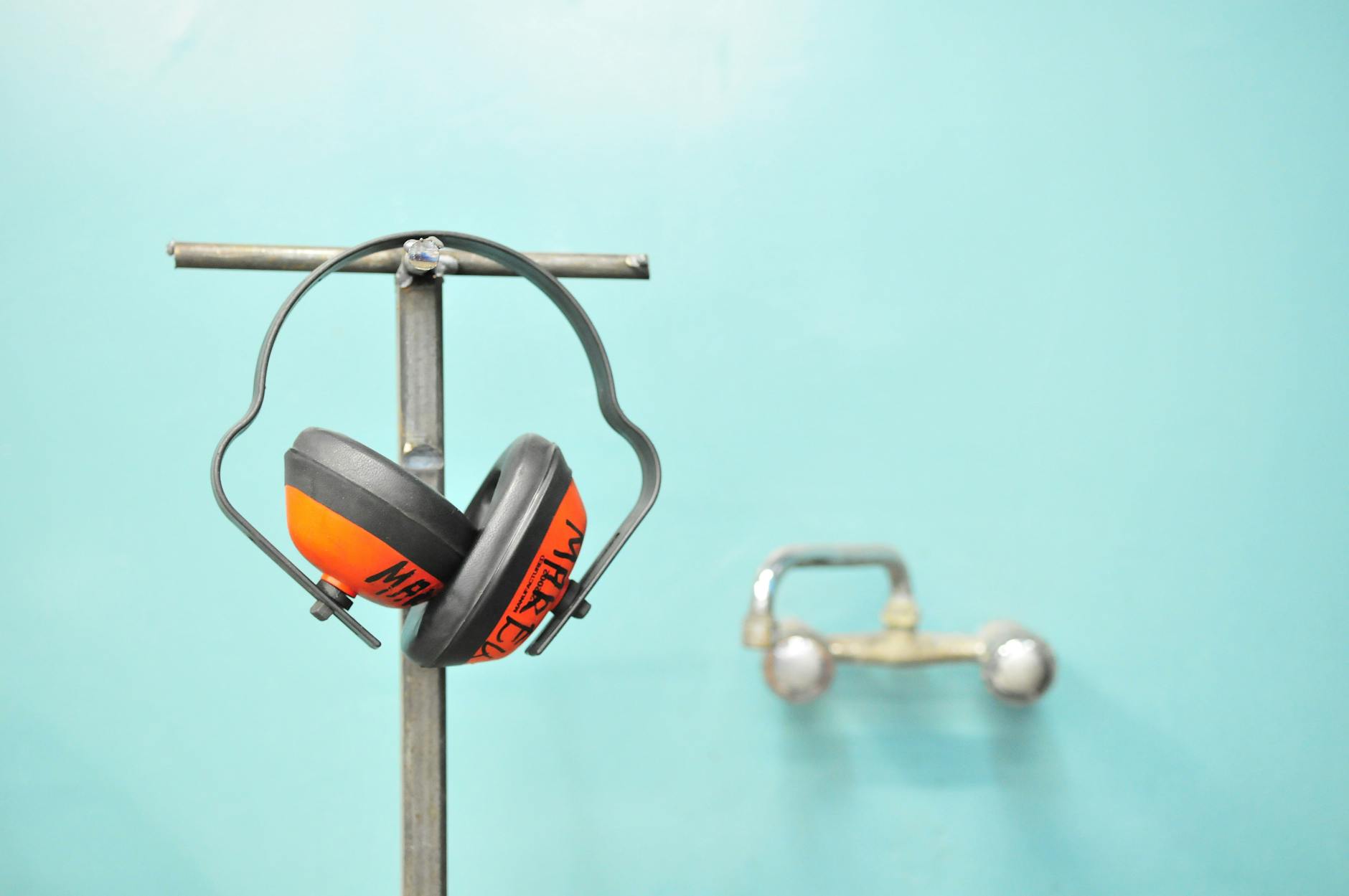
NRR is a laboratory-derived comparison rating for a properly fitted protector, not a promise of the sound level reaching one particular ear during live fire. Real protection can fall when an earmuff seal is broken by eyewear temples, hair, cheek weld, or a poorly adjusted headband; plugs can underperform when they are not inserted deeply enough. Reflections from concrete walls and overhead baffles also extend the noise exposure beyond the initial muzzle blast. The rating remains useful guidance—especially for comparing products of the same type—but range conditions and fit determine how much of that potential protection is actually realized.
- Muzzle brakes redirect blast sideways, often increasing the burden on adjacent shooters.
- Indoor lanes commonly add reflected sound that open outdoor bays dissipate more readily.
A practical NRR baseline
For a dedicated shooting range, an NRR in the mid-to-high 20s is a meaningful entry point for well-fitting earmuffs or earplugs. It generally offers substantially more margin than low-rated casual hearing protection. An NRR of 30 or above is strong laboratory performance, but it is not an automatic answer for every firing line.
The number on the package comes from controlled laboratory testing with properly fitted protectors and trained test subjects. It represents attenuation across a range of frequencies, with a built-in statistical allowance for variation among wearers. It does not mean that a 30 NRR protector reliably turns a 100 dB event into 70 dB at the ear in ordinary range conditions.
Real attenuation commonly falls short when the seal is compromised. Earmuff cushions can leak around glasses, hat brims, hair, or an imperfect headband position; plugs lose effectiveness when they are not inserted deeply enough. Fit matters especially because firearm impulse noise is brief, intense, and rich in frequencies that do not behave like steady background sound.
A high NRR also cannot account for the environment. An indoor bay, a short-barreled rifle, a muzzle brake, or a neighboring shooter firing a large-caliber firearm can create a more demanding exposure than a quiet outdoor lane. In those settings, dual protection—properly fitted plugs under muffs—adds independent attenuation and is often more meaningful than chasing a few extra NRR points on one device.
The useful interpretation is comparative rather than literal: 27 NRR is a credible dedicated-range baseline; 30+ supplies more tested margin; neither rating cancels the need for a consistent seal and protection matched to the firing environment.
- NRR
The U.S. Noise Reduction Rating is a laboratory-derived estimate of a hearing protector’s attenuation under standardized test conditions.
- Attenuation
The reduction in sound reaching the ear. It varies by frequency, fit, protector condition, and how it is worn.
- Dual protection
Earplugs worn beneath earmuffs. Their protection does not simply add rating numbers together, but the combination can improve practical margin.
- Seal
The continuous contact that lets a muff cushion block sound, or the placement that lets a plug seal the ear canal.
Why range noise needs extra margin
A firearm report is a brief, high-energy impulse, not a continuous sound like a mower or factory fan. That distinction matters: the ear has little opportunity to recover between sharp peaks, and a protector’s laboratory rating does not describe every part of that event equally.
The shooter’s own muzzle blast is only one source. Adjacent lanes can place another firearm’s muzzle closer to the ear than expected, while a brake, compensator, short barrel, or larger cartridge can make the perceived blast markedly harsher. The difficult exposure is often the unpredictable shot from beside or slightly behind the firing position.
Indoors multiply the problem
Hard walls, ceilings, lane dividers, and concrete floors return energy to the firing line. Rather than one outward-moving report, the ear receives the direct blast followed by fast reflections. An indoor range can therefore feel dramatically louder than an open outdoor bay even with the same firearm.
This is why a rating that seems adequate for occasional outdoor shooting may leave too little reserve indoors. More attenuation matters most when several lanes are active, the building has highly reflective surfaces, or short-barreled and muzzle-braked firearms are present.
Why earmuffs alone can fall short
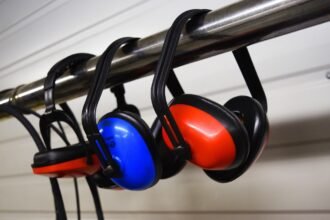
Earmuffs add valuable protection and are quick to put on, but their real performance depends on an unbroken cushion seal. Glasses temples, hats, hair, jaw movement, perspiration, and an imperfect headband position can create small leaks that reduce low-frequency isolation. A listed NRR cannot compensate for a disrupted seal.
For high-noise indoor sessions, earplugs worn under earmuffs provide two independent barriers. Their attenuation does not combine by simply adding both NRR numbers; fit, frequency response, and bone-conducted sound limit the total. Even so, dual protection commonly offers a meaningful practical increase in margin over either protector alone.
Electronic muffs can still be useful in a dual setup because amplification helps preserve range commands and conversation between shots. The relevant feature is not amplified sound itself, but reliable limiting of loud impulses alongside a secure physical seal.
The quietest firearm on a lane does not set the hearing-protection requirement. The loudest plausible shot nearby, plus the room’s reflections, does. This is especially important at busy indoor facilities, where the sound environment can change from one relay to the next.
The range itself can raise the exposure
An open outdoor firing line lets sound spread into a large air volume. Even there, muzzle position, a roof over the line, side berms, and a shooter one lane away can turn a seemingly open setting into a reflective, high-level environment.
Covered bays deserve particular caution. Concrete walls, steel targets or baffles, lane dividers, and low ceilings return energy toward the firing line rather than allowing it to dissipate. The report heard at the ear is therefore more than the direct muzzle blast; it includes a dense series of very fast reflections.
Short barrels can make this harder. They generally place a louder, sharper muzzle report closer to the shooter and can increase blast perceived by adjacent shooters, especially with rifles using muzzle brakes or compensators. A modest-caliber firearm is not automatically a modest hearing-risk setup when its barrel, device, and bay geometry concentrate the blast.
Useful context also includes who is firing nearby. A shooter may have a well-sealed protector and still encounter the peak output of a neighboring firearm at an awkward angle. That is why an NRR chosen for a quiet outdoor bench session may leave too little practical margin for a busy covered range.
Double protection: useful, but not simple arithmetic
With earplugs beneath earmuffs, the two NRR figures do not add together. Their leakage paths, fit errors, skull and body conduction, and the limits of laboratory test methods prevent that kind of calculation. In practical guidance, a common shortcut is to take the higher-rated device and add roughly 5 dB for the combination.
That extra 5 dB is a conservative rule of thumb—not a guarantee of real-world performance. It can be less when plugs are shallow or poorly rolled, muffs are lifted by eyewear temples, hair or hat brims interfere with cushions, or the cups are repeatedly shifted while shooting. Conversely, a correctly inserted plug under consistently sealed muffs can provide valuable redundancy when one layer is imperfect.
For a fuller explanation of how dual protection affects practical NRR, the key distinction is between a label estimate and an actual seal. At loud, reflective ranges, layered protection can reduce the consequences of a small fit lapse; it does not make extreme impulse noise harmless or convert two ratings into a precise measured result.
A quick fit check can matter as much as the second device:
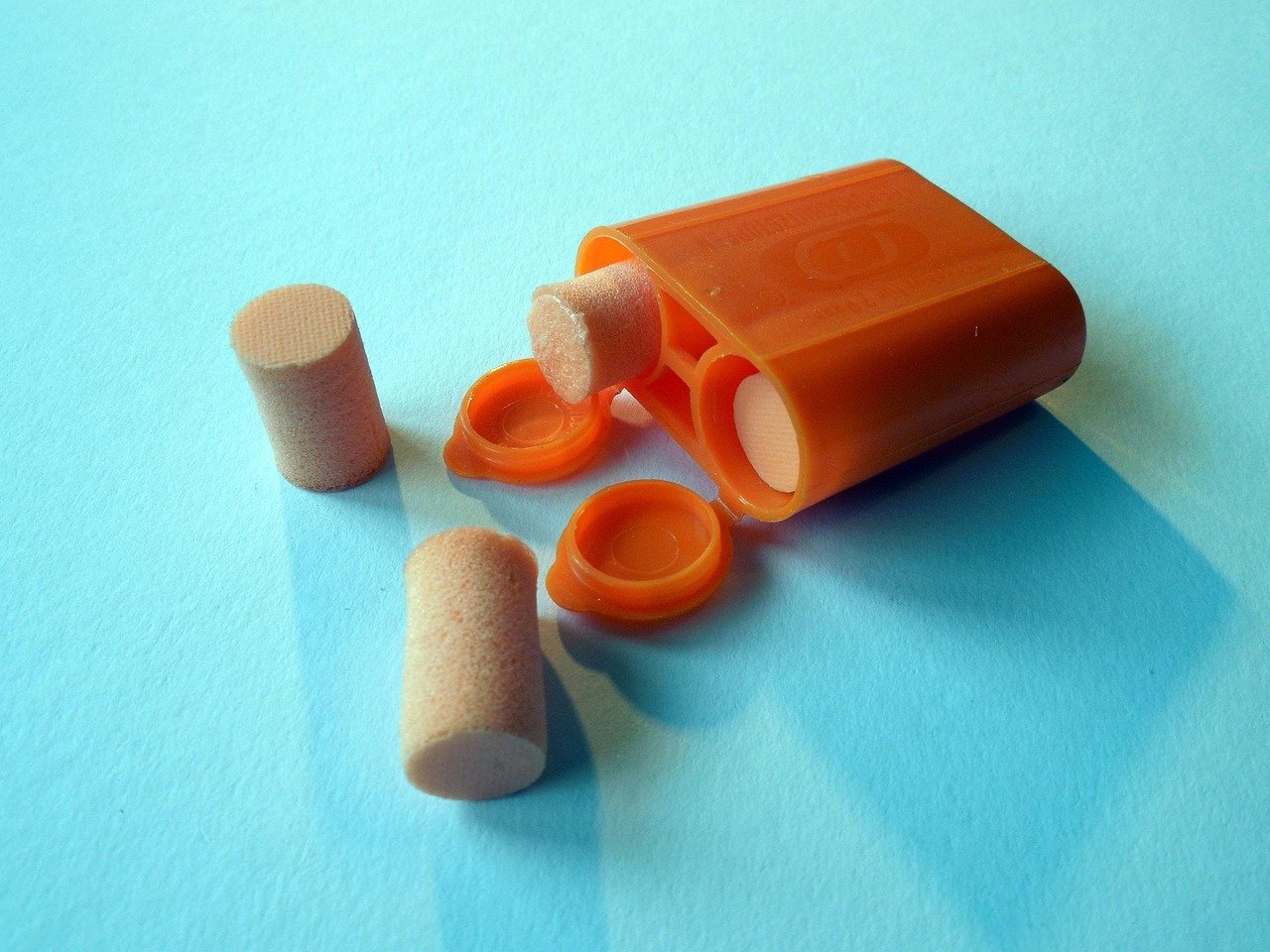
- Foam plugs sit fully in the ear canal, with little material protruding.
- Muff cushions contact skin all the way around each ear.
- Glasses, headwear, and stock weld do not create a visible gap or repeatedly break the seal.
A dependable seal beats a slightly higher label
- A seal that survives movementThe rated attenuation assumes an uninterrupted acoustic seal. Glasses temples, cap brims, hair, facial hair, jaw movement, and a shifted cup can create leakage that overwhelms a small NRR advantage.Look forMuffs with soft, deep cushions and enough headband tension to seal around eyewear; plugs that remain seated.AvoidChoosing by NRR alone when the protector gaps during cheek weld, conversation, or head movement.
- Correct plug insertionFoam plugs work only when compressed, placed deeply enough to seal the canal, and allowed to expand. A plug left near the canal entrance may feel comfortable while providing far less protection than its label implies.Look forA repeatable insertion method and a quick fit check; see the wider guide to shooting ear protection for protection types.AvoidLoose foam plugs, oversized reusable plugs, or relying on a muff to compensate for poorly fitted plugs.
- Comfort that preserves the sealA protector that becomes painful, hot, or unstable during a session is more likely to be lifted, repositioned, or worn inconsistently. Low-profile muffs can also reduce interference with a rifle or shotgun stock, provided their cushions still seal.Look forA stable setup that permits normal cheek weld and can stay on throughout the range session.AvoidThin or overly stiff cushions that break seal when the stock is mounted.
- Electronics, upkeep, and pairingElectronic muffs amplify quiet sound for conversation and range commands, then limit the circuitry during loud impulses. Their passive cups and cushions—not amplification—provide the attenuation during gunfire. Worn cushions, cracked housings, weak headbands, and depleted batteries can undermine intended use.Look forFunctional electronics paired with intact passive components; for higher-noise settings, plugs under muffs fitted independently.AvoidTreating an electronic model as inherently more protective, or assuming two NRR values can simply be added.
Make the call for the loudest likely string
-
Start with the most demanding firearm and position
Judge protection against the loudest firearm likely to be fired, including adjacent lanes—not the quietest rifle on the plan. A braked rifle, short barrel, magnum handgun, or shotgun under a roof can set the relevant condition for everyone nearby.
-
Factor in the room, not just the firearm
Indoor bays, covered firing lines, concrete walls, and low ceilings preserve reflected energy after the muzzle blast. If the session may move from an open outdoor line to a covered or indoor one, the more reverberant setting is the meaningful reference point.
-
Inspect the actual protectors
Confirm that plugs and muffs carry a legible NRR marking and are not damaged, hardened, torn, or contaminated. Check muff cushions, headband tension, cup hinges, plug stems, and any electronic components before relying on the label.
-
Build the system around a reliable seal
For high-blast conditions, properly fitted plugs under muffs provide redundancy when one seal is disturbed by cheek weld, eyewear, hair, hats, or movement. The two NRR figures are not added together; the benefit depends on both protectors remaining well seated.
-
Reassess when the line changes
Protection that felt adequate during a quiet outdoor relay may be insufficient once a neighboring shooter uncases a braked carbine or the group moves under cover. A changed firearm mix, shooting position, or range structure warrants a fresh margin check before firing resumes.
NRR is a laboratory label, not a prediction of protection during every shot.
Enough NRR is a range-specific decision
- The loudest credible nearby impulse—not the package’s highest number—sets the useful protection target.
- Fit, intact components, and changing acoustics can matter more than a small NRR difference.
- Dual protection is a practical high-margin arrangement for loud or reverberant firing conditions.
There is no single NRR that is automatically “enough” for every shooting range. A mid-to-high-20s NRR protector can be a sound baseline when it seals reliably, but louder firearms, muzzle devices, close lanes, and reflective structures can quickly justify more margin.
The useful final check is simple: identify the loudest likely condition, verify the markings and physical condition of the equipment, establish the seal, and revisit that decision whenever the range environment changes. A trustworthy setup is one that remains protective after the first shot changes the plan.



2 Comments
The seal issue is huge with glasses. I wear fairly thick safety-glass arms, and I can definitely feel the muff cushions sitting unevenly around them.
Is there a useful rule of thumb for deciding whether to change glasses, change muffs, or just add plugs? It seems like a tiny gap could matter more than moving from an NRR 27 model to an NRR 29 model, but manufacturers don’t exactly make that easy to judge.
Mid/high 20s as a baseline is more useful than the usual answer of “buy the highest number.” I have small ears and the highest-rated muffs I tried were so uncomfortable that I kept readjusting them every magazine. A dependable seal and actually leaving them on beats theoretical perfection, I guess.