

The brighter option on paper is not always the one that answers the switch later.
A weapon light can sit untouched for months, then fail at exactly the wrong time: rechargeables left partially drained, a host that rejects 18650 length or voltage, or CR123A cells that still work but fade sooner under sustained draw. That is the actual divide.
One battery favors stored readiness and easy replacement. The other favors repeatable hard use and lower long-run operating cost—if charging habits, cell fit, and output behavior are kept under control. The useful comparison is not a lumen contest; it is a match between battery chemistry and the light’s real readiness pattern.
The fastest answer

Common battery myths that cause bad matches
No. Length, button-top shape, protection circuits, and recoil-safe contact design can all decide whether a light runs reliably.
“18650” names a nominal size, not a guaranteed fit. Some lights are picky about cell length or terminal style.
Dual-fuel usually means specific approved chemistries and voltage ranges, not universal compatibility.
A light may accept two 3V CR123A cells or one 18650 Li-ion, yet reject other 18650 chemistries. That matters even more with uncommon options like Ni-MH 18650 cells.
Output regulation, cold performance, shelf life, and voltage sag under load often matter more than the label.
Before deciding, start with what matters when choosing a weapon light, then verify chemistry, voltage, and form factor for the host.
A rechargeable cell and a disposable lithium cell can share a similar shape while presenting a very different voltage profile. In weapon lights, that difference can affect regulation, runtime behavior, or simple compatibility.
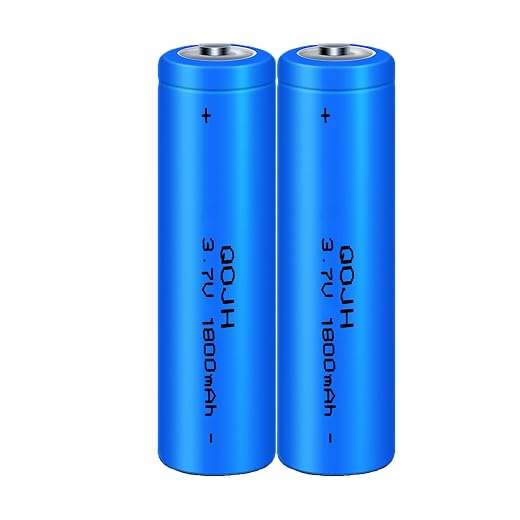
| Primary lithium pair Streamlight 85177 CR123A 12-Pack Lithium Cells | VS | Rechargeable example 1800mAh 18650 Ni-MH Rechargeable 2-Pack Button Top |
|---|---|---|
Good, shorter plateau | Regulated output |
Best, longest plateau |
More as cells age | Voltage sag |
Usually lower |
Gradual fade | Runtime shape |
Flat, then cutoff |
Less sustained heat | Recoil / heat |
More spring, thermal load |
Excellent | Cold confidence |
Noticeably weaker |
| Check | Check |
The more honest metric is usable intensity after several minutes, not the first burst. A strong 18650 setup usually keeps a flatter output curve and resists early dimming under heavy draw, which matters in lights with aggressive regulation. CR123A lights often give up peak sooner, but they can feel more predictable in deep cold and after long shelf storage.
That trade-off also affects heat: an 18650 can feed high output long enough for the head, springs, and electronics to stay hotter for longer, while CR123A sag often acts like a built-in limiter.
The battery that fits real upkeep
Battery format often stops being a spec-sheet decision and becomes a maintenance decision. CR123A suits lights that may sit untouched for months, because spares can be staged, dated, and largely forgotten until replacement time. 18650 works best when charging is already part of the routine, not an occasional afterthought.
The practical split usually looks like this:
- CR123A fits low-touch setups: long storage intervals, sealed spare packs, and simple rotation by date code.
- 18650 fits high-use setups: frequent top-offs, charger access, and periodic cell health checks.
- Spare management differs. A drawer of primary cells is easy to audit; rechargeables require tracking pairs, state of charge, and aging.
- Missed maintenance hurts 18650 harder. A neglected rechargeable can be half-empty or out of balance the day it is needed.
For staged emergency spares, the Streamlight 85177 pack matches the CR123A logic. The budget 18650 pair only pays off when regular cycling and charger checks are realistic.
Primary-cell standby standard
Reliable OEM-quality CR123A pack for weapon lights
Streamlight’s 12-pack is the clearest example of the CR123A argument. It suits lights built around 3-volt primaries, owners who keep sealed spares on hand, and setups where one simple battery standard across multiple ready-use devices matters more than recharge economics.
- Long shelf-stable storage
- Broad CR123A compatibility
- Simple spare-cell standard
- Strong cold-weather readiness
- Higher recurring spend
- Disposable by design
- Less economical for heavy use
Quick take CR123A remains compelling when readiness matters more than cycle cost. Its advantage is not maximum value per watt-hour, but predictable storage, broad fit, and dead-simple spare management.
For weapon lights that live loaded, staged, or packed as backup, CR123A still makes a strong case. This format keeps spare logistics easy and matches the voltage profile many legacy and duty-oriented lights were designed around. The trade-off is straightforward: better standby simplicity, worse long-run operating cost than a good 18650 setup.
Budget rechargeable with a compatibility catch
Good low-cost rechargeable option for frequent use
This low-cost two-pack is notable less as a universal 18650 and more as a warning label in battery form: it is marketed as a button-top rechargeable replacement, but the chemistry is Ni-MH rather than the Li-ion most 18650 weapon lights expect. That distinction matters even more in weapon lights built around 18650 cells, where driver voltage assumptions are often narrow.
- Low recurring cost for frequent range use
- Button-top format may suit some contact layouts
- Rechargeable appeal without premium buy-in
- Ni-MH is not the default 18650 chemistry
- 1800mAh is modest for this size class
- 67mm length can create fit problems
- Onboard charging support may be absent
As a case study, this battery shows why rechargeable savings can be real while compatibility risk stays high. If the host, charger, and body length are all explicitly approved for this chemistry and form factor, it can be the smarter trade-off for frequent use; if not, CR123A or a proper Li-ion 18650 remains the safer assumption.
Most 18650 weapon-light ecosystems are tuned around 3.6/3.7V Li-ion, not Ni-MH.
This pack is also listed at 67mm long, which can affect spring tension, tailcap closure, and contact reliability.
Support should be stated for this exact chemistry, terminal style, and length before rechargeable becomes the better trade-off.
A quick way to choose
-
Start with the manual
If the maker names only CR123A, that is the baseline. If 18650 support is explicit, chemistry, length, protection, and terminal style still have to match.
-
Map the idle time
Lights staged for long periods lean toward CR123A because self-discharge is low and spare rotation is simple.
-
Count training cycles
Frequent range use, admin use, or repeated high-mode sessions shift the value case toward 18650.
-
Check the support gear
18650 pays off when charger access, labeled cell rotation, and basic capacity tracking already exist. Without that routine, primaries are usually more predictable.
-
Use environment as the tie-breaker
Cold staging favors CR123A; longer sustained runtime favors 18650.
The practical winner
- Unclear 18650 support is a stop sign, not a maybe.
- Rechargeables win hardest in lights that see regular training use.
The Streamlight 85177 CR123A pattern fits lights that mostly sit ready and need simple, durable spare management. The 1800mAh 18650 Ni-MH pattern only makes sense in hosts that clearly approve that exact cell format and in use cycles that justify charging discipline.
The winning battery is the one that matches both the approved spec and the real use pattern.



6 Comments
This was one of the better explanations of the “dual-fuel” thing I’ve read. A lot of listings make it sound like if the battery physically fits, you’re good… which is how people end up annoyed.
If you had to pick between the Streamlight 85177 CR123A 12-Pack Lithium Cells and the 1800mAh 18650 Ni-MH Rechargeable 2-Pack Button Top for a light that gets used a few times a month, which one did you end up choosing?
For a few uses per month, I’d usually start with the CR123A pack unless the light explicitly supports that specific 18650 chemistry, length, and terminal style. The 18650 option can make sense if you’ll actually maintain a charging routine, but occasional-use lights often benefit more from the primary cell’s long standby and simpler spare management.
For a rifle that mostly sits staged in the safe, I still lean CR123A. The shelf-life point is boring but real, and boring usually wins for gear that might not get touched for months.
The part about charging discipline deciding more than raw runtime hit home. I *want* rechargeables to be the answer for everything, but if I forget to top them off, that savings math gets kinda goofy fast.
The Ni-MH 18650 mention threw me off at first because most people jump straight to Li-ion in these discussions.
Is your main point basically that the 1800mAh 18650 Ni-MH Rechargeable 2-Pack Button Top is only worth it when the host specifically calls for that exact type, and otherwise the Streamlight 85177 CR123A 12-Pack is the safer default?
Yes, that’s the core idea. The Ni-MH option can be economical in the right host, but only when chemistry support, charger compatibility, and physical fit are all explicitly confirmed. If that clarity isn’t there, the CR123A cells are usually the lower-risk choice.
Maybe I’m the odd one out, but I still prefer disposable CR123A for anything defensive. I know 18650 wins on repeat use and runtime, but I don’t love adding “remember charger status” to my list of things.
Also, less sustained thermal stress is not nothing. Everyone wants max brightness until the light turns into a tiny hand warmer 😅