A low sticker price matters less when a muff becomes unbearable before the firing line goes cold.
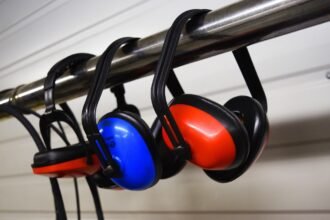
The familiar problem appears halfway through a busy range session: conversation is audible, the first shots are manageable, then cheek weld, eyeglass arms, heat, and repeated rifle fire expose the compromises. Walker’s Razor Slim and Howard Leight’s Impact Sport both use level-dependent amplification to pass quieter sound while limiting loud impulses, but neither name guarantees the better result for every setup.
Fit and passive attenuation remain the foundation. A thin cup can clear a rifle stock more easily, yet its seal can be disrupted by glasses, cap brims, hair, or bulky eyewear; a gap can matter more than a small published NRR difference. The Razor Slim is often attractive as a straightforward low-cost electronic muff, while the Impact Sport has a long following for ambient awareness and an ecosystem that includes olive-drab and accessory-oriented variants. Controls, battery access, audio character, headband pressure, and whether added earplugs are used on louder indoor lines can decide which bargain stays in the range bag.
- Published NRR describes laboratory attenuation; real-world seal quality can dominate perceived protection.
- Electronic circuitry improves awareness of range commands, but it does not replace the muff’s passive barrier.
Choose for the range role, not the logo


What matters beyond the NRR label
Published attenuation starts the comparison, but it is not the whole result. The Razor Slim is commonly listed at 23 dB NRR and the Impact Sport at 22 dB NRR; either figure depends on an unbroken cushion seal and the noise profile at the firing line. A broader shooting ear protection guide helps put those ratings in context.
Glasses arms, hair, uneven cup pressure, and a cheek weld can open small leaks that materially reduce real-world isolation. The Impact Sport’s lower-profile cup is often easier to work around a rifle stock; the Razor’s fit must be judged on the specific head and shooting position.
Both amplify low-level range conversation and limit loud impulse sound, but their microphone clarity, wind noise, and recovery character affect whether ambient audio remains useful. The cutoff circuit is a convenience feature, not extra hearing protection.
Controls should be reachable with gloves, volume steps predictable, and the battery compartment secure. Headband tension, hinge wear, cushion replacement, and the availability of stock or aftermarket accessories determine whether a budget muff stays dependable over repeated range days.
For high-noise indoor bays, short-barreled firearms, or extended firing strings, the printed NRR alone is an especially incomplete proxy for total protection.
Walker’s Razor Slim: compact electronic protection for mixed range days
Best for affordable, low-profile range protection
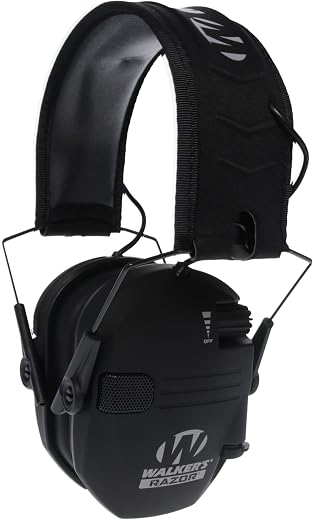
The Razor Slim is built around a straightforward idea: keep the cups narrow enough for an uncomplicated pistol stance, add ambient amplification, and avoid turning a basic range muff into a complicated piece of gear. Two microphones feed external sound through the speakers while loud impulses are limited, so ordinary conversation and range commands remain more available than with passive muffs.
Its single recessed volume knob is part of the appeal. There are few settings to manage, and the compact shell is easy to toss into a range bag. For general pistol practice and infrequent rifle strings, that simplicity makes the Razor Slim an approachable value choice. It is not a substitute for a carefully sealed, higher-isolation setup when exposure is prolonged or especially punishing.
- Low-profile cups interfere less with pistol shooting
- Simple external volume control
- Amplified ambient sound aids range awareness
- Compact, uncomplicated range-bag design
- Real-world isolation depends heavily on pad seal
- Slim cups can be less forgiving around eyewear
- Rifle stocks may still contact the cup edge
- Less reassuring for long, high-intensity sessions
Awareness-focused protection with rifle-friendly cups
Best for clear range commands and firearm stock clearance
The standard Howard Leight Impact Sport is built around keeping ordinary range sound present until a shot occurs. Its two external microphones amplify low-level speech and ambient noise—up to the model’s advertised 4× level—so cease-fire calls, a nearby instructor, and activity on adjacent lanes remain easier to follow than with passive muffs.
At the 82 dB trigger point, the electronics suppress amplification during an impulse such as gunfire, while the muff retains its 22 NRR rating in either operating state. The slim, cutaway lower earcups also leave more room around a rifle stock than bulkier designs.
That awareness is useful, but it is processed awareness. Microphones, circuitry, speakers, and a sealed earcup can make voices sound flatter, alter distance cues, and compress the contrast between quiet and loud events. In a busy indoor bay, reflections, ventilation, overlapping shots, and several conversations can turn amplified sound into a crowded wash. The Impact Sport helps maintain contact with the range; it does not reproduce open-ear hearing.
- External microphones keep range commands and nearby speech audible.
- Automatic suppression limits amplified gunshot impulses.
- Slim cutaway cups improve firearm-stock clearance.
- 22 NRR remains specified with power on or off.
- Indoor reverberation can make amplified sound congested.
- Electronic audio lacks natural distance and tonal cues.
- 22 NRR leaves limited margin for sustained indoor noise.
An Impact Sport package, not a separate platform
Includes batteries and audio connection cord
The olive-drab R-01526 is the familiar Impact Sport electronic earmuff in a different finish, sold here with two AAA batteries and a 3.5 mm audio connection cord. Its underlying fit, slim cutaway cups, 22 NRR, amplification behavior, and 82 dB sound cutoff remain Impact Sport characteristics—not an olive-drab upgrade.
It makes sense when the included cord and ready-to-use batteries suit the intended setup. Otherwise, compare the total package with other Impact Sport listings rather than treating color as added performance.
- Batteries included for immediate setup
- 3.5 mm cord supports wired audio
- Same rifle-clearance cup design
- Olive-drab finish adds no protection benefit
- Bundle contents can vary by retailer
- Included cord may duplicate existing gear
Before comparing listings, verify the exact included components, model number, and whether the audio cord and batteries are present. Product photos, colors, and titles can change while the core earmuff remains the same.
A lower-priced bare headset can be the better value when those extras are unnecessary; a complete bundle can be cleaner when they would otherwise be bought separately.
| Best budget range pick Walker's Razor Slim Electronic Hearing Protection Muff | VS | Awareness specialist Howard Leight Impact Sport Electronic Shooting Earmuff |
|---|---|---|
Very slim; workable, but stock contact varies | Profile & stock clearance |
Cutaway cup favors a cleaner rifle cheek weld |
Clear, low-end-forward amplification | Ambient sound character |
Stronger amplified awareness; can sound busier indoors |
Recessed volume knob; standard battery setup | Controls & power |
External controls; automatic shutoff helps conserve battery |
Padded wire headband; seal matters with eyewear | Comfort over a session |
Telescoping padded band; similarly seal-dependent |
Straightforward value for mixed pistol and casual range days | Range-session value |
Better rifle ergonomics; bundles add value only when their extras matter |
| View | View |
The rating is only the starting point
A one-point difference in listed NRR does not predict a one-point difference at the firing line. That label comes from controlled testing; a broken cushion seal can erase far more protection than the spec-sheet gap between Razor Slim and Impact Sport.
Eyeglass temples are a frequent culprit. Thick arms, hair caught under the pad, a cap seam, or a hat brim can create a small leak around either muff. Repositioning the cups after donning glasses and checking that the cushions sit flat helps reveal whether a setup is actually sealing.
The environment compounds the issue. In a crowded indoor bay, reflected impulse noise and neighboring short-barrel rifles with brakes or compensators can make electronic muffs feel overwhelmed even when amplification is switched off. Long sessions also matter: heat, jaw movement, and pressure fatigue encourage small fit adjustments that can disturb the seal.
Cup placement is especially relevant on a rifle. Sliding a cup slightly to clear a stock may prevent contact, but it must not lift the lower edge from the jawline. A compact cup that clears the comb is useful only if it still seals consistently.
If audio suddenly seems sharper, outside noise rises, or a cup shifts during a string, the issue may be fit, not the electronics. Briefly reseating both cups can restore the intended barrier.
Choose the Muff That Fits the Session
The Razor Slim is the uncomplicated value choice when a compact, low-profile electronic muff is the priority. The standard Impact Sport earns its place when amplified conversation and range cues matter more, especially around long guns.
The olive-drab Impact Sport makes sense only if its included batteries and audio lead have practical value; its core performance is not different. Across all three, comfortable all-day fit and a consistent cushion seal matter more than a one-point rating difference. Confirm the current listing’s rating, included items, and model number before ordering.