

A bag can solve a carry problem without turning safety into an afterthought.
A fitted dress, seated commute, mobility aid, or simply a day spent moving between layers can make waistband carry impractical. An off-body bag restores convenience, but it also introduces a critical difference: the item is no longer physically anchored to its carrier.
Safety comes from custody and a consistent access routine, not from a discreet-looking exterior. A capable design keeps the dedicated compartment separate from keys, phones, and loose essentials; holds its contents in a stable orientation; and uses closures that resist casual opening without making access uncertain. Equally important, the bag remains attended and under positive control rather than being set on a chair, left in a vehicle, or passed around. The strongest off-body options make that protected path repeatable: same compartment, same opening direction, minimal rummaging, and no need to expose everyday contents to reach it.
Match the Bag to the Routine—and Its Weak Point

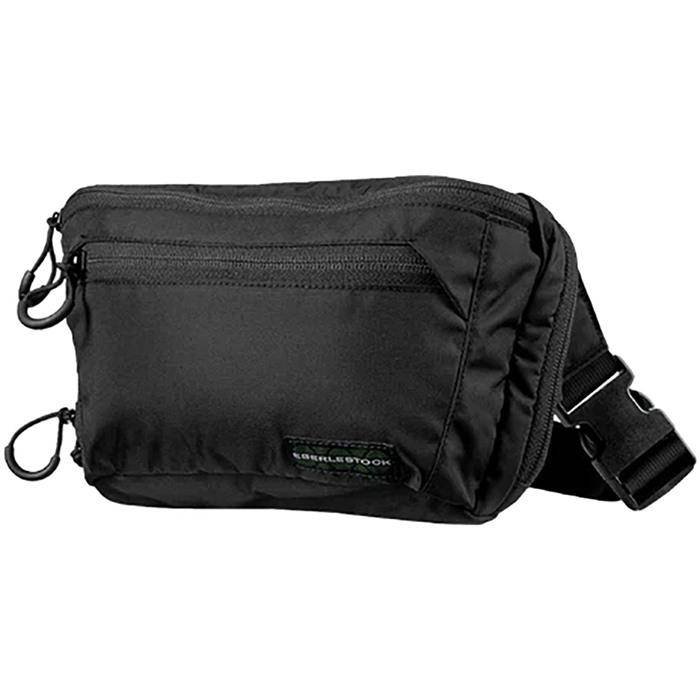
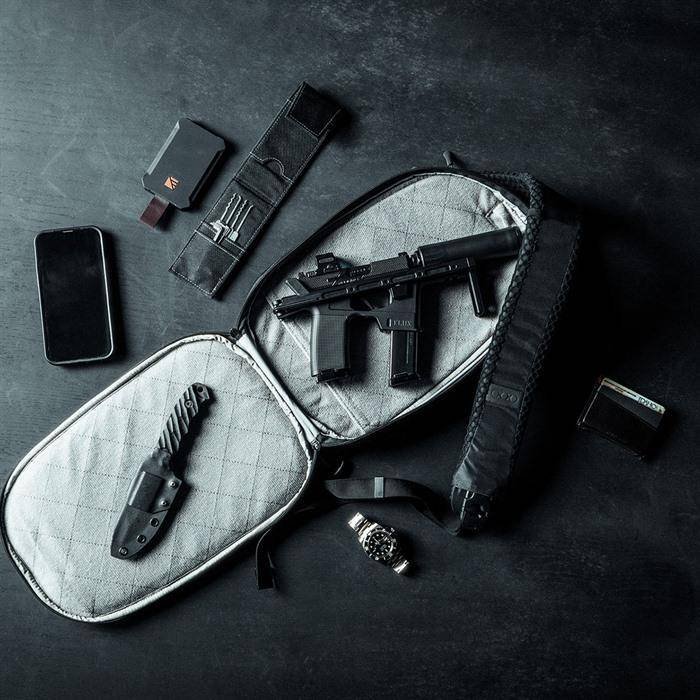
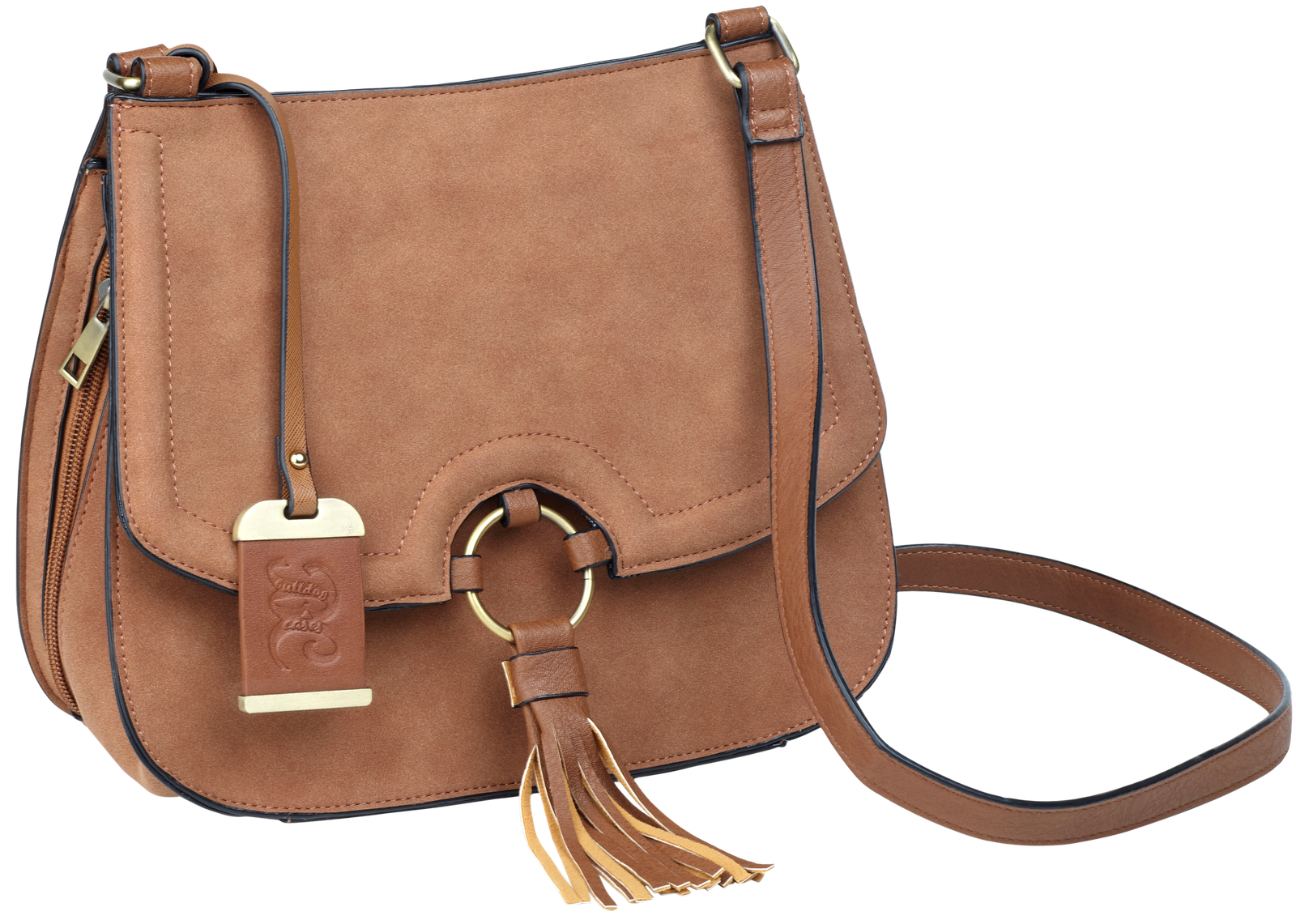
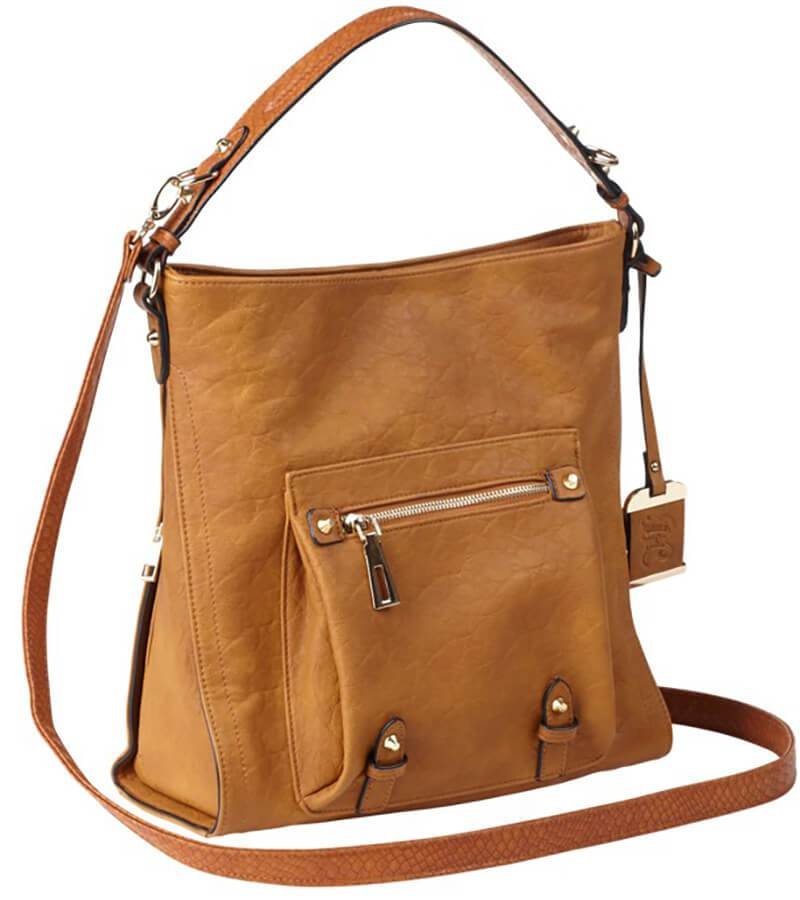
Off-body safety is a custody system, not a logo or a hidden pocket. A bag fits a routine only when its designated compartment keeps the carry item oriented, separated from loose contents, and inaccessible to casual handling—and when the bag remains under direct control.
If everyday items must share that space, or the bag is routinely set down, none of these designs eliminates the exposure risk.
Safety Depends on the System, Not a Single Feature
The comparison favors designs that make a secure routine easier to repeat under ordinary distractions.
Carry gear needs a dedicated space, rather than sharing room with loose keys, chargers, cosmetics, or other items that can obstruct access or alter orientation.
Zippers, lockable pulls, structured openings, retention panels, and a bag that rides close to the torso can reduce accidental opening, shifting, and casual interference.
A consistent draw path matters more than sheer pocket count. The bag should be usable without rummaging, rotating it unpredictably, or exposing its contents.
Features can support safer handling, but they cannot replace continuous custody, careful storage, or checking that the compartment is secured after use.
The strongest design is often the one that remains orderly when the bag is set down briefly, worn while seated, or loaded in a hurry. No off-body bag can prevent a lapse in attention; its value lies in limiting how easily routine mistakes become access, loss, or unwanted handling.
Loose essentials create moving hazards
Keys, a phone, chargers, coins, and lip balm do not stay where they are placed. In a shared compartment, they can press against controls, obstruct a draw path, catch on hardware, or simply conceal a missing item until the bag is already in hand. A padded sleeve or zipper alone does not solve that problem if everyday contents can enter the same space.
Purpose-built separation creates a hard boundary between the sensitive item and everything else. It also makes an informal visual check possible: the compartment should contain only the item and its retention equipment, with no room for small objects to migrate in. That discipline matters as much in an M-Tac sling as in a compact Bulldog crossbody; the bag’s exterior style does not change the need for isolation.
Retention must hold position, not merely hide it
A capable internal setup controls three things: orientation, location, and access path. A fitted hook-and-loop holster panel, purpose-sized sleeve, or adjustable retention insert can keep the grip in the same reachable position rather than allowing the item to rotate to the bottom. Retention should remain secure through bending, sitting, and a bag being set down—not depend on a crowded pocket holding everything in place.
Compatibility deserves closer inspection than a product photo. Check whether the interior accepts a dedicated insert, whether the mounting field is substantial enough to resist peeling, and whether the closure clears the intended access route. Readers comparing these details can broaden the search through this concealed-carry accessories guide, where retention-focused inserts and related carry equipment provide useful context.
Separation prevents interference; retention prevents shifting. The safer arrangement needs both, plus a closure that stays closed during ordinary handling.
A closure must resist shortcuts
A closure is not automatically safer because it has more hardware. A zippered compartment with a deliberate pull path can deter casual opening while still allowing the owner to confirm, open, and reclose it the same way each time. Magnetic snaps, open tops, and loosely draped flaps trade that resistance for speed and are easier to leave partially secured.
The useful test is closure discipline under distraction. Can the compartment be fully closed one-handed while walking, carrying other items, or transitioning into a vehicle? Does the zipper reach its end stop cleanly, or can fabric, a long pull, or an overfilled pocket leave a gap? A lockable zipper may add a barrier during storage, but it also adds a separate step; it is not a substitute for continuous control.
For a dedicated carry compartment, closure hardware should stay clear of the access path. Pulls, tabs, and flap edges that snag on the strap or surrounding contents can turn a familiar action into an inconsistent one.
The strap is part of the retention system
A bag can have a sound compartment and still become difficult to manage if it swings, rotates, or slides off the body. Broad, non-slip straps distribute load and resist migration; secure adjustment hardware helps preserve the chosen length. On a sling, a stabilizing geometry and body-side position generally limit pendulum motion better than a long, loosely worn crossbody strap.
Fit determines whether the bag moves with the wearer or independently. A bag held high and close is easier to shield in crowds and less likely to strike a seat, counter, or doorframe. Heavy contents and a low hang amplify swing, especially during stairs, bending, or quick turns.
Control ends the moment the bag is set down. A stable base can reduce tipping, but a countertop, shopping cart, or vehicle seat changes the custody problem entirely: the bag may be out of sight, reachable by others, or left behind. The safest-looking closure cannot compensate for an unattended bag.
A practical comparison is to wear each bag at its intended adjustment and simulate ordinary motion: sit, bend, climb stairs, reach overhead, and enter a vehicle. Watch for three failures: rotation that changes compartment orientation, swing that separates the bag from the body, and strap creep that makes the fit progressively looser.
M-Tac: a close-worn sling built around dedicated access
01
Top choice for organized, fast-access everyday carry
The M-Tac is a compact crossbody sling for carry routines where the bag remains close to the torso rather than being treated as general luggage. Its defining feature is a hook-and-loop-compatible concealed-carry area with an included universal holster insert, giving the intended item a distinct, configurable location instead of leaving it among everyday essentials.
The 600D polyester shell with PVC coating and adjustable crossbody strap reinforce its function-first EDC character. It suits readers comfortable with a visibly tactical silhouette and a bag worn as a consistent part of their daily setup.
- Dedicated hook-and-loop carry area
- Included universal holster insert
- Compact, body-close sling format
- Water-resistant coated fabric
- Tactical styling draws attention
- Best only with consistent wear
- Compact capacity limits general carry
Quick take A notably purpose-built option for controlled, close-body carry. Its value comes from keeping the bag in a predictable position and the dedicated area separate from loose everyday items.
M-Tac earns its place through intent, not disguise. The dedicated hook-and-loop panel and included insert create a clearer equipment boundary than an ordinary small sling, while the close-worn format supports repeatable positioning during routine movement.
It is most convincing when carried continuously and kept configured the same way. The overt tactical appearance is the trade-off: it may feel out of place in settings where a low-profile everyday bag matters more than purpose-built access.
Best for spacious everyday gear organization
The Bando EDC XL suits the person whose off-body bag also has to manage the ordinary clutter of a day out: phone, keys, cable, wallet, small tools, and other essentials. Its XL format and multiple compartments make it more of an everyday organizer than a purpose-built minimalist carry pouch.
That distinction matters. Compartmentalization can reduce loose-item interference, but only if one space is assigned to the carry item, remains visually distinct, and is used the same way every time. Once an item migrates among similar pockets—or shares a compartment with daily gear—the extra organization can create uncertainty rather than control. The Bando works best when its layout is simplified into a repeatable access map, not filled indiscriminately.
- XL layout accommodates everyday essentials alongside a planned carry setup
- Multiple compartments can keep loose gear from converging in one cavity
- Tactical-inspired construction fits hard-use everyday carry
- More pockets can blur the dedicated access path without a fixed routine
- Product details do not establish a purpose-built dedicated carry compartment or retention system
- Larger organizer format can invite overpacking and inconsistent item placement
A sleek option for lightweight portable storage
The Fade Sling is the low-profile choice for readers whose main safety advantage comes from keeping a bag on the body, rather than leaving a larger organizer in a vehicle, cart, or chair. Its compact sling format and plain black exterior suit a minimal everyday load and are less visually conspicuous than overtly tactical bags.
That convenience needs to be weighed against what the available product information does not establish: a dedicated separated compartment, a retention interface, or the closure and internal layout details needed to judge access control. In a small sling, every object competes for the same limited space. A crowded main compartment can make an item harder to locate cleanly and can undermine the orderly, repeatable placement that safer off-body carry depends on.
It fits best when the carry list is intentionally short and the bag can remain close-worn throughout ordinary transitions. It is a less natural match for those needing rigid compartment assignments, substantial ancillary gear, or product-documented retention provisions.
- Compact sling format encourages continuous body-side carry
- Plain black, low-visibility appearance
- Durable construction is stated by the seller
- Available details do not confirm a dedicated separated compartment
- No documented retention interface or internal organization scheme
- Small capacity leaves little tolerance for loose or growing loads
Best for compact carry with separate compartments
The Bulldog Small Suede Crossbody brings the category into ordinary purse territory: a tan suede exterior, an adjustable strap, and an 11 × 9 × 3.5-inch profile rather than overtly tactical hardware. Worn across the torso, a bag this small can stay close to the body and move less independently than a loose shoulder purse—useful traits for maintaining awareness and preventing the bag from swinging away during routine movement.
Its two main compartments and inner pockets create some separation, but the compact dimensions make the internal layout the deciding issue. The maker says it fits most small autos and revolvers; that is not the same as confirming clearance for a particular unloaded firearm, holster, and access path. A bulky holster, long grip, optic, or accessories can consume the available depth quickly. Fit verification matters especially here: the intended setup needs to remain oriented, retained, and isolated from keys, cosmetics, and other purse contents without distorting the flap or crowding the draw area.
- Crossbody format keeps the bag close and in contact with the torso
- Compact profile is less prone to loose-bag swing than larger purses
- Two main compartments and multiple pockets support basic item separation
- Adjustable strap helps tune ride height and body-side positioning
- Small 11 × 9 × 3.5-inch dimensions restrict holster and firearm compatibility
- No dedicated retention system is documented
- Magnetic flap closure may be less resistant to unintended opening than a more positive closure
- Multiple pockets can create ambiguity unless contents have fixed locations
A stylish option for concealed carry essentials
The Bulldog Anna Hobo is the more natural-looking choice for someone whose daily bag needs to carry the usual purse load as well as a concealed-carry setup. Its hobo silhouette and cognac finish read like conventional handbag design rather than a sling or purpose-built tactical bag, making it easier to integrate with office, casual, and social dress.
That same handbag-first premise changes the safety equation. A roomy main cavity invites receipts, cosmetics, chargers, and other small items; without firm boundaries, that volume can turn into shifting clutter. The product is sold with a concealed-carry holster, but the available listing does not fully document compartment layout, closure behavior, holster attachment method, or how consistently the designated area stays isolated when the bag is heavily loaded. It therefore suits a carry arrangement that remains deliberately organized rather than one that depends on a large purse naturally staying orderly.
- Conventional hobo styling
- Room for daily essentials
- Included carry holster
- Large cavity can encourage overfilling
- Loose items may migrate
- Limited documentation on compartment separation
- Less predictable access when heavily loaded
The Assumptions That Undercut a Good Bag
Concealment only reduces visibility; it does not prevent loss, interference, or access by others.
A bag still needs a separate carry compartment, a resistant closure, and close-body positioning. The question is not merely whether off-body carry is safe enough, but whether its setup and custody match the routine.
A lock can delay casual opening, but it cannot replace direct custody or secure storage.
Straps can be cut, the entire bag can be taken, and a locked compartment may be slower to access when the bag is worn.
Extra volume often creates more places for contents to migrate.
A roomy hobo or organizer works best when the dedicated compartment stays exclusive and every other item has a fixed pocket.
Compact bags sit close, yet limited depth can compromise fit, orientation, and closure clearance.
A small sling or purse must still hold the complete setup without crowding or forcing awkward access.
The safer choice is the bag whose dedicated space remains clear, closed, and controllable through ordinary transitions—walking, sitting, loading a vehicle, or setting it down briefly. Design establishes the margin; consistent custody determines whether that margin survives the day.
-
Dining and desks
A bag must stay attached or within direct physical control when seated, not migrate to a chair back, table edge, or drawer.
-
Restrooms and gyms
Stall hooks, benches, and locker-room changes expose whether the strap, closure, and close-body format remain manageable through awkward movement.
-
Travel transitions
Ticketing, security queues, luggage handling, and overhead storage test whether access stays deliberate while hands are occupied.
-
Child-related errands
Bending, lifting, strollers, and sudden pace changes reveal strap stability and whether ordinary contents crowd the dedicated compartment.
-
Vehicle stops
Entry, exit, and seating can turn a convenient bag into an unattended object unless its placement is planned.
A routine map often matters more than a feature list. Note every moment the bag comes off, shifts behind the body, or competes with other tasks. For vehicles, prioritize storage that avoids habitual unattended placement, rather than treating the cabin as an extension of on-body carry.
Temporary storage needs its own plan
A bag carried on the body and a bag left behind face different threats. Vehicle consoles, glove boxes, and seat pockets are visible, accessible after a break-in, and easily forgotten during quick stops.
A portable handgun safe can add a lockable layer for brief separation, particularly when it can be secured to a fixed anchor. It is not a universal substitute for continuous custody: lock design, anchoring method, local conditions, duration, and the risk of discovery all change the equation. The bag’s dedicated compartment still matters before and after storage.
A practical final screen
-
Demand a truly separate compartment
It needs a dedicated space, not merely an unused pocket shared with loose daily items.
-
Verify retention and closure together
Confirm that the compartment accepts the intended retention setup and closes reliably without creating a confused access path.
-
Test strap stability and orientation
A close, repeatable body-side position matters more than capacity; the bag should not swing, rotate, or shift during ordinary movement.
-
Buy only the capacity the routine can police
Extra room invites clutter. Everyday contents need fixed homes that cannot migrate into the dedicated compartment.
-
Match the bag to actual attendance habits
Consider commutes, sitting, restroom breaks, gym visits, vehicles, and every moment the bag might be set down or removed.
The most capable format is the one that makes secure separation, consistent placement, and continuous control easiest to maintain.
- Documented compartment design matters more than a generic “concealed-carry” label.
- A smaller bag can be safer in practice when it stays close and uncluttered.
For a dedicated, close-worn setup, the M-Tac Tactical Sling is the strongest pick because its hook-and-loop-compatible carry area gives retention equipment a defined role. The Bando EDC XL suits organized daily carry when its many pockets are assigned deliberately and one remains exclusive. For a slimmer, less tactical profile, the Fade Sling favors continuous close-body wear, though its retention details warrant closer verification. The Bulldog Anna Hobo works best only when its generous interior is kept from becoming a general-purpose catchall.







One Comment
Can you explain why the Anna Hobo made the list if its larger interior can work against separation? It sounds like exactly the kind of bag where daily stuff migrates into every available pocket.
I’m not saying larger bags are bad—I need one for work—but I’d like to know what would make that style pass your final screen rather than just adding an included holster and calling it done.