
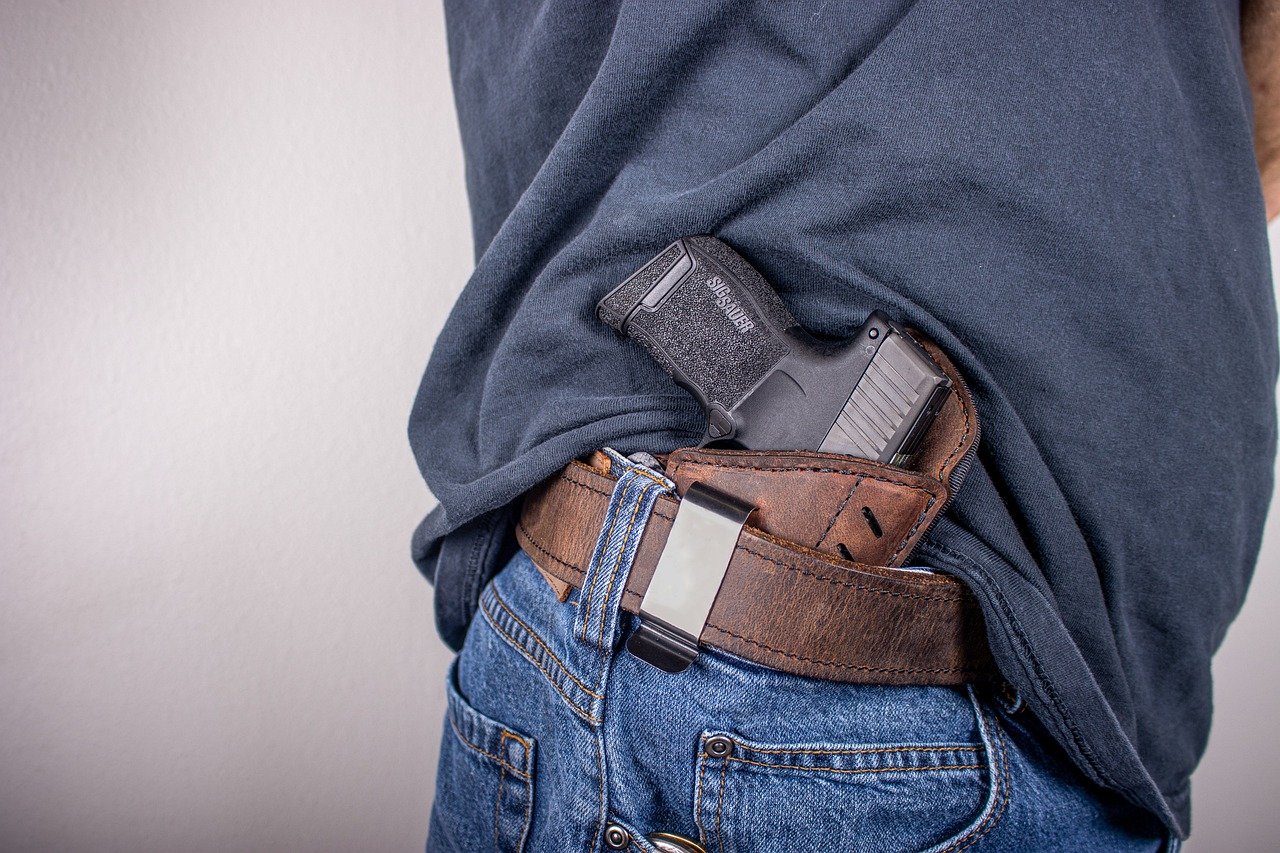
A holster can be well made and still feel wrong by late afternoon.
At breakfast, the pistol may sit exactly where it belongs; by the drive home, the grip has leaned outward, the holster has crept, and a waistband that felt fine now pinches with every bend. That slow change is often blamed on the holster, when the limiting component is the belt beneath it.
A gun belt is the load-bearing interface between holster hardware, trouser waistband, and the body’s constant motion. Its stiffness resists the outward torque created by the firearm and prevents clips or loops from tilting the holster. Its vertical rigidity keeps ride height and cant more consistent, while measured flexibility lets the belt follow the hips when sitting, walking, or climbing stairs. The result is not merely support: stable positioning can reduce visible printing, hot spots, and the repeated adjustment that draws attention to a concealed setup.
A gun belt can make a clear difference
A purpose-built gun belt can make daily carry feel markedly more controlled. By resisting sag and unwanted twist, it helps keep the holster at a consistent cant and ride height, which supports steadier concealment and a more repeatable grip during the draw. The difference is often most apparent with heavier handguns, spare magazines, or holsters attached by clips that depend on belt tension.
That said, a gun belt is not a universal requirement. A light firearm in a well-designed holster may carry acceptably on a sturdy ordinary belt, while a poor holster can remain unstable even on an exceptionally rigid belt. Excess stiffness can also be counterproductive, printing through lighter clothing or becoming uncomfortable when seated.
The belt, holster, and carry position function as a system. Useful compatibility signs include:
- A belt width that matches the holster’s loops or clips
- Enough structure to prevent rollover without creating a hard, visible edge
- Secure hardware that maintains adjustment through normal movement
- A holster design appropriate to the chosen carry location
In short, the belt improves the platform; it does not correct mismatched equipment or inconsistent placement.
Why the load behaves differently
A holstered handgun does not load a belt like an evenly distributed few extra pounds. Its mass sits outside the waistline, held at one or two attachment points, so movement creates leverage. Sitting, bending, and twisting can pull the belt outward and rotate the holster; a spare magazine or other pouch can create a second localized stress point.
Vertical stiffness resists the belt folding downward under the holster clips or loops. That helps preserve ride height and reduces the tendency for the holster body to cant as the lower edge presses into clothing.
Lateral rigidity is different: it limits sideways collapse and torsional distortion along the belt’s length. A belt may feel thick yet still roll, twist, or allow a loaded section to dip between its supporting areas. That distortion can change the relationship between holster, waistband, and cover garment.
Thickness contributes material to resist bending, but it is only one variable. Construction, reinforcement layout, edge treatment, buckle support, and the material’s long-term behavior matter as much. The useful target is controlled shape retention: enough structure to support localized leverage without becoming so unyielding that it fights normal body movement.
Resistance to permanent sag separates durable support from initial stiffness. Some belts feel firm when new but gradually take a set at the usual carry location. Once that curve is established, holster angle and tension can become less repeatable even if the belt still appears substantial.
How belt deformation shows up
A belt rarely fails all at once. More often, the section beneath the holster gradually takes a set: it compresses, rolls at the edges, or curves away from the body. That localized deformation lets the attachment points sag, changing the holster’s intended ride height and cant even though the clips or loops remain secured.
The chain reaction at the holster
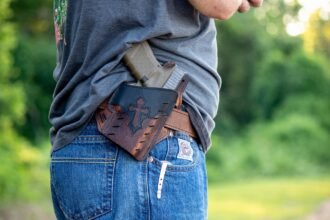
As the belt loses support, the holster can rotate outward around its attachment points. The grip then leans away from the torso, increasing its leverage and making the outline more likely to show through a cover garment. This is commonly called printing, but the visible issue often begins with belt geometry rather than the holster shell itself.
Typical signs include:
- A holster that shifts angle after walking, bending, or getting in and out of a vehicle
- Clips that appear to pull the belt edge downward or allow it to roll
- A grip that sits farther from the body later in the day
- Concealment that changes noticeably with the same clothing
More stiffness is not automatically the cure. An extremely rigid belt may hold the holster upright yet concentrate force along the belt edge, particularly while seated. That can create pressure points and make normal posture feel restrictive. Effective daily carry usually depends on controlled support: enough structure to resist sag and rotation, paired with enough conforming flexibility to follow the body through sitting, standing, and movement.
A belt that preserves holster angle while still conforming around the waist often produces better all-day concealment than one that is simply the hardest to bend.
What separates a carry belt from an ordinary belt
An ordinary fashion-leather belt is built to look finished across its full length, not to resist a concentrated, shifting load at one spot. Its single layer can stretch around holes, curl at the edges, and take a permanent set where a holster clips on. Casual web belts often avoid stretching, but their thin, flexible weave can fold or slide through a buckle under the same localized leverage.
Purpose-built belts address those weak points with a reinforced core, multiple bonded layers, or a stiffened synthetic laminate. The useful distinction is not simply hardness. The question of how stiff a gun belt should be concerns controlled resistance: enough vertical support to keep the holster upright, with enough conforming ability to wrap the body without creating a rigid hoop.
Details that determine support
- Edge finishing: Bound, stitched, or burnished edges help layers act as one structure and resist the rolled-edge feel that develops under clips.
- Buckle anchoring: A reinforced buckle end and robust attachment prevent the belt from flexing or elongating where tightening force is concentrated.
- Hole spacing or track adjustment: Closer increments allow tension to be set near the point where the holster stays stable without excess compression.
- Width: A belt must match both belt loops and holster hardware; added width can improve resistance to twisting, but only when the loops and clips support it.
Reinforced-web designs can provide excellent low-profile support, while quality leather often offers a more traditional appearance and gradual break-in. In either material, durability is revealed by behavior around the holster—not by a marketing description of stiffness alone.
Fit is part of the support system
A belt can feel properly sized through empty belt loops yet become functionally too short when a holster is added. The holster body, mounting hardware, and firearm occupy waistband circumference; an inside-the-waistband setup also compresses clothing differently as the wearer sits or bends.
The useful test is not whether the buckle closes, but where it closes. A carry belt needs enough remaining adjustment in both directions to accommodate normal day-to-day variation without running at its last hole, smallest setting, or maximum extension. Operating near an end of the range can reduce fine tension control and leave excess tail or insufficient overlap.
Match the belt to the attachment
Width and thickness must also clear the holster’s belt loops or clips. A nominal 1.5-inch belt may be too thick for a tight clip channel, while a narrow belt can shift inside an oversized loop. Before treating stiffness as the problem, check:
- Belt width against the holster’s stated loop or clip range.
- Belt thickness against clip clearance and buckle hardware.
- Adjustment spacing, since smaller increments permit more precise holster tension.
- Sizing method, especially whether the maker measures the belt itself, trouser size, or a dedicated carry measurement.
Material and closure change the daily experience
Leather remains the understated option: it pairs naturally with business-casual clothing, develops character, and can be very durable when its reinforcement is well bonded. Its trade-offs are break-in, greater sensitivity to sweat and rain, and a tendency to dry or distort if neglected. A leather belt also usually adjusts in hole-sized steps, which can leave fit slightly too loose or tight as clothing layers change.
Reinforced nylon or web belts generally resist moisture better, dry quickly, and tolerate hard outdoor use with little care. They are often lighter and less affected by weather, though their weave, edge treatment, and hardware can look conspicuous with formal clothing. Some web constructions are also thicker at the buckle, which matters when a shirt is tucked.
Choosing the closure
A conventional buckle keeps a familiar, low-key appearance, especially on leather. A ratchet-versus-leather carry-belt comparison comes down largely to adjustment: ratchet tracks permit small, repeatable changes that help maintain tension through sitting, meals, or changing layers. In exchange, the buckle can be bulkier and more mechanical-looking.
For office wear, leather with a restrained buckle often blends best. For wet climates, range use, or variable layers, reinforced web and fine ratchet adjustment can favor convenience. Durability ultimately depends on the whole assembly—stitching, reinforcement, buckle interface, and edge finish—not material alone.
A Better Belt Is Not a Complete Fix
It can reduce holster movement, but it cannot overcome a poorly matched carry setup.
Grip length, slide width, holster ride height, cant, and the drape of the cover garment often determine whether an outline appears. A belt mainly keeps those variables from shifting during movement.
Even modest loads can benefit from consistent support and repeatable placement.
Small handguns still sit away from the belt line through holster hardware, creating leverage. An ordinary belt may seem adequate while standing yet allow subtle tilt or migration after walking, sitting, and bending.
The useful target is controlled support matched to the holster, body position, and daily activity.
Excessive rigidity can make a belt uncomfortable when seated and may prevent the holster from settling naturally. Attachment clips or loops, their spacing, and their position relative to the buckle can matter as much as belt construction.
Test the Belt During an Ordinary Day
-
Start with the belt set as normally worn
Install the usual holster and unloaded carry setup, then note the buckle position and adjustment setting. A stable system returns to that setting without needing compensating tension.
-
Watch for rolling at the holster
While standing and walking, inspect whether the belt’s top edge folds or rolls toward the body under the holster. Rolling often lets the attachment tilt even when the belt initially feels tight.
-
Check whether the holster migrates
During routine bending, reaching, and stair climbing, look for clips shifting, the holster sliding along the belt, or belt material bunching behind its hardware. Movement at either interface can change the intended ride height.
-
Compare grip angle before and after movement
Use a mirror before leaving and again after normal activity. A grip that rotates outward, dips, or changes cant points to localized sag, hardware mismatch, or insufficient belt structure.
-
Repeat the seated test
Sit, stand, and walk for several cycles, including a typical commute or desk period. The useful adjustment is one that can be repeated cleanly rather than overtightened to control movement.
Testing with an unloaded setup separates support and fit issues from training considerations.
Judge the Belt by the Setup, Not the Label
- A belt that merely feels stiff in hand may still roll, creep, or create pressure once loaded.
- The useful comparison is the same holster, clothing, activity, and adjustment range—not belt marketing terms.
A purpose-built gun belt earns its place when it produces observable gains: the holster stays at its intended angle and height, the firearm remains secure, the load is tolerable through sitting and movement, and concealment changes less from one part of the day to the next. If an ordinary belt already delivers those results for a particular holster and carry position, a labeled “gun belt” adds little by itself.
The decisive test is repeatable performance under the actual daily load. Belt construction matters only insofar as it reduces sag, migration, discomfort, or printing without creating new bulk and rigidity problems.






2 Comments
Maybe a dumb question, but does this apply as much to a lighter subcompact? I only carry occasionally, and I’m trying to figure out whether my regular sturdy belt is actually failing me or whether I’m being talked into buying more gear.
Not a dumb question at all. A lighter subcompact places less leverage on the belt, so a sturdy ordinary belt may work acceptably, especially with a stable holster and limited daily movement. The useful test is whether the grip angle, ride height, and concealment stay consistent through your normal day—not whether the belt has a carry label.