
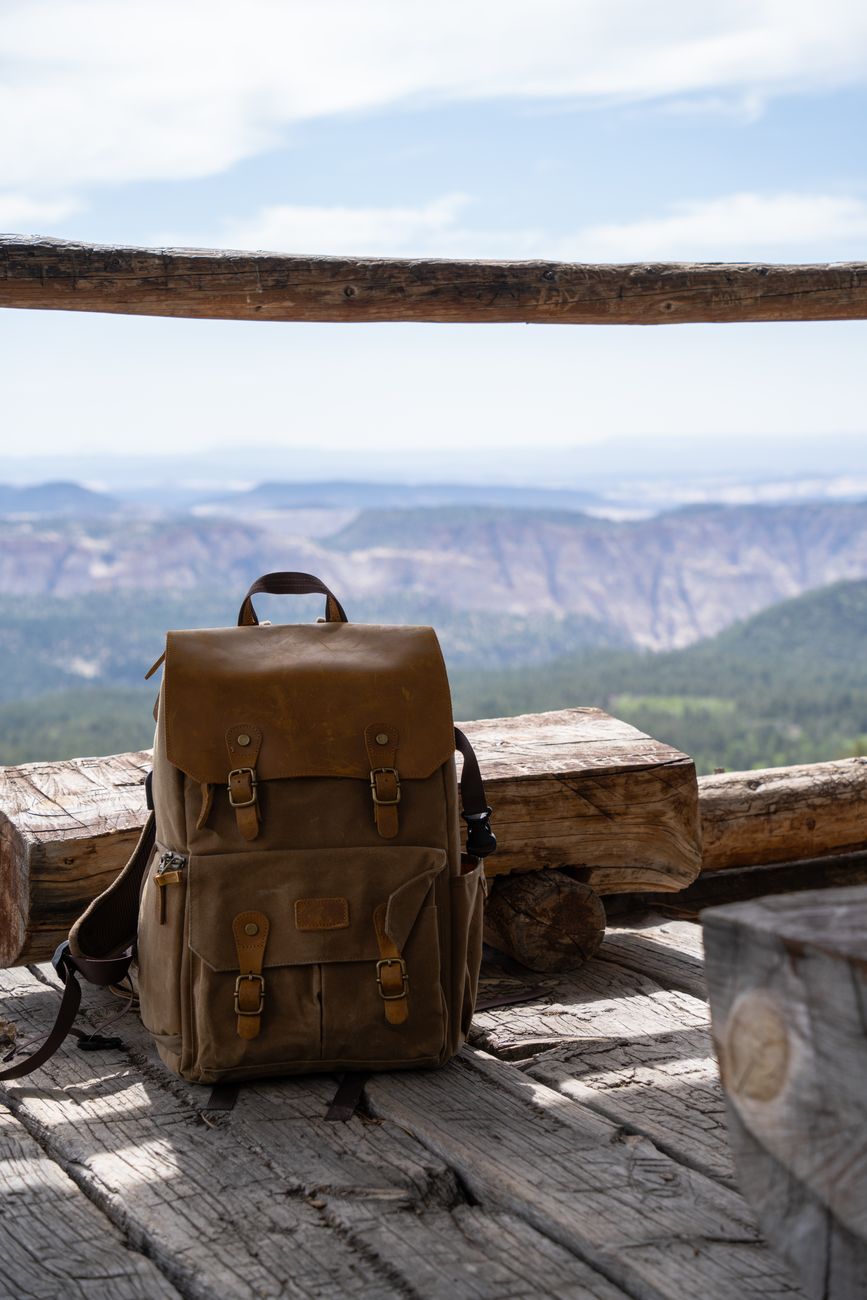
A lock matters only when it interrupts a realistic path to unauthorized access.
A range bag can look like gym gear on the passenger seat, yet it may hold firearms, loaded magazines, ammunition, spare optics, identification, and membership cards. The vulnerable moments are often mundane: unloading at a public firing line, stepping into a restroom, paying at a counter, or leaving the bag inside a vehicle during an errand.
The useful question is not whether a bag has a lock, but who might reach its contents, when, and by what route. A zipper lock can deter casual opening and keep a curious child or opportunistic passerby from immediately accessing the main compartment. It does not make a soft bag theft-proof, prevent the whole bag from being carried away, or substitute for a vehicle’s secure storage. Its value depends on the bag’s construction, the lockable zipper pulls, the time it is unattended, and whether firearms are separately enclosed in a purpose-built locked case.
When a lock makes sense
A range bag does not automatically need a lock for a routine trip. When it remains under the owner’s direct control and the firearm is unloaded and carried in an appropriate separate case, adding a small lock to the accessory bag may provide little practical benefit.
A lock becomes more useful when the bag could be out of immediate reach: during a stop between locations, in a shared vehicle, around children or other unauthorized people, or when the bag must be left in a controlled storage area. It can also help meet a range, event, transport-provider, or property policy that calls for secured equipment.
The important distinction is between the bag holding accessories and the case containing the firearm. A locked range bag does not necessarily satisfy a policy requiring a lockable hard-sided firearm case, nor does a separately cased firearm make every bag policy irrelevant.
Before traveling, consult current guidance from relevant local authorities, the range, and any venue or carrier involved. Requirements vary by jurisdiction and facility, so there is no single universal lock rule.
A locked bag is not a locked firearm
A padlock through two zipper pulls only restricts access to the bag’s main compartment. It does not turn every item inside into a secured object: a soft bag can be carried away intact, opened elsewhere, or cut. More importantly, one container may hold items with very different security implications.
Treat the contents separately
Assess each firearm and controlled component by its own condition and container. A handgun in a locked, hard-sided case within the bag remains protected if the outer bag is opened; a loose handgun beside a locked zipper does not. The same distinction can apply to a serialized frame, receiver, or other regulated component, depending on its design and applicable rules.
A practical range setup often separates items this way:
- Firearms: unloaded and enclosed in an individual case or locking device appropriate to the firearm.
- Serialized components: retained in the same secured case as the firearm when practical, rather than left loose among accessories.
- Ammunition and magazines: contained to prevent spills, damage, and unintended mixing; their storage needs are not identical to a firearm’s.
- Ear and eye protection, tools, targets: organized for convenience, not mistaken for a security layer.
The range bag then serves as transport and organization, while the inner container provides the meaningful boundary for the firearm itself.
A zipper lock controls access—not the bag itself
A lock can stop the bag from being opened normally, but an unanchored soft bag can still be carried away intact.
The thief does not need to defeat the zipper at the scene. The entire bag can be removed and opened later, away from witnesses.
It can still deter curiosity, prevent an accidental zipper opening, and make casual access more conspicuous.
Delay changes behavior. Someone looking for an easy opportunity may avoid a bag that requires tools, time, or noticeable handling.
The zipper pulls, zipper track, fabric, seams, and lack of an anchor often remain weaker than the lock.
Physical security is only as strong as the easiest alternative attack path. Cutting fabric or taking the whole bag may bypass the lock entirely.
Risk changes with the setting
An attended range bay is usually the lowest-risk part of the trip. The bag remains within sight, other shooters and range staff are nearby, and firearms are normally being handled or staged under active supervision. A small zipper lock adds little in that moment unless the bag must be left behind briefly.
Indoor and outdoor range differences
At an indoor facility, the greater exposure may be the lobby, retail counter, parking area, or any point where a bag is set down while checking in. Outdoor ranges can add distance: a vehicle may be parked far from the bench, shooters may walk downrange during a cease-fire, and a bag can sit unattended while targets are changed. Visibility matters more than whether the range has walls.
Transitions deserve the closer look
The pre- and post-range sequence commonly creates the clearest reason for added security. A bag may be carried through a parking lot, placed in a vehicle during an errand, or left while gear is loaded and unloaded. In those intervals, a zipper lock can discourage opportunistic opening, but it does not prevent the entire bag from being taken.
A practical risk comparison:
| Situation | Typical concern | What a bag lock changes |
|---|---|---|
| Attended firing line | Direct observation | Usually limited benefit |
| Vehicle stop or parking lot | Theft or casual access | Delays opening; does not secure the bag |
| At-home staging | Household access | Can add a modest access barrier |
| Shared vehicle or shared residence | Other people handling the bag | Helps signal and slow unauthorized opening |
For at-home storage, a range bag is generally a temporary transport item rather than a primary security container. In shared-access environments, separating firearms from general range gear and using a purpose-built locked container provides a more meaningful boundary than relying on bag zippers alone.
Verify the rule behind the lock
A range’s arrival policy, a transportation rule, and a carrier’s baggage standard can use the same word—locked—while meaning very different things. A club may simply want firearms unloaded and cased until the firing line. Another facility may require a closed case from the parking area, prohibit handling in vehicles, or specify a particular arrival procedure.
Transport definitions can be narrower still. A rule may distinguish between a firearm that is merely inside a locked bag and one enclosed in a locked, hard-sided container. It may also define “unloaded,” “readily accessible,” or permissible storage locations differently. Lockable zipper pulls only join two sliders; they do not turn a soft bag into a rigid case, prevent the bag from being carried away, or necessarily secure every opening.
The controlling details are often the least obvious: whether the lock must resist forced entry, whether each firearm needs its own enclosure, and whether a vehicle, public land, or a commercial carrier is involved. A product description saying “TSA lockable” is not proof that the bag satisfies any firearm-related requirement.
A range’s house rule can be stricter than the baseline rule for travel or storage. Conversely, compliance with a range’s check-in procedure does not establish that a soft, locked bag meets a separate transport definition.
-
Read the range’s current posted rules
Check its website, reservation material, and signage; ask staff about arrival, casing, and parking-lot handling.
-
Identify the exact travel context
Separate a drive to the range from air travel, interstate travel, and travel on public land or through restricted property.
-
Use primary current sources
Consult the relevant official agency, statute or regulation text, and carrier policy—not a bag listing, forum post, or old video.
-
Match the language to the bag
Compare terms such as “locked container,” “hard-sided,” “unloaded,” and “inaccessible” with the bag’s actual construction and closures.
-
Keep the source with the plan
Save the rule page and its update date, since facility policies and transportation requirements can change.
A lock only works as well as the bag around it
- Zippers that meet cleanlyLockable pulls need aligned holes when the bag is fully closed. A covered zipper track and close-fitting pulls make casual access less convenient than widely spaced hardware.Look forPaired metal pulls that align under normal packing pressure.AvoidOverstuffed compartments that leave a lock partly engaged or exposed.
- Structure and a real anchor pointPadding protects contents, but it also helps the bag retain its shape so the zipper can close consistently. Reinforced handles, shoulder-strap mounts, and a purpose-built tether loop matter more than a lock attached to thin fabric.Look forStiffened panels and reinforced attachment points sized for the intended lock or cable.AvoidTreating a soft zipper track or fabric loop as theft-resistant anchoring.
- A layout that preserves controlled accessSeparate, closable compartments keep sensitive items from becoming visible when ordinary range gear is retrieved. A range bag with a low-profile, non-tactical appearance can also attract less attention during the walk between vehicle and facility.Look forDedicated compartments that open independently and keep contents organized.AvoidOne deep main pocket that exposes everything whenever it is unzipped.
- Lock style matched to the transitionSmall keyed locks are simple and do not depend on a remembered code; combination locks avoid a separate key but require clear dial access. Mini cable locks can join zipper pulls with more flexibility, yet none prevents removal of an unanchored soft bag.Look forCompact hardware that closes fully without interfering with the zipper or carry handles.AvoidOversized locks that advertise the bag’s contents or strain zipper pulls.
Small failures that defeat the lock
A lock can look properly fitted while leaving an alternate opening. Many range bags have secondary zipper pulls, pass-through openings, or two zipper tracks that can be pulled apart far enough to reach contents. Every access path—not merely the main compartment—matters when assessing the setup.
Keys create a similar weak point. A spare key clipped inside an exterior pocket, under a vehicle mat, or on the same key ring as an easily accessible bag invites bypass rather than delay. Combination locks avoid a loose key, but only if the code is not written on a tag, stored with the bag, or routinely shared.
Vehicle storage deserves especially cautious assumptions. A locked vehicle is not equivalent to attended control, and an unanchored bag can be removed intact even when its zippers are locked. Long stops, visible range markings, and leaving the bag overnight all increase exposure.
The durable solution is usually a routine simple enough to survive fatigue and haste:
- check every compartment and zipper path before leaving;
- keep keys or codes separate from the bag;
- move regulated items into their intended secure container promptly;
- avoid arrangements that require several awkward steps at every transition.
A complicated locking scheme that is skipped after a long range day offers less protection than a modest setup used every time. The best arrangement makes the secure action the easiest default.
Make the call before the trip
- Continuous supervision reduces the value of a zipper lock; unattended transitions increase it.
- A separately cased firearm remains the meaningful security measure when one is required or appropriate.
- Any range-specific condition deserves verification before arrival, not an assumption based on the bag’s lock.
A lock can be a sensible extra delay when a bag may pass through parking areas, shared spaces, or other moments of uncertain control. Its value drops when the bag stays attended—and it never turns a soft bag into secure firearm storage.
Before leaving, consider who can reach the bag, whether the firearm is in its own suitable case, and what the destination requires. Safe handling, secure storage, and verified facility rules remain the foundation; the bag lock is only a situational layer.





9 Comments
The vehicle part is where I struggle. Sometimes I have to stop for gas or pick up my kid after the range. Is the practical advice basically “don’t leave it in the vehicle if you can avoid it,” even if the bag has a zipper lock?
That is the safer practical approach. A zipper lock can add a little delay, but a soft bag left in a vehicle is still easy to remove or attack away from view. Plan errands around the trip when possible, keep the bag out of sight during unavoidable transitions, and check the transport and storage rules that apply where you are.
Yep. The lock is mostly for access, not for solving the “someone smashed a window and took the whole thing” problem. I try to make the range stop the last stop before going home.
I appreciated the reminder about alternate openings. My old range bag has a main zipper lock point, but the side compartment zipper can be pulled open enough to reach inside anyway. It looked “locked” at a glance, which is probably worse because it encouraged false confidence.
I ended up moving the actual firearm into a separate lockable case inside the bag. Not theft-proof, obviously, but it makes the access-control goal clearer.
Good article, although I wish more bags advertised whether their zipper tracks can actually be defeated by spreading the teeth or sliding a pen through them. “Lockable zippers” sounds impressive on a product page, but the surrounding fabric and zipper design matter a lot more than the tiny lock.
Maybe I’m overly cautious, but putting the key in the same outer pocket as the locked zipper feels like locking your front door and taping the key to it. Convenient, sure. 😅
Does a TSA-style combination lock create any issue if local transport rules require a locked container? I know the article says to verify the actual rule, but I wasn’t sure whether “TSA approved” makes it less meaningful because it can be opened with a master key.
What about a range that requires firearms to arrive in a “locked case,” but doesn’t define case very well? Would a padlock through the zipper pulls usually count, or is that something you really have to get clarified by that specific range?
Get clarification from that specific facility. “Locked case” can mean different things in different policies, and a locked zipper bag may or may not meet the range’s intended standard. Ask them whether a soft case with locked zippers is acceptable, ideally before making the trip.