
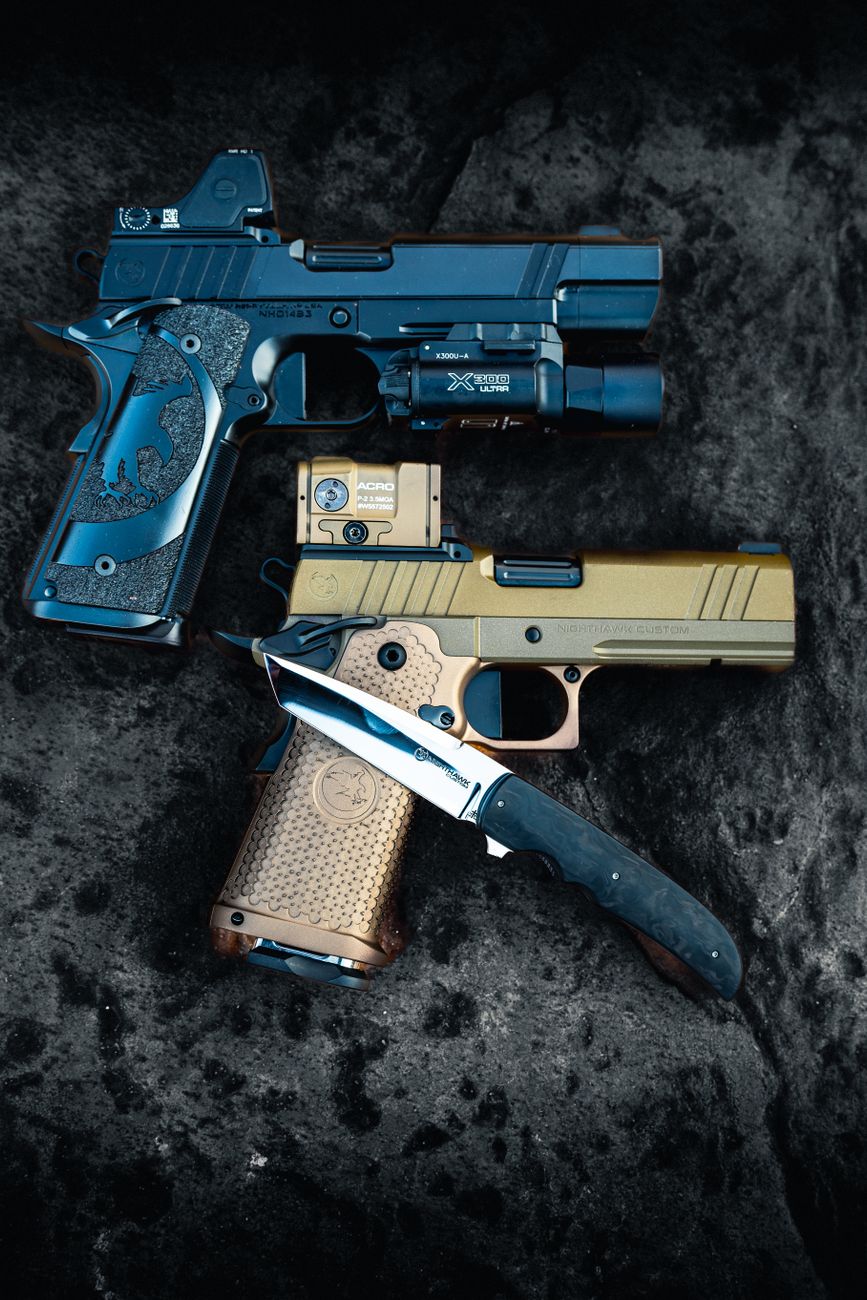
A rail match is only the first test.
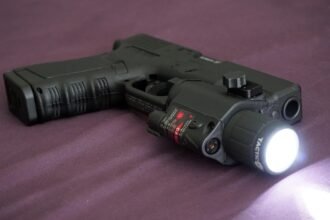
A light can lock onto the rail, clear the trigger guard, and still be the wrong match. If the support-hand thumb must stretch for the switch, the bezel throws a barrel shadow into the beam, or the housing hangs far past the muzzle, “fit” becomes a paper spec rather than a working setup. Real fit is a whole-system question: rail slot location, trigger-guard shape, slide length, optic height, and how the controls line up when the gun is actually gripped.
Holsters matter just as much. Many pistols accept a light physically but lose broad holster support once a long or uncommon model is attached. For some owners, the better answer starts with whether a mounted light belongs on the firearm at all, because a poor combination can add bulk faster than it adds capability. FIT means access, beam clearance, and carry compatibility—not just rail engagement.
Start with the gun’s actual job
Before lumen ratings or brand names, the firearm’s role narrows the field. A light that works well on a nightstand pistol can be a poor match on a concealed-carry gun, and a rifle setup follows different rules entirely. Intended use determines how much bulk, front weight, spill, throw, and snag risk are acceptable.
- Concealed carry: a short body, low-profile controls, and minimal added weight matter most. A workable fit also depends on real holster support; a technically compatible light is useless if carry options disappear.
- Bedside pistol: larger size is easier to tolerate. Longer runtime, simple activation, and a broader beam for room distances often matter more than deep concealment.
- Duty or open carry: durability, repeatable switching under stress, and retention-safe holster compatibility usually outrank compactness. Extra weight is acceptable if reliability improves.
- Rifle or PCC: mounting position, pressure-pad options, and stronger throw become more important. Longer sightlines and barrel shadow make rifle lights behave very differently from pistol lights.
Starting with role prevents false comparisons. It quickly removes lights that can mount to the gun but undermine storage, handling, or daily carry.
Check the rail before comparing light models
-
Identify the rail pattern
Treat 1913/Picatinny, Glock-style, and short proprietary rails as different interfaces. Similar width does not guarantee that a locking bar will seat correctly.
-
Find the usable slot
The critical detail is often the first slot behind the muzzle, not the total rail length. Slot position sets where the light sits relative to the trigger guard and the support-hand reach.
-
Check clamp shape and travel
Some clamps grab side faces; others rely on a crossbar dropping cleanly into a slot. A light can look aligned yet still rock, bind, or stop short if the clamp geometry mismatches the rail.
-
Confirm trigger-guard clearance
Compact frames often leave little space between the guard and the rail slot. That gap determines whether paddles can be reached without crowding the finger outside the trigger area.
-
Look for model-specific keys or inserts
Interchangeable rail keys can solve fore-aft placement, but they do not turn every light into a true universal fit. Secure lockup matters more than marketing language.
A light may mount to several pistols yet still fit one poorly. The usual failure points are slot spacing, crossbar depth, and clamp contact surfaces—small geometry differences that decide whether the setup stays stable under recoil.
Check the gun-and-light profile
A light can mount correctly and still fit badly once the whole front end is viewed in profile. The key question is where the bezel ends relative to the muzzle.
- Flush or slightly behind the muzzle: usually trims bulk and reduces holster issues.
- Past the muzzle: adds length, can collect more blast residue, and may change how quickly the gun clears a holster.
- Far behind the muzzle: often increases sight shadow, especially with compact pistols and shorter lights.
Watch the crowded front end
Threaded barrels, suppressors, and compensators change the equation. A long can or large comp can throw a heavy shadow, vent gas and carbon onto the light, or leave too little clearance between hot parts and the bezel.
Support-hand space matters too. On short frames, a wide light can crowd the index finger of the support hand or force a less secure grip. That discomfort often appears only when the gun is presented quickly, not when it is examined on a bench.
Holsters make these geometry problems final. Many fit the light model first and the gun second, so even small differences in bezel length or trigger-guard position can break compatibility.
A setup may lock onto the rail yet still fail on clearance, grip space, or holster retention. Those are common deal-breakers.
Make sure the switch works with the grip
A weapon light is not truly compatible if activation changes the firing grip. A model may clear the rail and fit the holster, yet still fail in use when the support-hand thumb must overreach, curl under the trigger guard, or break wrist alignment to press the switch.
Good fit shows up in small details:
- Momentary and constant-on can be reached without shifting the hands.
- The switch sits where the thumb lands naturally during recoil control.
- Activation is deliberate, not so exposed that grip pressure causes negligent white-light discharge.
- The toggle or paddle remains usable around gloves, suppressor heat, and front sight shadow.
Remote switches deserve the same scrutiny. A tape switch can help on long guns, but on a handgun it often adds routing problems, snag points, adhesive failure, and compromised holster clearance. If cable placement forces awkward support-hand placement or blocks takedown levers, the system fit is poor.
The practical test is simple: present the gun, acquire a normal two-hand grip, and verify that light activation happens without visible grip distortion. If the hand must hunt for the switch, the light fits the rail but not the gun-user system.
Rifles and pistols fit differently
On rifles, the mount often matters as much as the light body. Handguard length, front sight placement, suppressor diameter, and sling hardware decide whether the beam clears the barrel or throws splash back toward the optic. A light can fit the rail and still be a poor match once thumb reach and sling routing are considered.
For carbines, placement belongs in the buying decision, not the install stage. The best M-LOK mounting position for reach and beam usually balances four things:
- Support-hand access: momentary and constant activation without breaking grip.
- Shadow control: minimal blockage from the barrel, suppressor, or front sight.
- Sling clearance: no crowding around QD cups, loops, or wrap points.
- Handguard space: room left for irons, lasers, hand stops, and barricade technique.
Pistols are simpler because the rail largely fixes location. There, fit is driven more by rail key geometry, trigger-guard clearance, and whether the chosen light still preserves dependable holster compatibility.
Output numbers do not tell the whole story
Beam pattern matters more than raw lumens alone.
Indoors, useful spill and a controlled hotspot can reveal a room without harsh splash from white walls or mirrors.
High candela helps at distance, but it can feel overly tight up close.
A very intense hotspot may overpower nearby detail and increase reflective splash on glossy paint, glass, or light-colored surfaces.
Spill supports peripheral awareness and faster transitions.
Mixed-use guns often benefit from enough side light to read corners, hands, and movement outside the hotspot, while outdoor rifles may favor more reach.

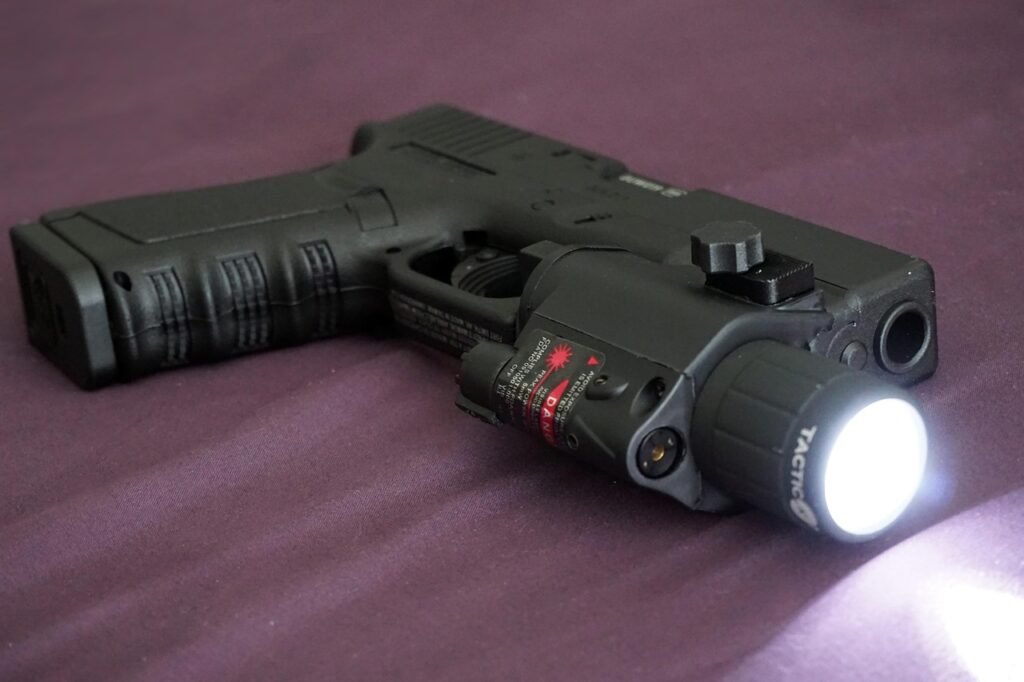
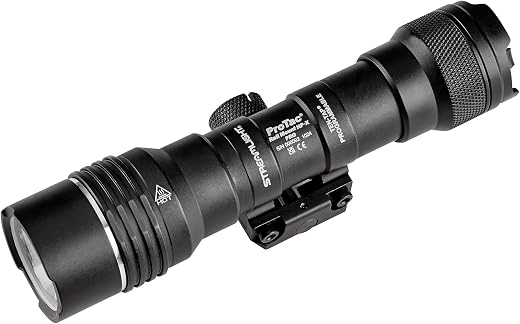
Ownability matters as much as rail fit
A light can mount cleanly and still be the wrong match if its power system and upkeep do not suit the gun’s role. Duty or staged-use guns often favor disposable cells for long shelf stability, while frequent practice can make rechargeables more practical. The real tradeoff is explained in the battery-format comparison.
Runtime also needs closer reading than the headline number. Many lights start bright, then step down as heat builds or voltage falls. On a compact pistol, that can be acceptable because the light is used in short bursts; on a carbine, sustained output may matter more.
What to check before calling it a good match
- Charging method: removable cell, magnetic port, or onboard USB
- Durability: recoil resistance, lens protection, and secure battery contact
- Sealing: rain and splash resistance matter more on exposed rifles
- Support: holsters, replacement switches, rail keys, and spare mounts
A slightly larger light can make more sense if it is easier to feed, harder to damage, and simpler to keep in service.
Use a simple pass-fail test
-
Rail lockup
Pass only if the clamp and rail key seat positively in the gun’s actual slot. Marginal fit, improvised spacers, or partial engagement fail.
-
Front-end clearance
The bezel must coexist with the muzzle, support hand, sights, and any can or comp without role-breaking overhang or shadow.
-
Natural activation
The switch must work from the normal firing grip without grip shift, hand crowding, or frequent accidental light discharges.
-
Platform compatibility
Pistols pass only if holster support remains. Rifles pass only if sling routing, handguard space, and barricade use stay clean.
-
Sustainment
Battery format, runtime behavior, sealing, and mount ecosystem must fit the intended use. One fail is enough to move on.

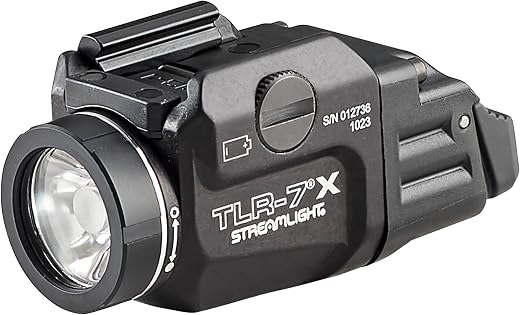
Fit Is a System, Not a Spec
A weapon light truly fits only when five pieces align: the gun’s role, the rail and mounting hardware, physical clearance, clean switch access, and a beam pattern that suits the environment. A model can lock onto the gun yet still fail in use if it crowds the grip, throws the wrong shape of light, or breaks holster compatibility.
That is why the brightest, newest, or most popular option is not automatically the best match. Real fit is practical fit: secure, reachable, durable, and appropriate for the specific platform and task.




5 Comments
This was actually helpful because I kept assuming “fit” just meant “does it clamp on the rail.” 😅
When you say beam shadow and muzzle overhang, is a little bit of shadow normal on a pistol or is that basically a sign the light is too short / mounted wrong?
A little shadow can be completely normal, especially on pistols. The question is whether it meaningfully blocks the useful part of the beam at the distances you care about.
If the bezel sits well behind the muzzle, you may see more shadow or more reflective splash off the front of the gun. If it sits closer to the muzzle, that usually reduces shadow, but then you still have to check clearance, holster fit, and how much overhang you’re comfortable with. So it’s less “any shadow is bad” and more “does the shadow interfere with the job of the gun/light setup?”
Maybe this is a dumb one, but on pistols how are people testing switch reach realistically? In the store everything feels “fine” for 10 seconds.
Then later you actually shoot and realize your grip gets weird when you try to activate the light. Are you recommending dry practice only, or is there some simple check before buying?
Not dumb at all. I got burned by that exact thing.
What helped me was presenting the pistol normally with eyes closed, then seeing where my support-hand thumb naturally landed. If I had to hunt for the switch or rotate my grip, it was a bad sign even before live fire.
Beginner question here: how do I tell what rail standard I have without sounding dumb at the gun counter? The article mentions slot location, clamp geometry, and rail keys, but I’m not really sure what I’m supposed to be looking at in real life.