
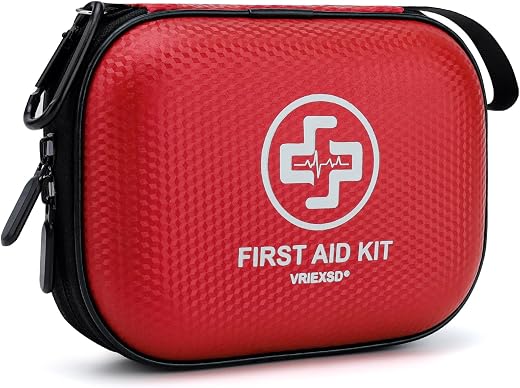
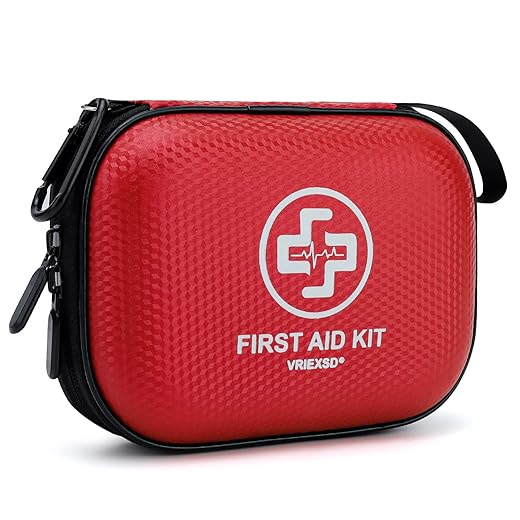
Mini First Aid Kit - 150 Piece Small Waterproof Hard Shell Medical Kit | Compact First Aid Kit with Comprehensive Supplies for Home, Car, Travel, Camping,...

DMI First Aid Kit, Mini 20 Piece Kit, Small and Compact All Purpose Use for Minor Cuts and Scrapes, Durable Water Resistant Case, Convenient and Portable,...

Coleman All Purpose Mini First Aid Kit - 27 Pieces, Small
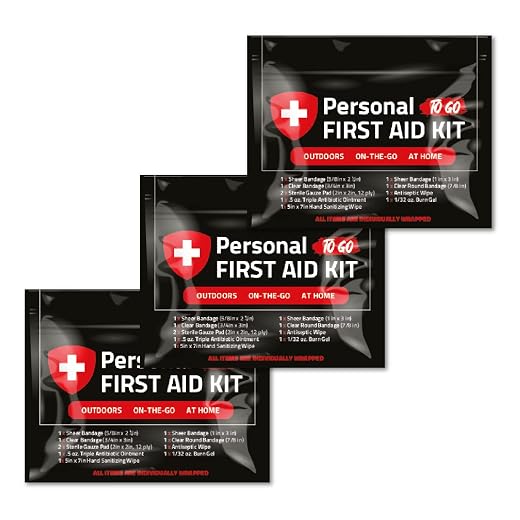
3 x Portable Travel Size First Aid Kit | Perfect for Home, Office, Car, School, Business, Travel, Hiking, Hunting, and Outdoors | Individually Wrapped First...

Compact First Aid Kit (228pcs) Designed for Family Emergency Care. Waterproof EVA Case and Bag is Ideal for The Car, Home, Boat, School, Camping, Hiking,...
A first aid kit left in a drawer has perfect capacity and zero everyday reach.
A paper cut at a café, a blister halfway through a commute, or a loose button of gear on a day out exposes the same trade-off: a kit only helps when it is present. Overstuff a pocket pouch and it migrates to a desk or car; shrink it too far and it may hold little beyond a couple of adhesive bandages.
“Pocket” need not mean one specific trouser pocket. A slim tin can ride in a jacket or cargo pocket, a soft kit can disappear into a work bag, and several small packs can place basic supplies in a vehicle, travel pouch, or daypack. The useful benchmark is not headline item count but practical coverage: wound-covering basics, a way to clean or protect a minor area, and packaging that survives the moisture, friction, and neglect of daily carry. Rigid cases protect contents well but consume more space; flexible pouches conform better, though their contents can be easier to crush. The right scale is the one likely to remain within reach.
- Item counts can exaggerate capability when a kit contains many small, duplicate bandages.
- Water resistance protects supplies from rain and spills; it does not necessarily make every closure waterproof.
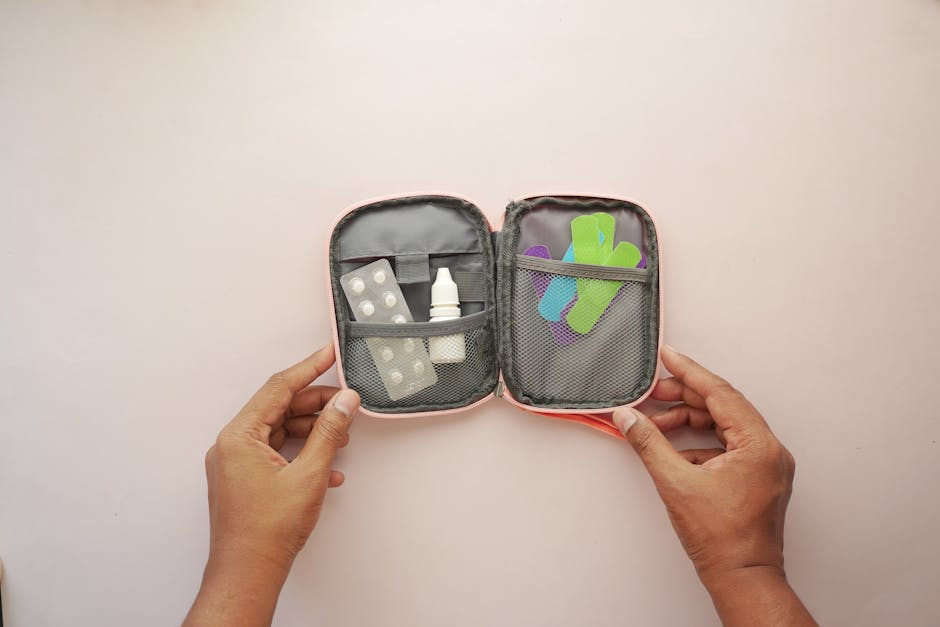
A pocket kit is a container-and-contents system
Assessment starts with the core essentials of EDC first aid, then asks whether the case keeps those supplies usable and reachable.
Dimensions matter less than thickness, edge shape, and rigidity. A flat tin may disappear in a bag yet create an uncomfortable pocket hotspot; a soft pouch conforms better but can crush delicate items.
Zippers, latches, and seams determine whether supplies stay contained. Water-resistant fabric helps with splashes, while a hard-shell seal offers more confidence around rain, sweat, and abrasion.
Supply counts can exaggerate capability. Useful mixes prioritize common minor-care items, clearly separated components, and room for replacements after consumables are used.
Refillability matters: standard-size bandages, wipes, and tape can extend a kit’s service life without replacing the carrier.
“Waterproof,” “compact,” and “20-piece” describe only part of the story. A kit deserves comparison only after its closure, internal layout, replaceable contents, and real carrying comfort are considered together.
Pick the kit that will actually stay nearby
A kit that fits a pocket but is too rigid, heavy, or noisy often migrates to a drawer. Coleman and DMI are the genuine pocket-scale choices here; the larger kits are more practical as staged supplies. After opening any kit, its useful capacity is clearer than its piece count: bulky gauze, tape rolls, and duplicate packets consume space quickly.
Coleman Mini: protection over maximum slimness
01
Best for durable everyday carry and versatile minor-injury coverage
The Coleman All Purpose Mini First Aid Kit takes the familiar mini-kit formula and puts it in a small embossed metal tin. Its 27-piece selection covers the ordinary nuisances that tend to justify everyday carry—small cuts, scrapes, blisters, and insect stings—rather than trying to imitate a larger home kit.
This is a natural fit for a work bag, purse, daypack, glovebox, or a roomier cargo pocket. The rigid case also makes the kit easy to recognize and retrieve among loose gear. For carry systems where a kit is regularly compressed under books, tools, or travel items, that physical protection can matter more than shaving the last bit of thickness.
- Rigid tin helps shield supplies from crushing
- Recognizable embossed case is quick to locate
- Broad minor-injury mix for its footprint
- Latex-free bandages widen general usability
- Tin is less forgiving than a soft pouch in slim pockets
- Fixed small capacity limits additions and refills
- Metal edges and corners can feel bulky against the body
In brief A durable, recognizable mini kit that makes most sense when carried in a bag or a pocket with some spare volume. Its protection is the trade-off for a less body-conforming shape.
For everyday carry that involves a bag or roomier pocket, the Coleman tin is a particularly convincing baseline. The case protects its modest, practical supply set rather than merely packaging it.
Those prioritizing an almost unnoticeable front-pocket profile may prefer a flexible pouch or a smaller custom setup. For consistent carry amid other gear, the tin’s structure and instant recognition can be worth the added rigidity.
Top choice for simple, low-cost portability
The DMI Mini is a bare-minimum backup kit built around supplies for minor cuts and scrapes, housed in a water-resistant white case. At 4 × 3.5 × 1 inches and about 0.13 lb, it makes sense where every millimetre matters: a small bag compartment, desk drawer, glove box, or as a second kit alongside a more capable setup. Its 20-piece count sounds substantial, but ten pieces are adhesive bandages; count alone says little about wound coverage, tool variety, or whether the case truly disappears in a particular pocket.
- Very small, light case
- Water-resistant outer case
- Low-complexity backup coverage
- Useful bandage-heavy mix
- Limited gauze supply
- No dedicated trauma tools
- One-inch depth may print in pockets
- Twenty pieces overstates range
Hard-shell mini for a better-stocked bag
A compact option with an unusually large supply count
This 150-piece mini kit trades the near-flat profile of a tin or soft pouch for a compact hard case that is more at home in a daypack, glove box, work bag, or roomy cargo pocket. The appeal is not merely the item count: a structured interior makes small components easier to find than loose supplies packed into a pouch.
The shell also adds a useful layer between contents and the knocks, compression, and incidental moisture of daily transit. Its weather resistance is conditional, however. It depends on an undamaged case and a closure that remains fully seated; a warped shell, worn latch, or partly closed zipper can defeat that protection.
- Broad 150-piece supply assortment
- Rigid case resists bag compression
- Structured storage aids item retrieval
- Waterproof-shell design suits travel
- Thicker than ultra-slim pocket kits
- High piece count can overstate capability
- Closure condition governs weather protection
- Less discreet in fitted pockets
Useful when multiple locations need basic emergency supplies
Portable Travel First Aid Kit Three-Pack — coverage where routine happens
This set makes more sense as three small, recurring-location kits than as a single upgraded everyday-carry pouch. One can live in a work bag, vehicle, or desk drawer while another remains with travel gear, reducing the chance that basic supplies are only available in the place left behind.
Its travel-size format suits households and commuters who prefer distributed readiness over carrying one kit constantly. That convenience also turns inventory into a three-location job: after a kit is opened, each separate pouch needs its contents checked, replaced, and returned to its assigned spot.
- Three kits support recurring locations
- Separately wrapped items simplify replacement tracking
- Small format fits bags and drawers
- Three units create three restocking points
- Not a single premium, deeply equipped kit
- Contents can become unevenly used
A spacious choice for households and larger groups
This 228-piece kit trades literal pocket carry for a more complete shared-resource format. Its waterproof EVA case makes more sense in a vehicle, stroller, daypack, boat locker, or household grab bag, where several people and a longer outing can justify broader coverage. That added range matters only when the case is reachable: a well-stocked kit at the bottom of a packed bag is less useful for a minor incident than a small kit carried close at hand.
- 228-piece assortment
- Protective EVA case
- Suited to shared storage
- Waterproof case design
- Not pocket-sized
- Bulk can reduce access
- More supplies to inspect
What compact-kit labels leave out
Count often reflects individually wrapped bandages, wipes, and duplicate small items.
A useful pocket kit balances wound-covering supplies, cleaning items, barriers, tools, and any personal add-ons against the space it occupies.
Hard shells, EVA cases, and water-resistant zippers offer different levels of splash and compression protection.
Seams, zipper paths, repeated opening, and condensation matter as much as the case material; sealed individual packets add another layer of protection.
Generic refills may not fit the case, match its layout, or replace the most-used components.
Contents benefit from periodic inspection for missing, damaged, or expired items. Adding a quality EDC tourniquet moves the setup into a specialized trauma category, with more bulk, training considerations, and a different decision context.
Bandages, gauze, cleansing wipes, gloves, tape, and small tools are common compact-kit categories. Specialized trauma components are not simply “extra pieces”: they can change the kit’s footprint, organization, and the knowledge needed to evaluate their role.
Make the pocket prove the kit
-
Measure the usable space
Compare the closed case—not its contents—with the pocket’s width, depth, and opening. A kit that clears the opening but rides above the pocket line is prone to shifting.
-
Sit and move with it
Rigid tins can protect supplies well, but their corners may press into a thigh or hip when seated. Soft EVA cases are usually kinder against the body, though bulk still matters.
-
Audit the pocket’s competition
Keys, a phone, wallet, knife, or flashlight can turn a compact kit into an awkward stack. A dedicated pocket often makes the Coleman or DMI more realistically carryable.
-
Check closure and snag points
Test whether a zipper pull, tin lip, or loose loop catches the pocket seam during removal. Fast access depends as much on the pocket opening as on the kit’s closure.
-
Match protection to exposure
Sweat, rain, and damp bags can degrade paper packaging and adhesive supplies over time. For wet commutes, waterproof bandages suited to compact kits can be worth checking alongside the case seal.
A kit buried beneath other EDC may be technically portable but functionally slow. The most practical placement leaves its outline easy to identify and lets the case come out in one motion. Hard-shell kits often suit a bag’s outer pocket; slim bandage-focused cases tend to work better in a trouser or jacket pocket.
Keep the kit ready after purchase
An initial inventory defines the factory contents, not a permanent state of readiness. Additionally, pocket carry exposes a pocket first aid kit to compression, lint, perspiration, and temperature swings. Even a waterproof or water-resistant claim matters only while the case, gasket, zipper, or latch remains intact.
Inspect the kit, not just its label
A brief periodic check reveals bent tins, cracked shells, damaged seams, loose closures, and damp packaging.
Each sterile wrapper deserves a look for tears, discoloration, swelling, or an unreadable date, since packaging condition can matter as much as the date printed on it.
Replacement is simplest when the original layout is retained.
Note what was used, discard compromised items, and restock compatible sizes without overpacking the closure.
The three-pack needs this check at each location.
The Coleman tin and EVA case benefit from confirming that lids still close cleanly.
Additionally, a visible, dry, intact pocket first aid kit is more dependable than a fuller kit left unexamined.
A kit that no longer shuts cleanly can expose supplies to moisture and abrasion. Check the latch, zipper, hinge, or gasket whenever contents are refreshed.
Pocket First Aid Kits: Common Questions
Does a higher piece count mean a better pocket first aid kit?
Not necessarily. Item counts can exaggerate capability when a kit contains many small, duplicate bandages. A useful pocket kit balances wound-covering supplies, cleaning items, barriers, and tools against the space it actually occupies.
Does "waterproof" mean a kit's contents always stay dry?
Not in every situation. Hard shells, EVA cases, and water-resistant zippers offer different levels of splash and compression protection, and that protection depends on an undamaged case and a closure that remains fully seated—a warped shell or worn latch can defeat it.
Which kit works best for a true front pocket?
The DMI Compact Twenty-Piece is the leaner true-pocket candidate at 4 × 3.5 × 1 inches, focused on adhesive bandages, gauze, tape, and alcohol swabs. The Coleman Mini Kit’s crush-proof tin is better suited to a bag, cargo pocket, or roomier pocket where its rigidity is less of a drawback.
How often should a pocket first aid kit be inspected?
A brief periodic check reveals bent tins, cracked shells, damaged seams, loose closures, and damp packaging. Each sterile wrapper deserves a look for tears, discoloration, swelling, or an unreadable date, since packaging condition can matter as much as the date printed on it.
When does a larger kit make more sense than a pocket-sized one?
Larger kits like the 150-piece hard shell or 228-piece family EVA case make more sense in a daypack, glove box, or household grab bag, where a longer outing or multiple people justify broader coverage. A well-stocked kit is only useful when it stays reachable—not buried at the bottom of a packed bag.
Match the Kit to the Carry
- For literal everyday carry, a smaller kit that is visible and easy to re-close is more credible than a fuller kit left in a drawer.
- Distributed packs work best when each location has an identified owner for periodic checks and replenishment.
For a coat, cargo pocket, or small day bag, the Coleman Mini Kit is the most balanced starting point: its crush-resistant tin helps protect basics from the pressure that defeats soft pouches. The DMI Compact Twenty-Piece is the leaner alternative for a modest, bandage-centered reserve where water resistance and low bulk matter more than breadth.
The Mini Waterproof Hard Shell Kit makes more sense in a backpack, glove compartment, or travel bag, where its broader assortment can justify the extra volume. The Portable Travel Three-Pack suits people maintaining basic coverage across a desk, car, and bag. For shared outings, a vehicle, or a household grab bag, the Family Emergency EVA Kit offers the most practical capacity. In every case, the useful kit is the one that stays close, opens without a search, and keeps its contents dry, legible, and intact.


9 Comments
Glad you called out the “waterproof” wording. A water-resistant zipper or EVA shell is not magic when the kit gets soaked, and individually wrapped items can still get gross after repeated heat and humidity cycles.
People see waterproof and apparently picture it surviving a submarine expedition 😂
I appreciate that you didn’t automatically call the biggest piece count the “best” kit. A 228-piece kit sounds great until it lives under the car seat forever and nobody can find a bandage when they need one.
For under $15, would you pick the DMI or just buy loose supplies? Mostly looking for something to leave in my work backpack for little cuts and headaches, not a wilderness trauma setup.
For that use and budget, I’d lean DMI if you want a simple, contained starting point that is likely to stay organized in the backpack. Add only the personal items you’re comfortable carrying and check local guidance or labels for medications. Buying loose supplies can stretch the budget further, but it is easier to end up with a messy collection that never gets checked.
Why include the three-pack when the headline is about everyday carry? It sounds more like a home/car/office strategy than a pocket kit. Not saying it’s useless, just feels like it muddies the comparison a bit.
I bought a similar metal tin years ago and the hinge eventually got bent after bouncing around with tools. It still closed, but not tightly enough for wet weather.
Would you favor the Coleman over the hard-shell mini for someone who bikes to work year-round? My kit lives in a pannier, so pocket thickness isn’t really the issue.
For a pannier, I’d generally favor the hard-shell mini if its closure and stated weather protection are intact, because the extra organization and conditional moisture resistance matter more than the Coleman’s compact tin format. Put either kit inside a small sealed bag if it regularly faces heavy rain, and inspect it after a wet ride. A rigid case is helpful, but no compact kit should be assumed waterproof after repeated abrasion or a damaged closure.
Seconding the extra bag. I commute by bike too and a cheap zip freezer bag has saved my kit more than once. Not glamorous, but neither is opening a damp box of bandages.
I’m mildly skeptical of the DMI being called pocket-friendly at a full inch thick. Maybe jacket pocket-friendly, sure. For my normal phone/keys/wallet situation, even a slim kit has to compete for real estate.
Still, this was more practical than the usual “buy this 200-piece miracle bag” roundup.