
A small cut in the wrong place can make a simple task feel suddenly complicated.
A paper edge catches a finger on a train, or a knee is scraped halfway through a trail: there is blood, perhaps grit, and no tap in sight. The immediate aim is not to create a perfect sterile field. It is to remove visible contamination as gently as conditions allow and avoid adding more.
Soap is useful for washing intact surrounding skin, where oils and residue cling, but it is not the essential cleaning agent for an open cut. Clean running water is commonly used because its flow carries debris away; without it, a clean bottled-water rinse, sterile saline, or careful wiping around—not into—the wound can serve a similar practical purpose. Dry cloth, leaves, alcohol, hydrogen peroxide, and fragranced wipes can irritate damaged tissue or leave fibres behind. If debris cannot be lifted easily, the cut is deep or widely separated, or bleeding remains difficult to control, it warrants professional assessment.
- A sealed bottle of drinking water is generally preferable to an unverified natural water source for rinsing.
- Clean gauze or a low-lint cloth can apply steady pressure while the area is being assessed.
Decide whether cleaning can wait
A straightforward minor cut is usually shallow with clean edges; to clean a cut without soap, avoid harsh scrubbing. Additionally, it contains no embedded material and bleeds slowly under steady pressure. It may sting, but normal feeling and movement remain intact.
Cleaning is not the first priority when bleeding is heavy. Blood that spurts or pulses, rapidly soaks through material, or does not slow with continuous direct pressure calls for bleeding control first; see how to stop bleeding from a fingertip cut for the relevant technique.
Signs that change the response
Urgent assessment can be warranted when a cut is:
- Deep, widely gaping, or caused by crushing, with yellow fat, tendon, muscle, or bone visible
- Associated with numbness, weakness, loss of movement, pale or cool skin beyond the injury, or an impaired fingertip
- A bite, a puncture, a cut from a dirty or rusty object, or a wound with glass, metal, or other debris lodged in it
- Located near the eye, genitals, or a joint, or caused by a high-force mechanism
An object embedded in a wound is generally left in place rather than pulled out. The aim is to avoid turning a contained injury into heavier bleeding while arranging appropriate help.
A wound can look small at the surface yet involve deeper tissue. When any warning sign is present, rinsing and cosmetic tidying are secondary to controlling bleeding and obtaining prompt assessment.
Create a cleaner working area
Before handling the cut, reduce the number of contaminants likely to reach it. Move away from dirty water, soil, food-prep surfaces, and dusty wind if possible. A clean paper towel, unopened gauze pad, or the inside of a clean shirt can serve as a temporary work surface.
Hands are not the wound
Cleaning hands and cleaning a cut are different jobs. Alcohol hand gel, disinfecting wipes, and soap can make hands safer to work with when used as directed, then allowed to dry. They are not substitutes for rinsing a wound: alcohol, peroxide, scented wipes, and household disinfectants can sting and may irritate exposed tissue.
If running water and soap are unavailable, you can clean a cut without soap with a clean, damp cloth.
Additionally, rinse the area with bottled water.
Avoid touching the cut with fingertips after handling phones, door handles, tools, or packaging.
Useful nearby supplies often include:
- Sealed bottled water or plain drinking water for later rinsing
- Clean gauze, tissues, or paper towels for handling and covering
- Hand sanitizer for intact hands only
- Disposable gloves, if available and undamaged
- Tweezers, only if clean and needed for material sitting loosely on the surface
A practical fallback is to have one person hold the water or supplies while another handles the wound, limiting repeated contact with unclean objects.
Rinse debris away
Gentle irrigation uses a steady stream of sealed drinking water, sterile wound wash, or saline.
Additionally, it carries debris outward.
Unsuitable sources include lakes, puddles, unsealed containers, alcohol, and peroxide.
Soap belongs on intact surrounding skin, not inside the cut.
Home wound cleaning
Dr. Nisar explains wound-cleaning basics at home, complementing the gentle irrigation approach described here.
Stop at loose debris
Rinsing is intended to carry away loose surface dirt—sand, dust, dried blood, or small fibers resting in the cut. A clean, damp gauze pad or cloth can gently lift material that releases easily after irrigation. It is not a tool for scraping the wound bed.
Pressure, repeated wiping, tweezers used below the surface, needles, or attempts to widen the cut can drive contamination deeper and injure tissue that is still viable. Material may look superficial while extending into the wound, especially with gravel, glass, wood splinters, plant thorns, or dirty metal.
Signs debris is not simply loose
Professional assessment can be important when material:
- remains fixed after a gentle rinse;
- is buried, sharply painful, or visible in a deep cut;
- may be glass, wood, thorn, soil, or metal;
- leaves a dark spot, persistent gritty sensation, or continuing bleeding when touched.
Covering the area with a clean dressing after limited rinsing can help protect it from further contamination while care is arranged. Trying to make the wound look completely clean in the field can cause more harm than leaving suspected embedded material undisturbed.
A fragment can be larger or deeper than its visible edge. Removing it without adequate visualization can leave pieces behind or worsen tissue damage.
Strong antiseptics are not automatically safer
For a simple cut, thorough rinsing with potable water, saline, or wound wash is often gentler than pouring in a strong antiseptic.
Alcohol, hydrogen peroxide, and iodine-based products can injure exposed cells as well as microbes. Stinging is not a measure of useful cleaning.
Its fizz reflects a chemical reaction, not reliable removal of embedded debris.
It may irritate healing tissue and can make the wound look temporarily cleaner while leaving particles that need assessment untouched.
Vinegar, rubbing alcohol, essential oils, toothpaste, powders, and unverified creams are not designed for open tissue.
Their concentration, sterility, and tissue effects are uncertain; residues can be difficult to rinse away and may complicate later evaluation.
Keep the cut clean after rinsing
After rinsing, do not rub the cut dry. Let it air-dry briefly, or pat the surrounding skin with clean gauze or a lint-free cloth. Rubbing can reopen fragile surface tissue and transfer fibers into the wound. Avoid blowing on it; breath is not sterile.
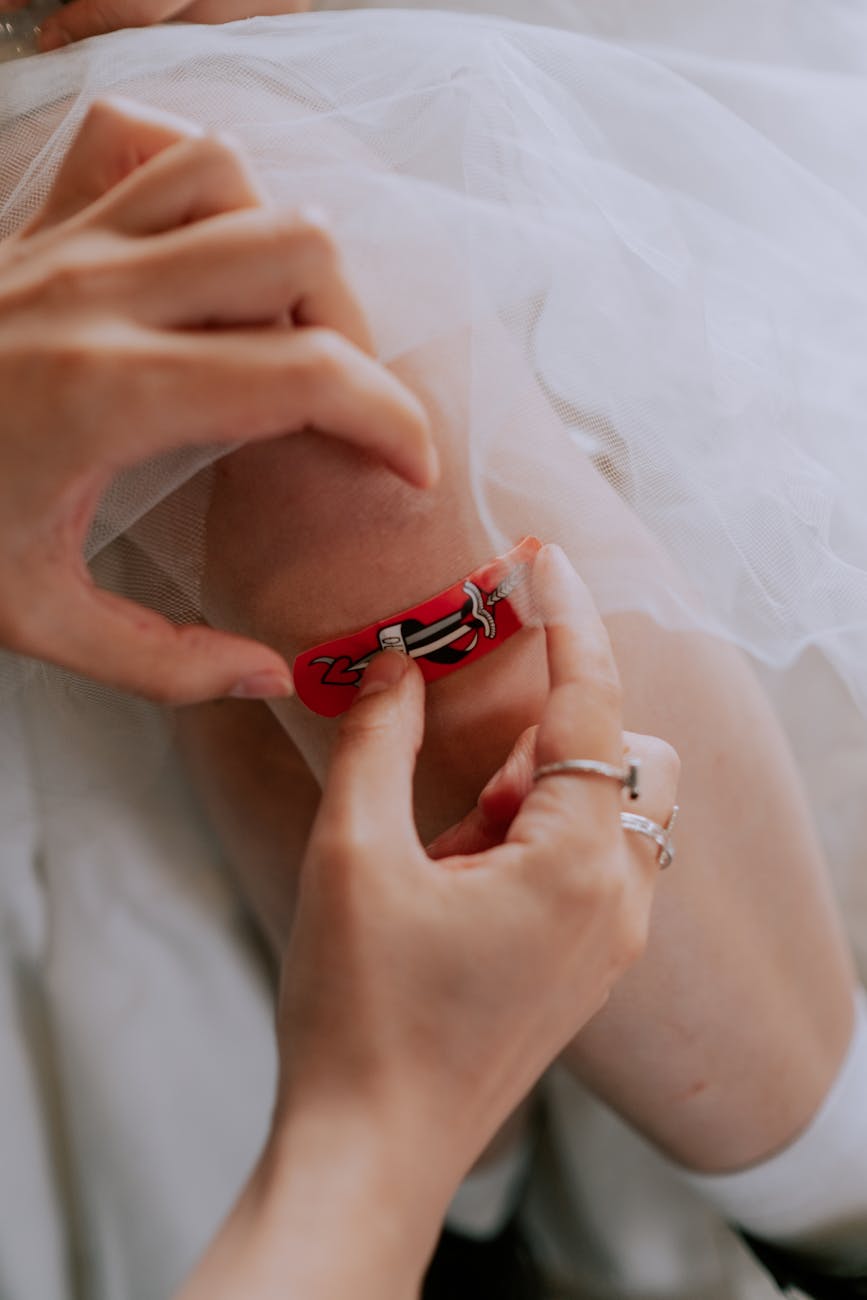
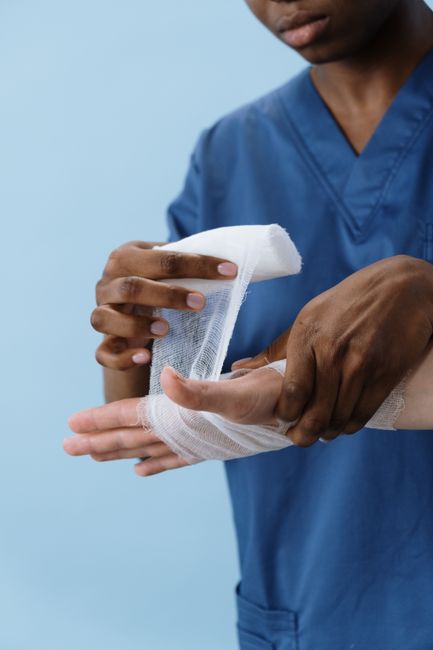
A clean dressing creates a barrier between the cut and hands, clothing, soil, or shared surfaces. A non-stick sterile pad held with tape works well when the area is tender or likely to ooze. For a small, dry cut, an adhesive strip may be enough—provided it stays clean, dry, and attached.
Match the cover to the setting:
- High-friction spots such as fingers, heels, or knees benefit from flexible, securely edged coverage.
- Bends and joints need a dressing that moves without pulling the wound edges apart.
- Damp areas or sweaty work call for a more water-resistant cover, changed when wet or loose.
- Hands and food-prep areas may need an outer protective layer to keep the dressing in place.
Check the seal after washing hands, exercise, or repeated movement. Change a dressing that is wet, dirty, detached, or soaked through; bandages that remain secure after cleaning can reduce repeated handling of the cut.
Use a brief monitoring routine
-
Check at each dressing change
Note pain, redness, swelling, drainage, and whether the edges remain together. A quick comparison with the prior check is more useful than judging a single moment.
-
Separate mild irritation from worsening signs
Mild local tenderness and a small amount of redness can occur after a minor cut. Increasing pain, spreading redness or warmth, swelling, pus-like drainage, fever, or red streaking are different patterns and merit individualized clinical guidance.
-
Reassess function
New numbness, weakness, reduced movement, or pain that limits normal use can indicate more than a superficial skin injury.
-
Consider the wound context
Clinical input can be especially important for bites, punctures, contaminated wounds, cuts with separated edges, and situations involving uncertain tetanus protection or conditions that affect healing.
-
Restock after the incident
Replacing used water, dressings, gloves, and a small waste bag turns an improvised response into a more reliable future kit.
Cleaning a Cut: Common Questions
Is soap actually needed to clean a cut?
Soap is useful for washing intact surrounding skin, where oils and residue cling, but it is not the essential cleaning agent for an open cut. Clean running water, a sealed bottled-water rinse, or sterile saline serve the actual cleaning purpose by carrying debris away.
Is hydrogen peroxide good for cleaning a wound?
No. Hydrogen peroxide’s fizz reflects a chemical reaction, not reliable removal of embedded debris. It can irritate healing tissue and may make the wound look temporarily cleaner while leaving particles that still need assessment untouched.
What water is safe to use for rinsing a cut?
Sealed bottled water, plain drinking water, or sterile saline are suitable. Unsuitable sources include lakes, puddles, and unsealed containers, since their cleanliness cannot be verified.
Should debris stuck in a cut be pulled out?
Only loose surface dirt should be gently lifted with a clean, damp gauze pad after irrigation. Material that remains fixed after a gentle rinse, appears buried or sharply painful, or may be glass, wood, thorn, soil, or metal should be left for professional assessment rather than dug out.
When does a cut need professional care instead of home cleaning?
Urgent assessment is warranted when a cut is deep, widely gaping, or caused by crushing; when there’s numbness, weakness, or loss of movement; when it’s a bite, puncture, or wound from a dirty or rusty object; or when it’s located near the eye, genitals, or a joint.
Clean water and careful observation matter
- Escalating symptoms are not simply normal soreness.
- A compact clean-supplies kit reduces reliance on improvised materials.
When soap and a sink are unavailable, gentle irrigation, clean coverage, and repeat observation can limit avoidable contamination. The important distinction is trajectory: ordinary mild tenderness tends to settle, while worsening pain, spreading inflammation, drainage, or impaired function calls for individualized clinical assessment.



5 Comments
Step about stopping at loose debris is the one I needed. I once spent ages trying to pick a tiny bit of gravel out of my son’s knee with tweezers and probably made everyone miserable 😬 Glad to see “don’t dig around in it” stated plainly.
Thank you for mentioning bites and punctures separately. My brother once treated a cat bite like a regular little cut… spoiler: it did not stay little. Those deserve a call to a clinician, not a DIY medicine cabinet experiment.
I appreciate the distinction between hand sanitizer for hands and not for the cut itself. People seem to treat sanitizer like magic potion, but it burns like crazy on broken skin.
This would have saved me some panic on a hiking trip last summer. I used my drinking water to rinse a scraped knuckle, covered it with a clean gauze pad, and it healed fine. Good reminder that dumping half a bottle of peroxide on it isn’t automatically the move.
Could you clarify the monitoring part for a cut over a finger joint? Mine was small and stopped bleeding, but the bandage keeps peeling off whenever I bend my finger.
I don’t want to tape it so tightly that my finger gets numb, and changing it several times a day feels counterproductive.