
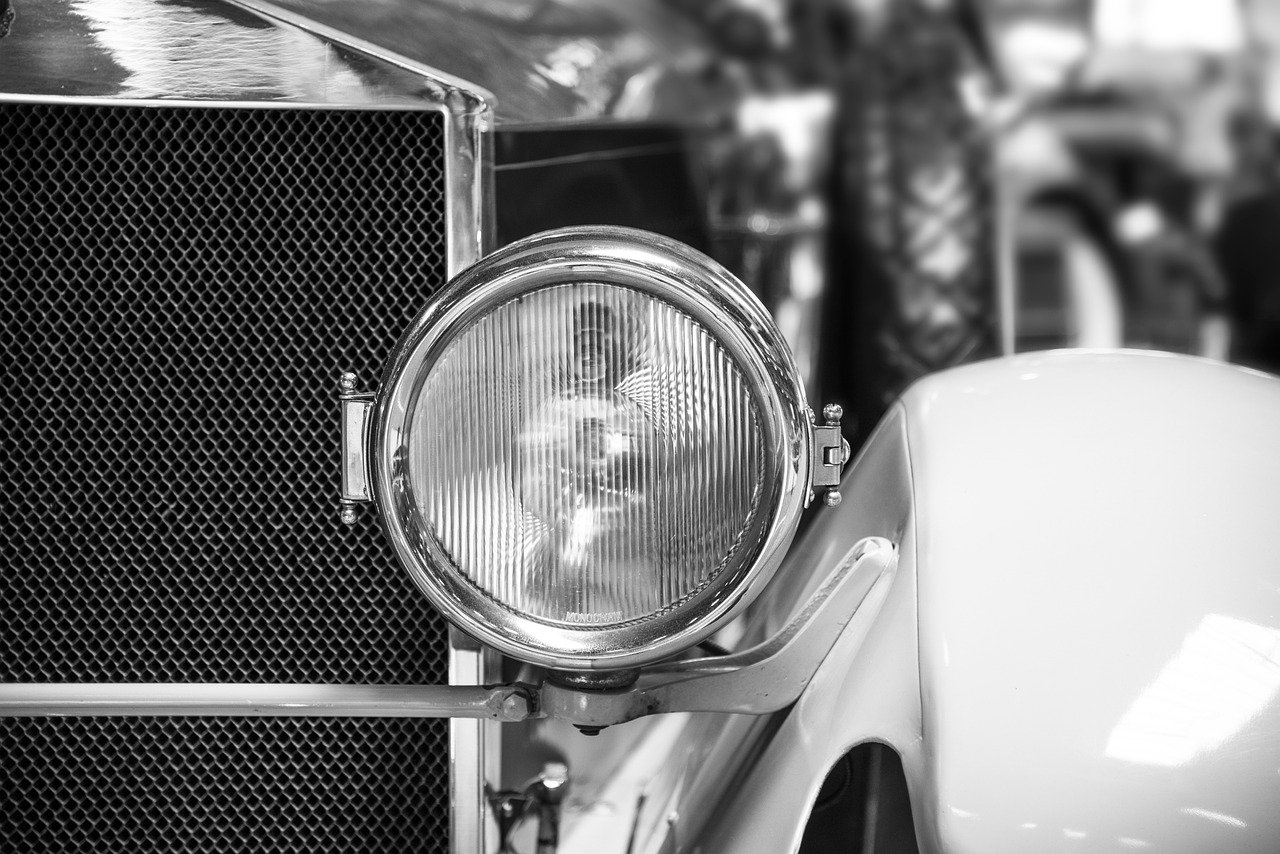
A large lumen number can still leave the important part of the trail in the dark.
A headlamp can look spectacular on its package, then turn a distant cairn, route marker, or worksite detail into a dim blur. The catch is that lumens describe the total quantity of light leaving the lamp—not how intensely that light lands on a particular point.
Usable long-range vision depends chiefly on beam intensity, commonly stated in candela, and the optics that concentrate it into a narrow spot. A broad flood beam may produce more overall light yet spread it across a wall, map, bench, or nearby ground; that is often more useful for close, hands-on work because it reduces hard shadows and peripheral darkness. A tightly focused beam preserves enough intensity to identify objects farther away, but can create tunnel vision and harsh near-field glare. The meaningful question is not simply “How bright?” but how much light reaches the task at its actual distance?
- Candela, rather than lumens, underlies a headlamp’s quoted beam-distance rating.
- Distance ratings are typically calculated to 0.25 lux—roughly moonlit-ground illumination, not necessarily comfortable detail recognition.
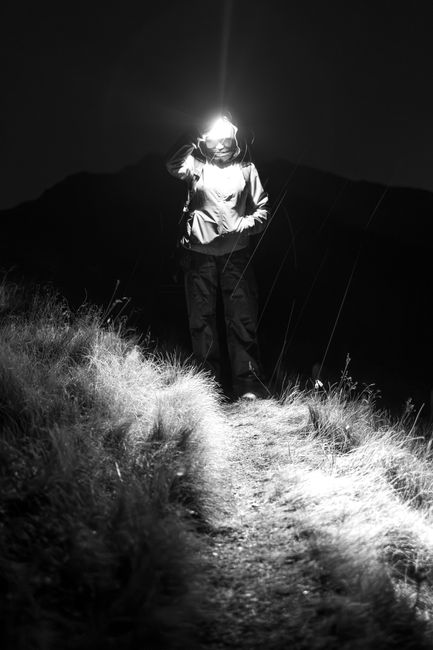
Output, intensity, and illumination answer different questions
Lumens (lm)
Lumens are the total visible light leaving the headlamp. They do not reveal whether that light is concentrated down a trail, spread across a workbench, or lost in an overly wide beam.
Candela (cd)
Candela measures peak beam intensity in a particular direction. A tighter optic can raise candela—and apparent reach—without increasing total lumens.
Throw distance
Advertised throw is calculated from candela, commonly as √(cd ÷ 0.25). It marks where the beam falls to 0.25 lux, a dim reference level rather than a guarantee of clear detail recognition.
Lux (lx)
Lux is light arriving on a surface: one lumen per square metre. It is the most task-relevant concept because reading a map or spotting texture depends on illumination at that distance.
Think of lumens as the water leaving a hose, candela as the force of its jet, and lux as the water reaching the target.
Close work benefits from broad, even lux with limited glare and hard-edged hotspots. Long-range navigation benefits from higher candela, provided the beam also supplies enough surrounding spill to maintain context. Two lamps with the same lumen claim can therefore look dramatically different at both arm’s length and 100 metres.
Beam shape decides where lumens go
A headlamp’s lens, reflector, or TIR optic does not create extra light. In headlamp lumens vs throw terms, it allocates the available lumens. Spread those lumens across a wide angle and the nearby scene is evenly lit. But each patch receives modest intensity. Compress them into a narrow cone and the center becomes brighter at range. That increases candela and throw while leaving less light for everything else.
The parts of a useful beam
The parts of a useful beam
- Hotspot: the brightest central area. A small, intense hotspot helps pick out trail markers, reflective objects, or terrain features far ahead.
- Spill: lower-intensity light surrounding the hotspot. It reveals hands, footing, trail edges, tools, and nearby obstacles.
- Transition: the gradient between hotspot and spill. A smooth transition is often more comfortable for scanning; a sharp edge can make the beam feel like a tunnel.
For close work, broad flood or a generous spill usually places light across the whole task area without constant head movement. A distance-oriented optic can put the same nominal lumen output into a brilliant central spot, yet leave a map, work surface, or peripheral objects comparatively dim.
An overly tight beam also carries a peripheral-awareness penalty. The eye adapts to the bright hotspot, making dim surroundings seem darker; turning the head becomes necessary to inspect what lies beside the beam. A balanced beam—moderate hotspot with usable spill—often suits mixed movement and near tasks better than either extreme.
Two headlamps rated at the same lumens can look dramatically different. The tighter optic may reach farther because it concentrates light into fewer degrees of beam angle, while the wider optic makes more of the immediate environment visible.
For close work, even light beats headline output
A map, stove, tent zipper, or engine bay usually sits 30–100 cm from the lamp. At that distance, a broad, uniform flood makes more information visible than a tight hotspot with impressive throw figures. Even spill reduces the need to keep moving the head merely to inspect adjacent parts.
Low modes deserve close scrutiny. A useful task level is low enough to read labels or sort hardware without blasting reflections from paper, metal, wet rock, or pale fabric. Smoothly spaced levels—or a dedicated low setting—are often more practical than a high-lumen turbo that lasts briefly and forces the eyes to repeatedly readjust.
Comfort reveals optical quality
A harsh central hotspot can conceal detail immediately around its edge: pupils contract for the bright center, leaving nearby shadows comparatively harder to read. For repairs and camp chores, look for a soft transition from center to spill rather than an abrupt bright disc.
Tint also matters when distinguishing wire colors, map contours, grime, fuel stains, or food. Neutral-white light and LEDs with higher color rendering can make subtle differences easier to judge than a cool, greenish cast. They may sacrifice some peak output or runtime, but at working distance, accurate, comfortable illumination is often the more useful trade.
Distance depends on intensity
At walking speed, a headlamp does more than reveal the ground directly ahead. It must make a cairn, reflective blaze, bend in the trail, or change in surface stand out soon enough to interpret it. That calls for concentrated candela: enough hotspot intensity to return useful contrast from a distant target.
A high-lumen flood can make the near trail look impressively bright while leaving distant markers washed into the background. Conversely, a tighter optic directs a larger share of its output into a small angle, making it better suited to long-throw beam options for distance. Spill still matters; it helps locate the hotspot, monitor footing, and avoid tunnel vision.
Recognition is shorter than advertised throw
A lamp’s quoted throw reflects headlamp lumens vs throw. It is commonly based on only 0.25 lux at the target, roughly enough to detect a lighted object. In practical use, a marker may be recognizable at a fraction of that figure. Dark rock, wet vegetation, fog, dust, rain, and competing lights all reduce contrast; reflective tape may appear much farther than an unmarked junction.
Faster travel tightens the requirement. More range provides more time to read the surface and choose a line, but excessive hotspot brightness can degrade near vision. A balanced trail beam pairs a defined, sustained hotspot with broad, moderate spill rather than chasing lumen numbers alone.
Why two beam channels can work better
A headlamp with separate flood and spot channels avoids the usual compromise: flood can light hands, tools, and footing, while spot preserves the intensity needed to identify something farther away. The useful design detail is not merely two LEDs, but independent control. A low flood for camp tasks and a moderated spot for an approaching trail marker are often more useful than either channel at maximum.
Running both beams together is not automatically an upgrade. It raises electrical load, so runtime falls and heat rises; as the housing warms, many lights step down output to protect electronics and the battery. At close range, the spot hotspot can also bounce harshly from reflective signs, wet leaves, pale surfaces, or dust, reducing dark adaptation.
Two overlapping beams may create a distracting bright center with a dimmer ring or visible double shadows. For stationary close work, flood alone is usually cleaner. For movement or scanning, adding spot selectively can retain distance awareness without turning the foreground into glare.
Read the specification table by mode
- A sustained, named operating levelCompare lumens and runtime on the same mode, ideally after thermal step-down. A brief turbo figure says little about light available through a full task.PreferANSI/PLATO FL 1 figures for each relevant mode, including runtime graphs where available.QuestionOne maximum-lumen claim paired with an unspecified or vague runtime.
- Candela beside the distance ratingBeam distance is calculated from candela at a very low illumination threshold, not from a promise of practical recognition range. Candela makes spot-oriented models easier to compare.PreferCandela and throw listed for the exact spot or combined mode being considered.QuestionDistance claims without intensity data or without identifying the active channel.
- Comparable beam evidenceBeamshots only help when exposure, distance, camera settings, and surroundings match. They reveal hotspot size, spill, tint shift, and artifacts that output tables conceal.PreferSide-by-side shots at fixed settings, plus reports of beam behavior in real terrain.QuestionIsolated promotional images with automatic exposure or no stated conditions.
- Weight and controls under real useA high-output headlamp can be less useful if front-heavy, awkward with gloves, or prone to accidental activation. Mode order and memory determine whether low light is available quickly.PreferTotal carried weight, balanced battery placement, lockout, direct low access, and predictable mode memory.QuestionWeight quoted without the battery or an interface that requires cycling through bright modes.
A claimed runtime may include a long, dim tail after the lamp has reduced output for heat or battery protection. The more revealing question is how long the selected beam remains bright enough for the intended work.
Battery chemistry, cell capacity, and regulation shape that answer; power type affects sustained lumens as much as the headline output does. A mode chart, regulated-runtime graph, and independently matched beamshots together are more meaningful than a maximum-lumen badge.
Match the beam to the pace
A headlamp’s useful balance changes with both task distance and travel speed. For tent setup, repairs, cooking, or map reading, broad flood places light across hands, tools, and the immediate ground without a harsh central patch. Low to moderate output is often more comfortable here because reflective surfaces can otherwise produce distracting glare.
For ordinary hiking, a balanced beam—wide spill plus a modest hotspot—helps reveal roots at the feet while showing the next bend or trail marker. The needed forward view rises as pace rises: recognition must happen far enough ahead to allow time to identify terrain, choose a line, and react.
Fast trail travel shifts the priority toward intensity and reach, but not to a spot-only beam. A distant hotspot can expose upcoming obstacles, while spill maintains foot-placement information and peripheral context. For runners comparing lumens with beam distance, practical recognition distance matters more than the maximum throw figure: uneven ground, wet rock, fog, and vegetation reduce contrast long before a manufacturer’s measured endpoint.
A simple field check is to use the intended mode at the intended pace. If obstacles appear only after they demand abrupt braking or direction changes, more forward intensity—or a slower pace—may be needed.
Weather can reverse the advantage of throw
A tight, high-candelabra hotspot is not always an advantage. In fog, falling snow, rain, dust, or humid air, light scatters from droplets and particles back toward the wearer, creating a bright veil that erases contrast beyond it. Wet rock, signs, water, and other reflective surfaces can add direct glare.
A lower-output flood or a softer, wider spot often preserves more usable detail in these conditions. Dimming the hotspot and aiming it slightly downward also reduces reflected light. This is one reason brightness and waterproofing matter for paddling and rain: weather resistance protects the lamp, while beam restraint protects visibility.
Choose by the two distances that matter
-
Set the far recognition distance
Identify the farthest point where terrain, a trail marker, or an obstacle must be recognized—not merely seen. For a broader comparison, see how to choose a headlamp by lumens and throw.
-
Name the nearest task
Map reading, repairs, cooking, and sorting gear need comfortable, even light at arm’s length; glare and a hard hotspot quickly become tiring.
-
Match beam shape to both zones
Choose flood for the near task, spot intensity for the far target, or separately controlled channels when both are active.
-
Check sustained output
Compare regulated runtime and beam behavior after heat builds. A brief turbo rating is less relevant than the mode held through the activity.
-
Test controls in context
Confirm that mode changes, lockout, and spot/flood switching work with gloves and without cycling through disruptive high modes.
Lumens vs. Throw: Common Questions
Why do two headlamps with the same lumen rating throw light so differently?
Lumens describe the total light leaving the lamp, not how it’s focused. A tighter optic concentrates the same lumens into a narrow beam, raising candela and throw distance, while a wider optic spreads the same output across a broader area with less reach.
What does a manufacturer's stated beam distance actually mean?
Advertised throw is usually calculated to where the beam falls to 0.25 lux, a dim reference level roughly equivalent to moonlit ground. That’s enough to detect a lighted object, not necessarily to identify terrain detail clearly, so real recognition distance is often shorter than the quoted figure.
Is a wide flood or a narrow spot better for camp tasks like cooking or map reading?
A broad, even flood is usually better for close work. It lights the whole task area without a harsh central hotspot, reducing the need to constantly move the head to see adjacent objects.
Does running both flood and spot channels together always give better light?
Not necessarily. Running both channels increases electrical load, which lowers runtime and raises heat, and the overlapping beams can create a distracting bright center or double shadows. Using flood or spot selectively based on the task is often more effective.
Why can a tight, high-candela beam actually perform worse in fog or rain?
In fog, snow, rain, or dust, a concentrated beam scatters off airborne droplets and particles, creating a bright veil that reduces contrast beyond it. A lower-output flood or a softer, wider spot often preserves more usable detail in these conditions.
Amount, reach, and placement are separate
Lumens describe how much light leaves the headlamp; throw describes how far its concentrated beam can remain useful; optics decide where that light lands.
A suitable choice keeps the closest task comfortable while delivering enough sustained intensity to recognize the farthest needed detail. Controls and thermal regulation determine whether that balance remains usable beyond the first few minutes.


9 Comments
I’m slightly skeptical of “neutral high-CRI” being treated as universally better. On a cold, wet trail, I often find a cooler beam makes pale roots and reflective markers pop more. Is that just personal preference, or are there conditions where cooler tint really has an edge?
Not just preference. I use neutral/high CRI for camp chores, but a cooler low-CRI trail light can feel more contrasty at distance. It’s not necessarily showing more detail; it can just make certain bright objects stand out harder. Wet rock is still a glare festival either way 😅
“Match the beam to the pace” is the part that clicked for me. Walking a familiar trail and biking it are totally different problems, even if both are technically outdoors at night. More lumens isn’t a personality trait, folks 😂
How much should we care about regulated runtime if the stated output is only needed in short bursts? For search-and-rescue style use I can see it, but for occasional camping it seems like a spec-sheet obsession. Then again, some lights step down so fast it feels a bit dishonest.
It depends on the consequence of losing brightness. For camping, a brief high mode may be perfectly fine if the lower modes are comfortable and predictable. But regulation matters whenever you need a consistent working beam for an extended task—navigation, repairs, route finding, or simply a long winter walk. The useful question is not whether turbo lasts, but what level the lamp settles at and whether that sustained level still serves your task.
One thing I wish more reviews covered is beam transition. A lamp can have plenty of flood and plenty of spot on paper, yet the abrupt ring between them makes scanning a room feel weirdly tiring.
Also, red light controls deserve a mention somewhere. I don’t need it for “night vision” marketing, but it’s nice when checking on kids in a tent without turning the whole place into daylight.
The fog section should be printed on every headlamp box. People blast turbo into mist, get a wall of white backscatter, then conclude their lamp is broken. Lower + wider has saved my early-morning dog walks more than once.
This clears up why my “1,200 lumen” headlamp still feels useless when I’m trying to find trail markers across a clearing. Is there a rough candela range you’d consider adequate for normal hiking versus fast night running? The manufacturer throw numbers always seem wildly optimistic.
They usually are optimistic because the throw rating is based on a very low illumination threshold in ideal darkness. For ordinary hiking, a balanced beam with enough intensity to identify terrain roughly 30–60 m ahead is often more valuable than a huge quoted throw figure. Faster running raises that requirement substantially, but beamshots and regulated high-mode output are more useful comparisons than a single candela target.