
The cheapest carton is expensive when every few magazines end with a click instead of a report.
A rimfire session can lose its rhythm fast: a hollow click, a stovepipe caught in the ejection port, or a round that refuses to chamber turns a productive string into troubleshooting. With .22 LR, the low per-round cost is only part of the value equation. Reliable ignition, consistent cartridge dimensions, and adequate cycling energy preserve practice time and keep a high-volume outing moving.
Ammo is not always the sole culprit. Rimfire semiautomatics can be sensitive to fouling, a dry action, weak magazine springs, damaged feed lips, or a load that does not suit the rifle’s bolt and recoil-spring setup. Still, bulk ammunition with uneven priming, waxy buildup, inconsistent velocity, or rough rims magnifies those variables. The stronger picks earn their place by reducing preventable interruptions—not by promising that any .22 LR will run flawlessly in every firearm.
- A recurring malfunction at the same point in a magazine often points to feed lips, follower drag, or spring tension rather than the cartridge.
- Rim thickness and priming compound are especially consequential in rimfire ammunition because the firing pin crushes the case rim to ignite it.
Start with the load that fits the job
Rimfire reliability is firearm-specific. A load that cycles one semi-auto cleanly may short-stroke another, while a bolt action can reveal accuracy differences that cycling tests miss.
Lot variation matters, too. Before committing to a large case, testing a few boxes through the intended firearm, magazines, and typical shooting conditions can expose feed, extraction, or grouping preferences.
- True dud
A round that receives a normal, well-centered rim strike but does not fire after a sensible re-strike. This points most directly to uneven or missing priming compound.
- Light strike
A shallow, off-center, or inconsistent rim impression that fails to ignite a cartridge. The likely variable is the firearm’s firing pin, bolt closure, or fouling—not automatically the ammunition.
- Cycle failure
A fired case may extract yet the action lacks enough rearward energy to feed the next round or lock open. It is a load-and-platform compatibility result, not an ignition failure.
- Dimensional stoppage
A round that resists chambering, extracts reluctantly, or hangs in a magazine can reflect case-rim variation, bullet profile, wax coating, chamber fouling, or magazine geometry.
Reliability is judged as a chain: ignition, chambering, extraction, and repeatable cycling. One malfunction type cannot fairly condemn a load without reading the evidence left on the cartridge and firearm.
Well-regarded bulk .22 LR tends to show uniform rim thickness, primer distribution, overall length, bullet seating, case finish, and lubricant application. More uniform velocity also reduces the marginal cycling behavior that can appear in recoil-operated semiautos.
Each pick is considered in clean, known-good bolt actions and common semiautomatic rifles with sound magazines. Bolt guns isolate ignition, fit, and extraction; semiautos add the harder test of sufficient impulse, feeding geometry, and dirty-action tolerance.
Repeated no-fire rounds with healthy strikes carry the most weight. Isolated failures to feed or extract are noted, but are interpreted alongside chamber condition, magazine behavior, bullet shape, and whether the same lot repeats the fault.
Rimfire ammunition remains lot-sensitive. A small function check in the specific firearm can reveal a compatibility issue before a larger supply is opened.
High-velocity ammunition often provides a wider operating margin, which helps explain the broad utility of CCI Mini-Mag and the semiauto focus of Federal AutoMatch. But a consistent standard-velocity round can run exceptionally well in a properly sprung action, while a fast round with variable dimensions can still create feed or extraction problems.
That distinction matters when comparing CCI Pistol Match, CCI Tactical, and Remington Golden Bullet: the useful question is not simply how often a rifle fires, but which stage fails and whether the pattern repeats.
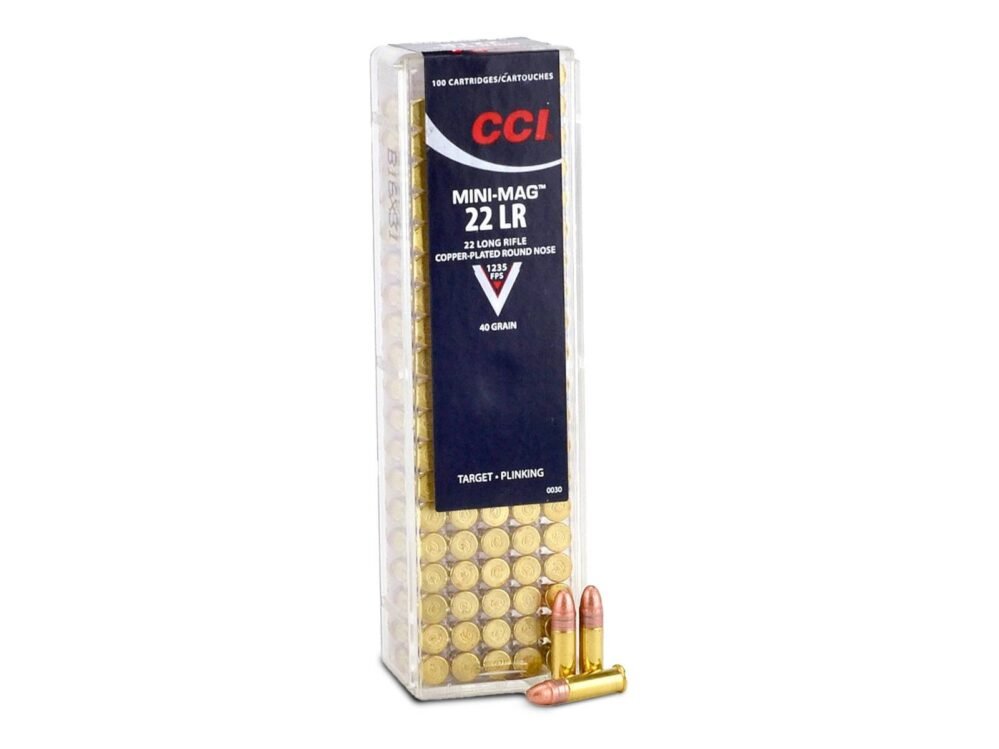
CCI Mini Mag for mixed-action range days
01
Best for dependable all-around plinking and small-game use
CCI Mini Mag’s 40-grain high-velocity round-nose load is the practical baseline when one bulk purchase has to run across pistols and rifles. Its reputation comes less from headline velocity than from consistent rimfire priming and enough operating margin for many semi-automatic actions.
That makes it a strong fit for informal range sessions where a light target load may leave a pistol short-cycling, yet a hunting-specific hollow point is unnecessary. It is also a useful control load when diagnosing whether a stoppage belongs to the ammunition, magazine, or firearm.
- Dependable ignition reputation
- High velocity aids cycling
- Useful across rifles and pistols
- Cleaner-running than many bulk loads
- Costs more than budget bulk
- Sharper report than standard velocity
- Point of impact can shift
- Accuracy varies by barrel and lot
Bottom line Mini Mag earns its premium when a range day includes several actions and malfunctions waste more time than a cheaper carton saves. It remains a general-purpose load, not an automatic accuracy winner.
For mixed rifle-and-pistol use, Mini Mag is among the safest bulk-adjacent choices when reliable firing and cycling rank above lowest cost. Its higher velocity can move groups and point of impact relative to standard-velocity ammunition, so sights zeroed with one load may not track precisely with this one.
Individual barrels still decide accuracy: some produce notably tighter groups with Mini Mag, while others prefer slower match-oriented loads. The added report and per-round cost are the price of a dependable, widely compatible range staple.
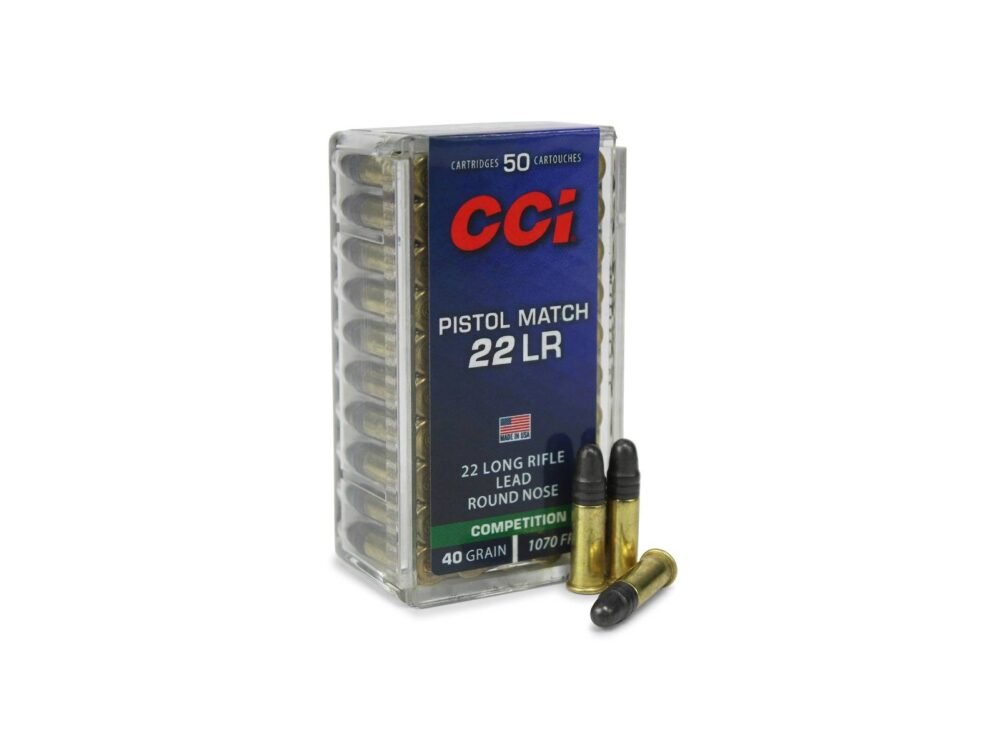
Best for affordable target practice with reduced ricochet risk
CCI Pistol Match is the slower, more deliberate choice for handgun bullseye work, indoor lanes, and careful steel practice. Its 40-grain lead round nose loading is built around standard-velocity-style behavior rather than the extra operating margin of high-velocity bulk ammunition, which can make sight tracking and shot cadence feel more settled in a well-matched pistol.
That calmer character is not a promise of universal reliability. Blowback .22 pistols need sufficient rearward slide travel to extract, cock, feed, and lock into battery; a stiff recoil spring, tight new action, heavy slide, suppressor setup, or dirty chamber can turn a soft-shooting load into intermittent short-stroking. A small, documented test through the intended magazines remains more meaningful than a velocity label. For revolvers and manually cycled rifles, the same load’s appeal is chiefly its predictable target-oriented handling and potential for tighter practical groups.
- Target-oriented 40-grain LRN load
- Controlled standard-velocity-style behavior
- Useful for deliberate pistol drills
- Often gentler around steel than jacketed bullets
- May short-stroke some semiauto pistols
- Lead bullet can foul barrels
- Requires lot and magazine testing
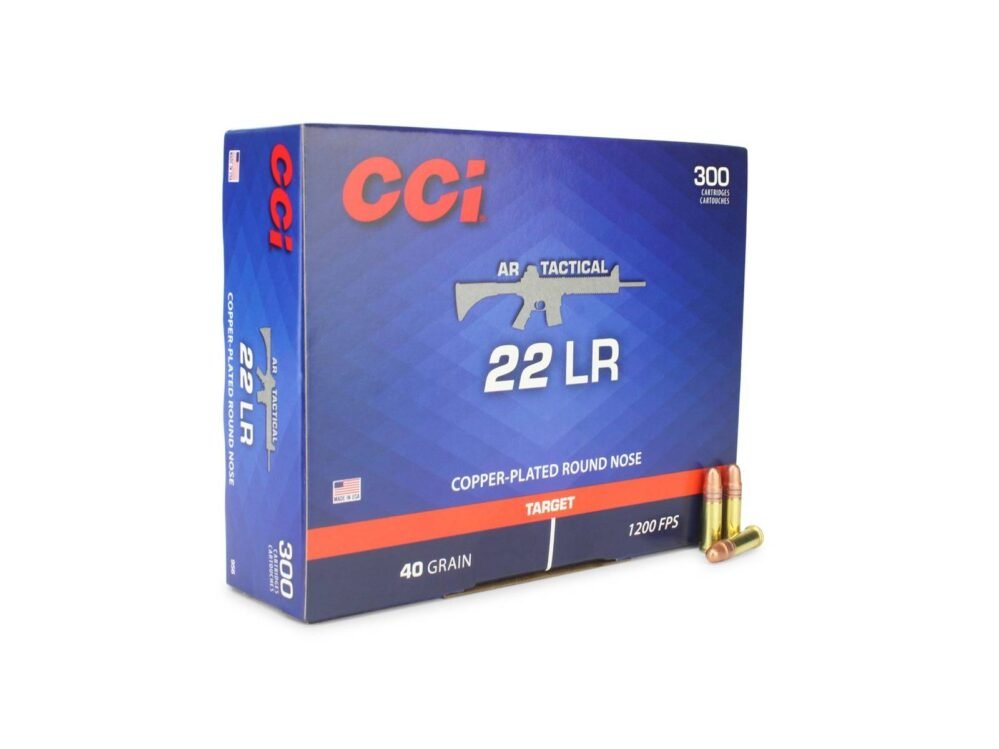
A versatile option for backyard plinking and competition
CCI Tactical 22 LR 40 Grain RN is a useful bridge between casual bulk shooting and structured rimfire practice. Its 40-grain round-nose format suits the feeding geometry common to AR-style .22s, trainer carbines, and everyday semiauto rifles, while its managed velocity profile is intended to keep drills, sight checks, and familiarization work more repeatable than a purely bargain-focused load. “Tactical” here is a role cue, not a performance guarantee: reliable results still depend on the individual chamber, magazine, bolt speed, and lot.
- 40-grain round-nose profile
- Practical for semiauto drills
- Useful training-load middle ground
- CCI consistency reputation
- Not a substitute for function testing
- Accuracy remains rifle- and lot-specific
- Tactical label adds no magic
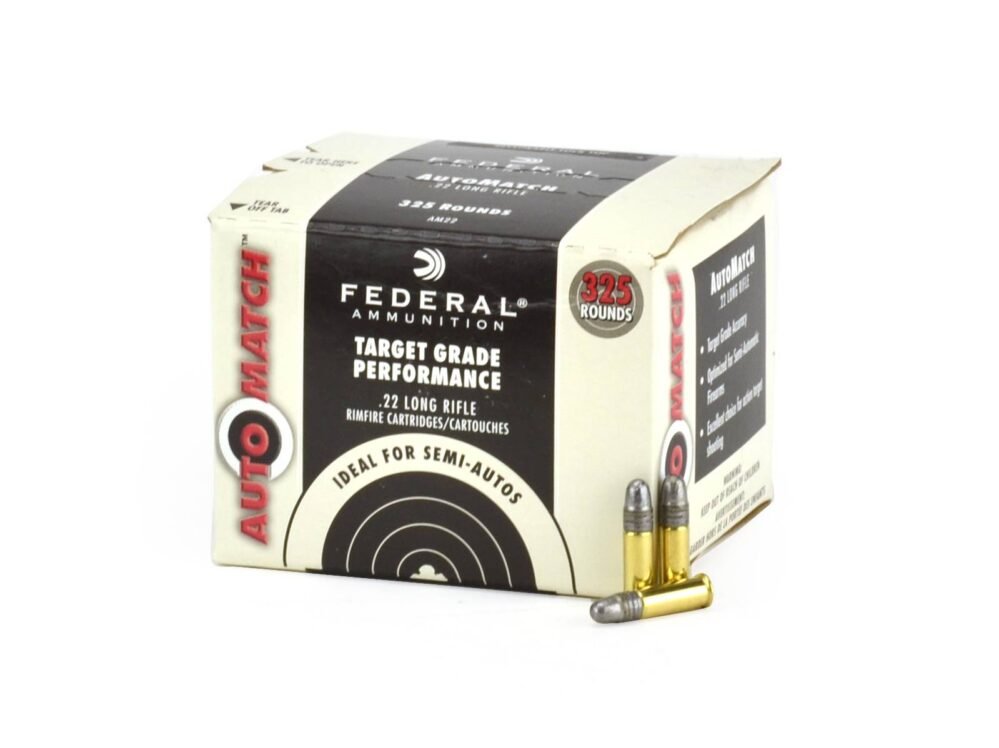
Designed for reliable cycling in 10/22-style actions
Federal AutoMatch is a 40-grain lead round-nose .22 LR built around the needs of autoloading target rifles, especially 10/22-style platforms. Its appeal is straightforward: a bulk-oriented load intended to keep sustained semiauto practice moving without treating every range session as a precision-ammunition exercise. It suits shooters whose primary goal is repeatable drills, positional work, and high-round-count informal targets.
- Purpose-built for autoloading target use
- 40-grain round-nose profile
- Bulk-friendly practice format
- Well suited to 10/22-style rifles
- Accuracy remains rifle- and lot-dependent
- Bulk lots still warrant screening
- Magazine-related stoppages can mimic ammo faults
The standout choice for maximum round count
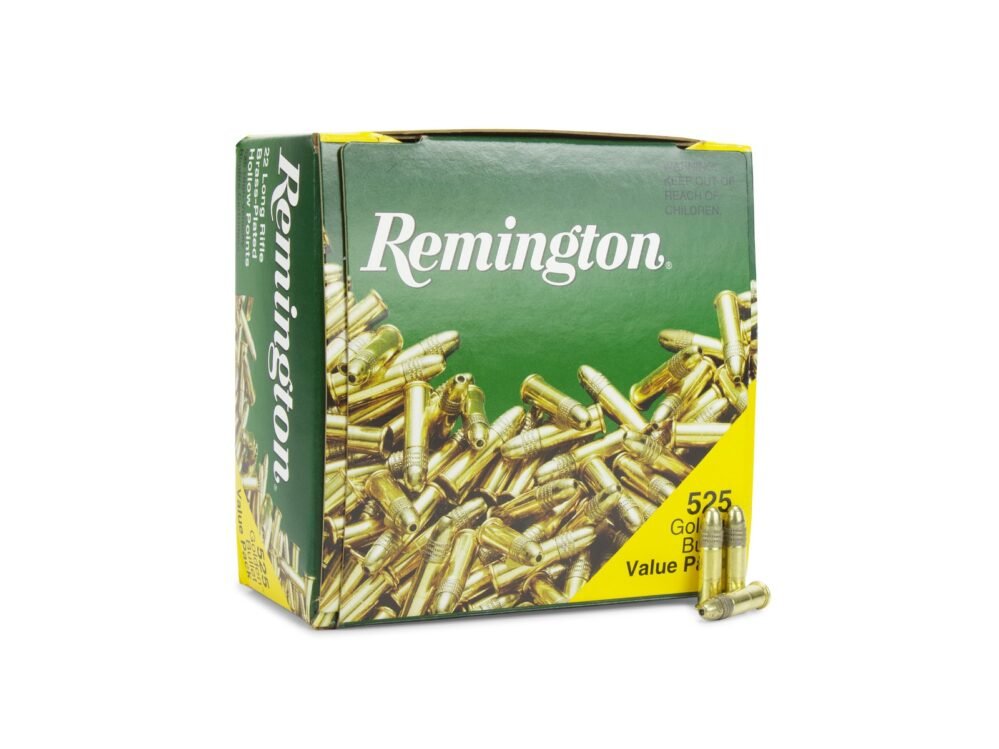
Remington Golden Bullet 22 LR Bulk Pack centers on round count: 525-round boxes, with case quantities reaching 6,300 rounds. Its 36-grain brass-plated hollow-point loading suits casual plinking, informal practice, and high-volume sessions where having ample ammunition on hand matters more than tightly controlled match-style results.
- 525-round bulk boxes
- 36-grain brass-plated hollow point
- Available in large case quantities
- Consistency can vary by lot
- Results can vary by firearm
- Not a match-focused load
| Velocity class | Bullet profile | Best fit | Cycling margin | ||
|---|---|---|---|---|---|
|
CCI Mini Mag 22 LR High-Velocity Rounds All-around | High velocity | 40-grain RN | Mixed-action shooting | Check stock | |
|
CCI Pistol Match 22 LR Lead Rounds Target work | Match-oriented | 40-grain LRN | Deliberate targets | Check stock | |
|
CCI Tactical 22 LR Consistent Round-Nose Ammo Range drills | Practical range load | 40-grain RN | Semiauto drills | Check stock |
A high-velocity round nose load can add operating margin in a semiauto that short-strokes with softer target ammunition. That does not explain a cartridge that receives a solid rim strike and fails to fire; that points toward ignition performance, not cycling energy.
Log the firearm, magazine, round count, ammunition lot number, and exact event: no fire after a clear rim hit, nose-up feed jam, failure to extract, or bolt failing to lock open. Retest a suspect lot in another magazine before assigning blame. Bullet shape matters too: round nose profiles generally present predictably from many magazines, while each chamber and feed path still has preferences.
For bulk buying, compare cost per round only after a small, documented function trial. A load that runs cleanly through several magazines can be the better value than a cheaper pack that creates ambiguous stoppages.
Buy the rounds that finish the string
- Protected, traceable lotsFactory boxes and intact inner packaging make lot numbers easier to retain and reduce loose-round damage or mix-ups.Look forSealed packaging with a recorded lot number.AvoidLoose bulk rounds with no lot traceability.
- Velocity that fits the actionHigh-velocity loads may run a stiff semiauto more reliably, while standard-velocity ammunition can be the better accuracy fit in a tuned target gun.Look forA velocity class proven in that firearm.AvoidAssuming one velocity suits every action.
- A meaningful trialTest several magazines over a clean, documented session; separate light strikes from feed, extraction, and cycling events.Look forRepeatable results across magazines and sessions.AvoidJudging a case from one short string.
- Working-round costA cheaper carton loses its advantage when recurring duds or stoppages consume time and ammunition.Look forCost calculated from rounds that fire and function.AvoidSticker-price comparisons alone.
Divide the carton cost by the number of rounds that ignite, feed, cycle, extract, and group acceptably in the intended firearm. That figure exposes whether a bargain remains a bargain after failures.
Start with sound bulk-ammo buying fundamentals, then log brand, lot, magazines, round count, and failure type. A single proven lot can be worth more than a larger carton that produces intermittent disruptions.
Rule out the equipment first
A dirty chamber can slow seating and mimic a weak round.
Additionally, a fouled extractor can leave a fired case behind.
Bulk .22 LR Ammo Picks That Cut Down on Duds reduce misfires in this scenario.
Additionally, before judging a bulk lot, inspect cartridges for crushed rims, corrosion, heavy wax buildup, or grit.
This aligns with Bulk .22 LR Ammo Picks That Cut Down on Duds by guiding inspection.
Keep lubricant off ammunition; oil can collect debris and may migrate into rimfire priming compound.
Clean the chamber, extractor claw, and magazine, then retest with the same loading method.
Store unopened boxes and loose rounds dry, clean, and temperature-stable. Avoid damp basements, vehicle interiors, and garages that cycle through heat and humidity; condensation and contamination are more useful clues than age alone.
Use a known-good magazine and record the lot number, firearm, and failure type. A single clean retest can separate a cartridge issue from a maintenance issue.
Run a baseline load through several magazines over a realistic session, not a single clean ten-round string. Record true misfires separately from feed, extraction, and bolt-cycling interruptions; note the lot number and whether the problem follows one magazine. A load that finishes repeated strings with few meaningful interruptions has earned a larger purchase.
The bulk picks worth starting with
CCI Mini Mag is the strongest all-around starting point for mixed firearms and reliable semi-auto cycling. Federal AutoMatch merits first trial in autoloading rifles, while CCI Pistol Match suits controlled target work where a milder load functions dependably. CCI Tactical is a practical middle ground for general semi-auto range use; Remington Golden Bullet makes sense when high round count outweighs maximum consistency.
The best bulk load is the one that runs a particular firearm through real sessions—not the largest carton or the highest velocity on its label.







11 Comments
The advice to record the *kind* of failure is overdue. A light rim strike is not the same thing as a failure to eject, yet online reviews lump them together and declare a box “trash.”
I would have liked to see a simple sample log in the article: load, lot number, firearm, magazine, round count, and stoppage type. That would make the testing advice easier for newer shooters to follow.
That is a good suggestion. A simple log is more useful than trying to remember whether a load “felt bad.” The fields you listed are the core of it; I would add whether the action was freshly cleaned and whether the rounds were stored dry. Those details help prevent a magazine or maintenance issue from being assigned to the ammunition.
I use a notes app for exactly this. It sounds excessive until you buy another brick six months later and cannot remember which lot gave you the stovepipes.
No Winchester Wildcat mention? Not saying it is flawless, but it has been a surprisingly good bargain around here. Curious if it just missed the cut or if the availability is too spotty.
Why not include a dedicated match load if accuracy is part of the discussion? I get that this is about bulk ammo, but a comparison baseline would show whether the rifle is the problem or the cheap ammo is.
Mini Mags cost more, but they are the box I grab when I just want a range trip without playing malfunction detective. That usable-round cost point is exactly right.
Glad you separated actual duds from feed/extract issues. People love to blame a bulk box when their mags are filthy or the extractor has been collecting gunk since 2019.
Why no Aguila Super Extra on the list, though? It has been a decent cheap-ish trainer in my 10/22, at least when I can find the 40-grain stuff.
Aguila Super Extra was a reasonable omission to question. It can be a solid value, especially in a rifle that likes it, but this list focused on five loads with especially clear roles and broad availability in bulk-oriented shopping. As with the others, it deserves a few magazine and session tests before committing to a case.
Same here. Super Extra runs better than Golden Bullet in my old 10/22, but my buddy’s pistol chokes on it. Rimfire being rimfire, apparently.
I appreciate that Golden Bullet wasn’t presented as magic just because the box is huge. My last bucket was okay, then the next one had enough random weirdness that I stopped treating the brand as a sure thing.
CCI Tactical has been my compromise load: enough pep for my semi-auto rifle, not as sharp-feeling as Mini Mag, and usually accurate enough for steel. “Usually” is doing a lot of work there, obviously 😅