
A grooming tool earns its carry only when a small problem cannot wait until home.
A stray brow before a meeting, a torn nail catching on fabric, or stubble missed at the jawline can feel disproportionately obvious once there is no bathroom cabinet nearby. The tempting response is to pack a miniature version of everything—then discover a pocket weighed down by loose, awkward tools that never get used.
A more useful test is simple: does this solve a recurring touch-up in seconds, without making everyday carry miserable? Compactness alone is not enough. A tool must be safe when closed, easy to clean, and capable of doing one job well rather than several jobs poorly. That standard favors purpose-built essentials over novelty multitools and turns a grooming kit from pocket clutter into quiet insurance.
- Prioritize closed designs: exposed points and unguarded blades quickly make compact tools impractical.
- Choose corrosion-resistant steel where moisture, pocket lint, and infrequent cleaning are likely.

What earns a permanent pocket slot
- It solves a recurring, immediate problemA pocket tool needs to handle a small annoyance in seconds: a torn nail edge, loose thread, or food caught after a meal. If its likely use begins with finding a sink, table, mirror, or spare time, it belongs in a wash bag instead.Carry it whenFrequent fixes that can be done cleanly while standing or walking.Leave it behind whenRare scenarios or tasks that require a proper setup.
- Its absence has an annoying consequenceThe strongest candidates prevent snagging, discomfort, damaged clothing, or an unpolished appearance from lingering through the day. Convenience alone is weaker than a problem that becomes worse when ignored.Carry it whenA modest issue that compounds until it can be addressed.Leave it behind whenA tool carried merely because it might be useful.
- It stays contained and survives pocket lifeEdges need caps or folding protection; clippings, residue, and moving parts need to remain controlled. A tool that opens in a pocket, sheds debris, rusts, or bends has failed the carry test regardless of its compact dimensions.Carry it whenProtected, washable construction with durable pivots and no loose waste.Leave it behind whenExposed blades, messy grooming steps, or delicate mechanisms.
- It replaces rather than duplicatesOne precise tool can justify its footprint when it covers several quick touch-ups without doing any of them poorly. Compact travel kits often repeat functions already covered by a keychain tool, wallet comb, or full kit at home.Carry it whenA distinct function with little overlap in the existing carry.Leave it behind whenMiniature travel gear that duplicates established tools.
Three sensible ways to begin
Choose clippers for the nails at hand
A compact lever clipper is the straightforward everyday choice. Its exposed lever gives the fingers direct feedback, and a rigid, well-pinned body keeps the jaws aligned as they close. Look for cleanly ground, evenly meeting edges: sharpness is less about a dramatic bite than a cut that does not compress or bend the nail before it separates.
A folding clipper protects its cutting head and packs flatter, but its handle is often shorter and its pivot can introduce slight flex. That trade-off suits occasional maintenance and tidy carry; it is less convincing when firm, precise pressure is needed. Models with a catcher retain clippings, though the enclosure also makes rinsing and drying more important.
A file-equipped clipper can replace a separate smoothing tool for small rough edges. Its fold-out file is usually short and lightly cut, useful after a trim but not a substitute for a full-length file. A crowded multitool adds bulk and joints without improving the cut.
For ordinary fingernails, a small, rigid lever clipper with aligned jaws is usually enough. Unusually thick, dense, or curved nails call for wider jaw opening, heavier leverage, and a sturdier frame; forcing a tiny pocket clipper can twist its jaws out of alignment.
When a hangnail catches
A hangnail is a torn strip of skin at the nail fold, not extra nail to tear away. Pulling it can extend the split; broad, forceful clipping can do the same. The immediate aim is simply to prevent further snagging: keep the area clean, avoid picking, and protect the edge from friction until it can be handled deliberately.
For tool angle and a careful sequence, see the detailed hangnail-trimming method.
A small clipper is for a clearly loose edge—not for cutting into the nail fold.
Resistance may come from worn or misaligned cutting edges.
A sound clipper shears cleanly. Pinching or bending during a cut points more often to failing geometry than nail strength.
Repeated passes often mean the jaws are crushing rather than cutting.
Crushing, ragged edges, and a nail that folds before it separates suggest dulled edges or jaws that no longer meet squarely.
Debris can be removed; corrosion and loose pivots cannot be cleaned away.
Pitted edges stay uneven, while pivot play lets the jaws shift apart under load. Both faults call for replacement rather than polishing.
A pocket comb should glide, not grab

A comb’s material is less revealing than its geometry. A well-finished pocket comb separates hair with little resistance; a poorly made one catches individual strands at the tooth tips, along the tooth flanks, or at the seam where two molded halves meet.
Match the teeth to the job
Wide tooth spacing gives dense, curly, damp, or easily tangled hair somewhere to go. It is less tidy for precise parting, but it reduces the force needed to clear a section. Fine spacing can neaten straight or short hair, yet it loads quickly in thick hair and is more likely to tug if used to force through knots.
Inspect the teeth in side light. Rounded, polished tips and smooth tooth roots matter more than a sharp-looking profile. A fingernail drawn gently across the tips can reveal burrs or abrupt flashing; those defects are warning signs, not “grip.”
Stiffness without a harsh pull
The spine—the bar joining the teeth—sets most of a comb’s rigidity. A very thin spine flexes, causing teeth to twist and rake rather than separate hair. Excessive stiffness is not automatically preferable: it transfers more force to hair when a tangle is met. A compact comb around palm-length offers useful leverage without becoming awkward in a pocket.
Metal combs are not inherently rougher. Smooth, rounded metal teeth can perform well, while stamped edges, unpolished tips, and heavy-handed passes can create snagging. Starting at the ends, clearing small sections, and moving upward limits the need to pull a comb through resistance.
Shaving tools need an honest test
A mini electric shaver is primarily a dry-stubble maintenance tool, not a pocket substitute for a full wet shave. Its small foil or rotary head can quickly soften the look of a few hours growth, clear a missed patch below the jaw, or tidy a briefcase-sideburns line. It tends to struggle with longer, flat-lying hairs and tight contours, where repeated passes can become slower than expected.
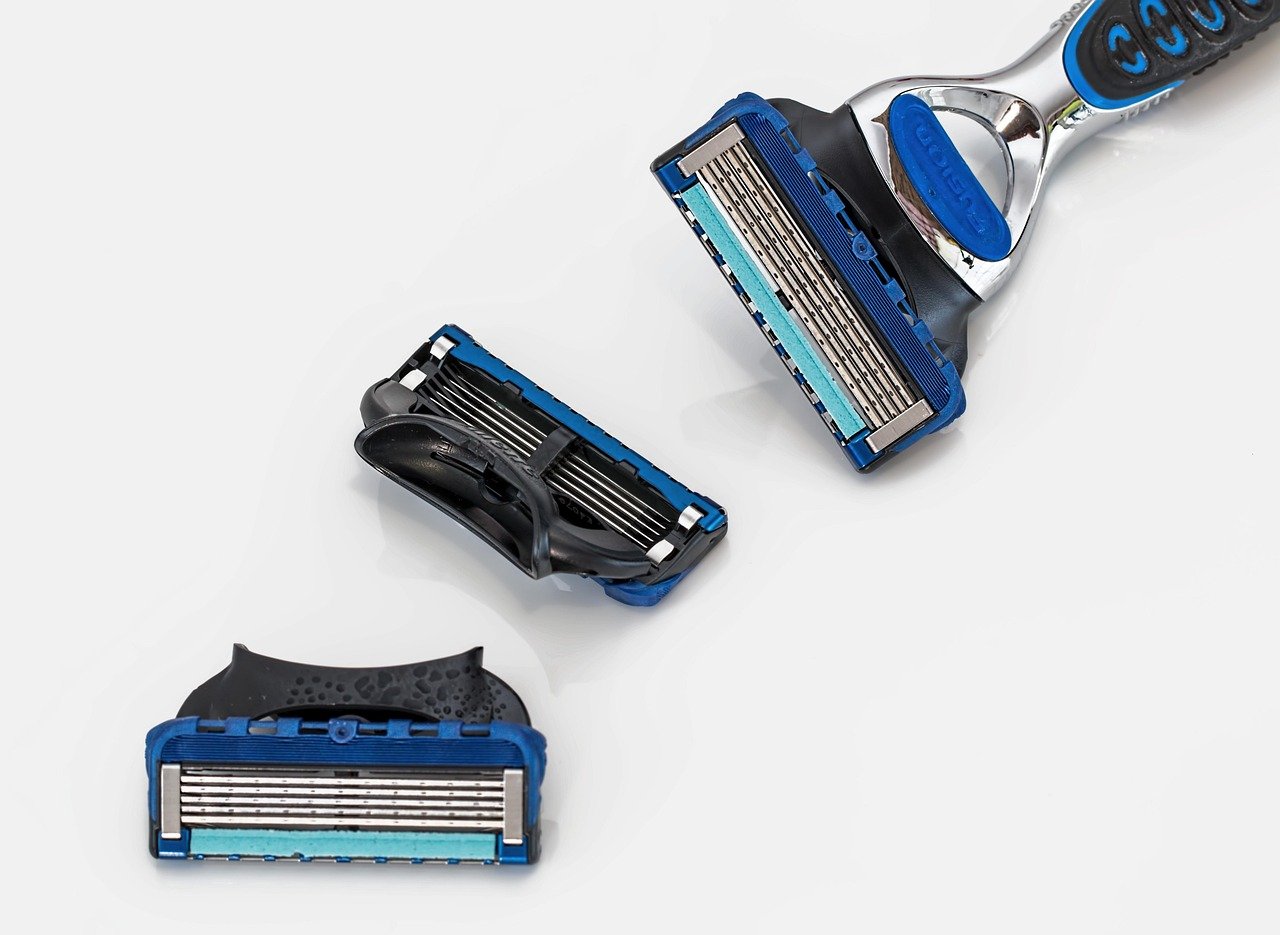
Manual razors cut closer and give more deliberate control around a mustache edge or isolated missed hair. That precision comes with carry complications: an exposed cartridge can nick fingers, collect pocket debris, and lose edge quality when it rubs against keys or other gear. A safety razor or loose blade adds still more handling risk and is rarely a casual loose-pocket item.
Judge the tool where it will live
The useful test is not how either tool performs at a bathroom sink, but whether it completes a realistic touch-up in its intended carry setup.
- Mini electric shaver: confirm it has enough charge, a protected head, and a brush-out routine for hair debris.
- Manual razor: use a rigid blade cover or dedicated sleeve; keep it separate from loose metal objects.
- Either option: test whether it reaches the usual missed area without a mirror, water, or cleanup that the situation cannot support.
If a tool leaves visible stubble, sheds clippings into a bag, or requires supplies that never travel with it, it belongs in a travel kit rather than everyday carry.
Finish the outfit, not the whole routine
Portable fragrance and lint control are presentation tools, not universal EDC essentials. They earn room when dark fabrics regularly collect visible debris, outerwear moves between pet-filled and formal settings, or a long commute makes a modest scent refresh useful.
Solid fragrance versus travel spray
Solid cologne is usually the calmer pocket format: a sealed tin or stick cannot mist neighboring contents, and application stays confined to pulse points. Its wax or balm base also encourages restrained dosing, though it may soften in sustained heat and can pick up lint if the container is left open.
A travel spray gives broader, lighter coverage and may project more like a conventional fragrance. It also introduces a cap, nozzle, and possible leak path; a rigid case and an intact cap matter more than bottle size.
Keep lint removal clean
A compact roller is especially useful on wool, knits, and dark cotton, but its adhesive surface needs protection. A cover prevents pocket grit from occupying the tacky sheet. Reusable gel rollers avoid spent sheets, yet need rinsing and complete air-drying before they grip well again. For either style, use light, single-direction passes; aggressive scrubbing can fuzz delicate fabrics.
Store each tool as if it will be used today
-
Give grooming tools a quiet pocket
Use a slim sleeve, internal organizer slot, or small zip pouch rather than loose pocket carry. Keys and coins nick comb teeth, scratch finishes, and can force a clipper lever open.
-
Keep sharp edges and clean surfaces covered
A cap, sheath, or closed case prevents a razor or scissors from contacting lint and protects fingers when retrieving the kit. Place cutting edges facing inward, away from fabric seams.
-
Avoid heat, dampness, and compression
Hot cars can soften adhesives, warp some plastics, and degrade scent products. Damp pockets invite corrosion; a packed back pocket or tight bag compartment can bend combs and misalign clipper jaws.
-
Empty pocket debris before it becomes grit
Brush lint from comb teeth and rinse-and-dry clippers according to their material and construction. Open folding tools fully so trapped dust around pivots and springs is visible.
-
Inspect the kit on a simple rhythm
Check for loose screws, rough cutting edges, cracked caps, residue, or a case that no longer closes securely. Retire or isolate damaged items until they can be cleaned, adjusted, or replaced.
Combs, trimmers, clippers, and razors can collect skin oils, hair, product residue, and pocket debris even when they appear tidy. Shared tools benefit from cleaning between users, complete drying before storage, and separate disposable cutting components where the design allows.
A personal pouch also reduces casual borrowing and keeps one person’s grooming debris from spreading across the rest of the carry. Never return a damp tool directly to its case; enclosed moisture is especially hard on steel pivots and cutting edges.
Pocket Grooming Tools: Common Questions
How do I know if my pocket clippers need replacing?
Watch for crushing instead of cutting, ragged edges, or needing repeated squeezes for one nail. Corrosion and loose pivots can’t be cleaned away and usually mean it’s time for a replacement rather than more maintenance.
Is a mini electric shaver a replacement for a full shave?
No. A mini electric shaver is a dry-stubble maintenance tool best used for quick touch-ups, not a substitute for a full wet shave. It tends to struggle with longer, flat-lying hair and tight contours.
Should I carry solid cologne or a travel spray?
Solid cologne is usually the calmer pocket format since a sealed tin or stick can’t mist neighboring contents. A travel spray gives broader coverage but adds a cap, nozzle, and possible leak path to manage.
How should I store grooming tools in a pocket?
Use a slim sleeve, internal organizer slot, or small zip pouch rather than loose carry, keep sharp edges covered, and avoid heat, dampness, and compression, which can soften adhesives, invite corrosion, and misalign clipper jaws.
What's the right way to handle a hangnail on the go?
Don’t pull it or clip broadly, since both can extend the split. Keep the area clean, avoid picking at it, and protect the edge from friction until it can be trimmed carefully.
Let Evidence Shrink the Kit
For 30 days, keep a small log whenever a carried tool is used: what it solved, where it was used, whether it left clippings, hair, adhesive, or residue, and whether its grip, edges, or carry position caused discomfort. Note untouched items as carefully as successes; pocket space is evidence, not aspiration.
At month’s end, retire, relocate, or clean idle pieces. If one tool repeatedly pinches, leaks, snags, or creates cleanup, replace that proven weak link with a better-designed equivalent before adding another gadget category. A lean kit improves through observed friction, not accumulation.



One Comment
Do mini electric shavers really make sense for neck cleanup? I can get a close shave at home, but by late afternoon I just want to tidy the obvious spots before dinner. The article makes it sound like they’re not meant to replace a razor, which is probably where I’ve been expecting too much.