

LINVO Polarized Sunglasses Men Women,Black Square Sun Glasses UV400 Lightweight Frame,Retro 80's Style,Classic Unisex Shades,Driving,Fishing,Golfing,Running

Hifot Aluminium Glasses Case, Slim Reading Glasses Case, Portable Travel Metal Eyeglass Spectacles Protection Hard Shell
- GOOD PROTECTION: the soft inside can protect your glasses from damage, scratches, dust, and provide optimal guard for your glasses.
- COMPACT: these aluminium eyeglasses case are very lightweight and portable also allows them to be stored anywhere, so will not add burden to your trip.
- FASHION DESIGN: stylish glasses cases are available in the timeless colors of the black. These holders easily add a subtle touch of style to your outfit.
- SIZE: this pocket glasses sleeve fits most standard sized eyeglasses and reading glasses as well, inner size- 15.2cm/5.98in x 5.7cm/2.24in x 2.6cm/1.02in.
- NOTE: please confirm that your glasses are the right size for this slim metal eyeglasses case before buying.

2 Pack Foldable Reading Glasses for Women Man, Blue Light Blocking, Anti UV Glare, Computer Compact Readers
- 【Block Harmful Blue Light】:Blue light blocking HD clear resin lens, which is anti-reflective, can prevent 90% harmful blue light and 100% UV400.
- 【Compact Design】:The glasses can be folded small enough and come with a sturdy glasses case, allowing you to place or take them anywhere.
- 【Alleviates Eye Fatigue】:Upgrade your screen time with these blue light blocking reading glasses which could alleviat visual fatigue and discomfort caused by various digital screens.
- 【2 PCS - Great Value】:You will get 2 pairs so that you can keep 1 pair in a place where you read frequently and carry the other with you.
- 【Perfect for Daily Use】Ideal for reading, working, scrolling, and all close-up tasks, anytime, anywhere.
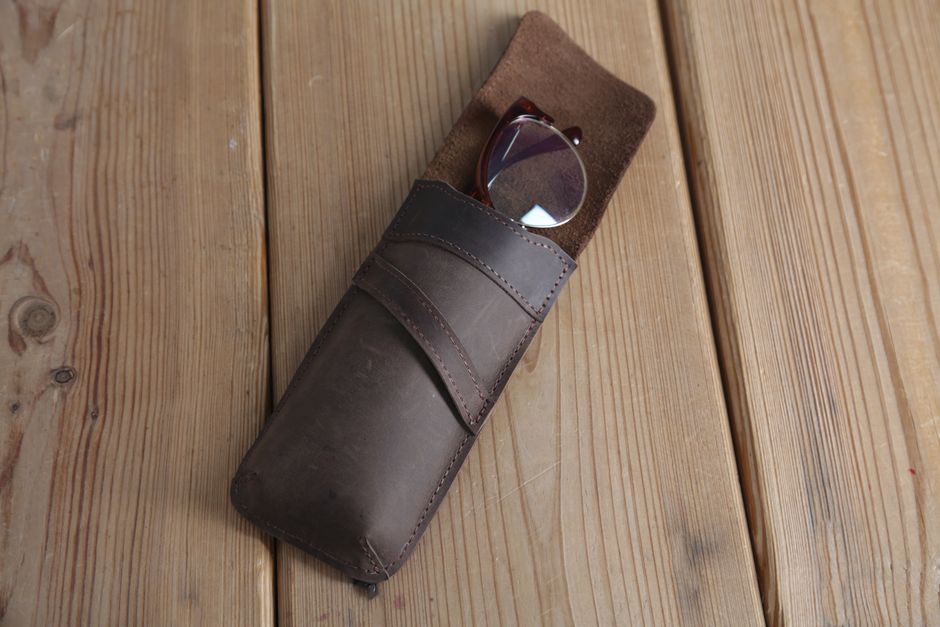
A carry case earns its space only when it prevents the damage that made carrying glasses feel pointless.
A pair tossed into a jeans pocket can meet keys, a phone corner, or the full weight of a car-seat lean—then emerge bent, scuffed, or simply left at home next time. A microfiber pouch cuts cosmetic rubbing, but offers almost no resistance to crushing. For loose-pocket or console carry, a rigid shell is the meaningful upgrade.
The practical compromise is a slim, rounded case that follows the glasses’ folded footprint rather than a deep clamshell built for oversized frames. Metal shells resist point pressure well, though their edges and hinge can feel noticeable in a front pocket; a jacket or sling makes that trade-off easier. For readers, folding frames shrink the entire system, but introduce small hinges that deserve a hard case rather than bare-pocket carry.
- Reserve a little clearance: tightly packed cases can press lenses against grit.
- Keep a small microfiber cloth inside; it separates lenses from loose debris.
Start with the job, not the frame
Limit criteria for choosing an everyday pair
An everyday pair is easier to choose once three limits are fixed. Additionally, these are the primary task, likely damage, and the maximum package worth carrying when selecting a purse water bottle.
Different glasses solve different problems
- Sunglasses manage bright conditions and glare; they are not automatically impact-rated protective eyewear.
- Clear prescription or non-prescription glasses support indoor vision and screen-to-street transitions, but lens coatings and frame geometry still need to suit the environment.
- Readers are a close-work tool. Folding versions reduce bulk, yet do not replace distance correction.
- Safety glasses prioritize defined impact and coverage requirements; their fit and styling may be less convenient for all-day casual wear.
- Paired systems—for example, clear everyday glasses plus compact sunglasses—separate tasks rather than forcing one compromise.
The useful bulk limit includes the case, cloth, and spare pair, not just the folded frame.
A protective setup is more than a case
- Lenses take the surface damage firstHard coatings can slow fine scratching, while appropriate impact-rated lenses can better resist breakage from a drop or flying debris. Neither feature prevents damage when grit is trapped against the lens.Look forCoatings and lens material matched to the likely hazards.AvoidTreating scratch resistance as immunity to abrasion.
- Frames preserve alignment under loadFrame material, hinge construction, and lens retention determine whether the glasses spring back after being sat on, twisted, or dropped. A flexible frame may survive deformation yet still allow lenses to pop out if the groove and rim are weak.Look forSecure lens seating and hinges with controlled, even movement.AvoidEquating a thick-looking frame with crush resistance.
- Soft sleeves control rubbing, not crushingA clean microfiber sleeve separates lenses from keys, coins, and other abrasive carry items, and adds almost no bulk. It provides little protection against bending or a bag being compressed.Look forA dedicated, grit-free sleeve for low-pressure pockets.AvoidUsing a sleeve as protection in a crowded bag.
- Shells trade bulk for structural marginSemi-rigid shells reduce pressure and casual knocks while remaining pocketable; hard cases offer the most reliable defense against crushing when their closure stays shut. In either style, internal clearance matters: a tight case can press grit into the lenses.Look forA case sized to prevent lens contact and resist the expected load.AvoidAn oversized case that lets the pair rattle, or a tight one that pinches.
A sleeve can be sufficient for a quiet shirt pocket. A semi-rigid shell suits ordinary commuting friction and light bag pressure. Hard cases earn their volume when the glasses share space with dense gear, are likely to be sat on, or travel in checked luggage.
Keeping the interior free of sand and metal dust is as important as choosing the shell: protective materials cannot cancel abrasion from debris already inside.
Lens materials and coatings
Poly-carbonate is a common low-bulk choice for a purse water bottle, because it is light and resistant to drops. Additionally, its softer surface can pick up scratches more readily than glass unless it has a hard coat. Trivex offers low weight with crisp optics, while CR-39 plastic provides good clarity but is less suited to repeated impact.
Glass resists surface scratching well and can stay optically clean for a long time.
However, it adds weight and can chip or break under impacts that a plastic lens might survive.
No material makes a pair indestructible.
Additionally, a lens can be scratched by grit, damaged at an exposed edge, or dislodged when a flexible frame twists.
Additionally, coatings solve narrower problems. A hard coat slows everyday abrasion; an anti-reflective coating reduces rear-surface reflections but benefits from careful cleaning; polarization cuts reflected glare from roads and water, rather than increasing physical protection. Rinsing dust away before wiping matters as much as the coating itself.
Everyday impact resistance is not equivalent to occupational eye protection. For work, tools, hazards, or settings with mandated PPE, consult the dedicated guide to Z87 and Z87+ ratings. Additionally, verify markings on the eyewear and packaging, including your purse water bottle.
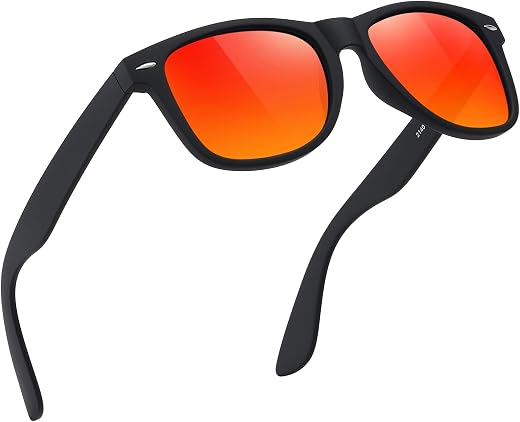
For a casual backup pair, LINVO’s square polarized sunglasses combine a lightweight frame, UV400 designation, and retro styling. They can suit low-stakes carry, but their listing does not establish a safety-impact rating.
Frames that stay put
A carry frame earns its place through retention and repeatable comfort, not aggressive styling. Look for hinges with tight, even resistance and screws that sit flush; barrel hinges with adequate knuckle engagement generally tolerate daily opening better than loose, gritty mechanisms. Spring hinges can reduce pressure at the temples, but add moving parts and are not automatically more durable.
Geometry matters as much as material. A moderately wrapped front, temples that follow the head without pinching, and a bridge that distributes contact over a broad area tend to remain stable during walking, bending, and frequent on-off use. Extremely thin temples pack neatly but may twist more easily; very thick ones can conflict with headphones or hearing protection.
“Rubberized,” “tactical,” and similar finishes are largely cosmetic unless the underlying frame, hinge, and lens mounting are sound. Check that lenses sit evenly in the rims and that the frame does not rack when gently opened.
Persistent slipping down the nose usually signals a fit issue rather than a need for a heavier frame. An optical shop can often adjust temple bend, nose pads, or bridge contact so the pair remains comfortable enough to be carried—and worn.
Match the case to the squeeze
A case earns its volume by resisting the force it is likely to meet. A shirt pocket or organizer sleeve usually calls for a slim rigid shell; a loose tote, backpack bottom, or luggage pocket can subject glasses to point loads from chargers, bottles, and books, making a deeper hard case more credible. Soft pouches save space, but mainly control scuffs—not compression.
Check the fit before committing
Measure the glasses closed, including their thickest point: usually the stacked lenses at the rims or the folded temple tips. Compare that footprint with the case’s internal length, width, and depth, rather than its outside measurements. A useful clearance target is a few millimeters around the frame; a case that barely latches can preload the hinges or rub lens coatings.
- Closure: A positive snap, latch, or firm magnetic closure should stay shut when the closed case is gently shaken. Avoid closures that can catch on pocket lining and spring open.
- Hinges: Open the case fully and inspect whether its hinge or inner seam contacts either lens. Cases that flex at the spine under thumb pressure offer limited crush margin.
- Cloth clearance: A microfiber cloth can ride on top only when the lid closes without force. Fold it flat; a wadded cloth can press the lenses against grit. Keep the cloth clean and separate from keys or coins.
The compact choice is therefore the smallest case that closes freely around the actual pair and remains shape-stable under the carry environment’s expected squeeze.
Slim metal-shell option
This portable aluminum case pairs a compact metal exterior with a soft interior, making it a plausible match for reading glasses or other slim frames carried in a pocket or work bag. Its fit still merits a closed-frame measurement: metal shells protect only when the lid closes without pressing the lenses or temples.

Choose lenses for the light actually encountered
Polarized lenses are most useful where reflected glare dominates: water, wet pavement, snow, pale concrete, and vehicle hoods. They can make long outdoor exposure noticeably less fatiguing, but the filter has a trade-off with certain displays. LCD panels emit polarized light, so a phone, dashboard, or aircraft instrument can appear dim or nearly black at particular head angles; this is why a phone screen can look dark through polarized lenses.
Photochromic lenses suit a carry setup that moves repeatedly between daylight and indoor tasks. They reduce the need to swap pairs, yet their activation depends chiefly on UV exposure, temperature, and lens chemistry—not simply visible brightness. Most windshields block substantial UV, so lenses may remain comparatively light behind the wheel; the limited darkening inside cars matters for frequent drivers.
For predominantly driving use, a dedicated sunglasses tint often delivers more predictable glare control. For screen-heavy indoor days with brief outdoor walks, clear lenses or a lightly responsive photochromic option can avoid carrying a dark lens longer than conditions warrant. Marketing labels matter less than the actual route: open sun, windshield time, display use, and rapid transitions between them.
Close work without the extra case
Occasional close work does not always warrant a full-size reader and case. Folding readers can disappear into a coin pocket, organizer sleeve, or small hard case, then open for a menu, parcel label, transit map, or a brief phone task. Their short temples and extra hinges make a rigid shell especially worthwhile; loose pocket carry invites scratches and hinge stress.
Reader power is a comfortable starting point, not a universal setting. Print size, working distance, lighting, and the length of the task all change what feels usable. A simple reader-strength reference can help narrow the common off-the-shelf options before committing to a spare pair.
For low-bulk carry, prioritize:
- a case that closes without pressing on the folded frame;
- a clear lens intended for close viewing rather than a dark sunglasses lens;
- a backup pair stored separately, so one loss does not end the day’s close-work capability.
Blue-light-filtering readers may suit screen-heavy use, but their folding format and case are the more consequential features for an everyday-carry kit.
Keep impact protection task-specific
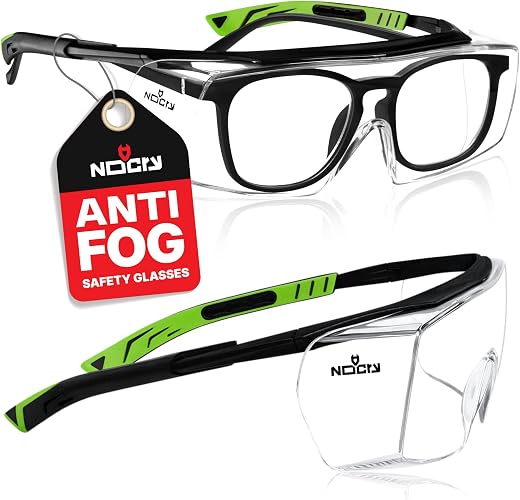
A tough everyday frame is not automatically protective equipment. Durable sunglasses may survive drops and pocket carry, yet lack the coverage, retention, side protection, and tested impact performance required around flying debris, grinding, or shop tools.
Look for a clearly marked ANSI/ISEA Z87.1 rating when task protection is needed; Z87+ denotes high-impact testing. The marking belongs on the eyewear or packaging, not merely in a vague product description. Ordinary polycarbonate lenses alone do not establish a rated safety system.
Three low-bulk approaches cover most situations:
- Slim dedicated safety glasses: keep a lightweight, wraparound rated pair in a work bag, vehicle kit, or tool pouch.
- Over-glasses (OTG): practical for prescription wearers when the fit leaves clearance at the temples and brow without painful pressure.
- Separate work kit: reserve goggles, sealed eyewear, or job-specific protection for dusty, splash-prone, or high-debris work rather than forcing them into casual daily carry.
This separation keeps everyday glasses comfortable while preserving the right protection for the exposure.
Build around the failure most likely to happen
-
Pocket-first: readers that disappear until needed
A folding reader in a truly rigid, lint-free shell suits intermittent menus, labels, and screens. Keep the case dedicated: keys, coins, and loose tools turn a compact pocket into an abrasion and crush test.
-
Outdoor-and-driving: prioritize retention and glare control
A full-size pair with a secure fit, a hard case in the bag or vehicle, and a microfiber cloth handles longer wear better than ultra-compact frames. Polarized lenses can be useful around water and pavement, but display visibility merits a real-world check before relying on them.
-
Modular: separate routine vision from occasional hazards
Carry the everyday pair for ordinary tasks, then add a task-specific protective pair only when the work warrants it. This avoids forcing bulky rated eyewear into every outing while keeping its protection available when relevant.
-
Maintain the protective loop
Rinse grit before wiping, use a clean cloth, and periodically empty the case. Inspect screws, temple tension, nose pads, coatings, and the case closure; a loose hinge or contaminated lining can defeat an otherwise sensible setup.
- Select for the likely insult—pocket compression, reflected glare, or task impact—rather than trying to make one pair cover all conditions.
- A small, clean hard case and a consistently clean cloth often matter more than shaving a few millimeters from frame size.
There is no universal everyday-carry pair. A compact reader system, a retained outdoor pair, or a modular task kit each works when its most probable failure mode has been addressed. Reassess the setup when daily routes, work exposure, or storage habits change.
Everyday Carry Glasses: Common Questions
Is a microfiber pouch enough to protect glasses in a pocket or bag?
A microfiber pouch cuts cosmetic rubbing but offers almost no resistance to crushing. For loose-pocket or bag carry where the glasses share space with dense gear or could be sat on, a rigid or semi-rigid shell is the meaningful upgrade over a soft sleeve.
How do I know if a glasses case actually fits my glasses?
Measure the glasses closed, including their thickest point (usually the stacked lenses at the rims or folded temple tips), and compare that to the case’s internal dimensions rather than its outside measurements. A useful clearance target is a few millimeters around the frame; a case that barely latches can preload the hinges or rub lens coatings.
Are polarized lenses a good choice for everyday carry?
Polarized lenses work well against reflected glare from water, wet pavement, and vehicle hoods, but LCD screens emit polarized light, so a phone or dashboard display can look dim or nearly black at certain angles. If you check screens often, that trade-off is worth testing before committing.
Do I need dedicated safety glasses if my everyday glasses are already durable?
Yes, for hazardous tasks. A tough everyday frame isn’t automatically protective equipment; it may lack the coverage, retention, and tested impact performance required around flying debris or shop tools. Look for a clearly marked ANSI/ISEA Z87.1 rating (Z87+ for high-impact) on the eyewear or packaging itself.
Are folding readers durable enough for loose-pocket carry?
Folding readers’ short temples and extra hinges make a rigid case especially worthwhile. Loose pocket carry without a case invites scratches and hinge stress, so pairing a folding reader with a dedicated hard case matters more than it does for a standard full-size frame.
Purse Water Bottles: Common Questions
Can a bottle ride on its side in a shallow purse?
Only after a filled at-home test. A screw cap with its gasket seated is generally more reassuring than assuming any straw lid will remain sealed when compressed against other items.
Does insulation make a small bottle impractical?
Not necessarily. Insulated walls add bulk relative to capacity, but the 6.8-ounce and 10-ounce Exllena formats trade volume for a compact, rigid shape that is easier to place than a wider bottle.
Which size suits a brief errand or event?
The 6.8-ounce mini suits bags with very limited usable height and depth. The 10-ounce Exllena is the more balanced choice when a little more water matters without moving into a tall-bottle footprint.
When does the 24-ounce POWCAN make sense?
It fits longer stretches away from refill points, provided the bag is tall enough for its roughly 10-inch body and can manage its filled weight. Its slim width does not offset a shallow purse’s height limit.


5 Comments
I keep a pair of prescription sunglasses in my car console, and they get sat on occasionally when it’s packed with random stuff. Is a hard shell actually enough for that kind of crushing, or do I need to look for a specific material/thickness?
A rigid shell is a big improvement over a soft pouch, but “hard case” covers a wide range. For a crowded console, look for a case that does not flex easily when squeezed, has a secure closure, and leaves a little clearance around the frame rather than pressing directly on it. Semi-rigid zip cases are better than cloth, but a molded clamshell is usually the safer choice for repeated crush risk.
Also make sure the hinges aren’t sticking out into the case. I cracked a pair because the case looked roomy, but the temple hinge was taking all the pressure.
The folding-reader idea is tempting because I only need them for menus and tiny medicine labels. Are folding frames noticeably less durable at the hinges, though? More tiny moving parts sounds like a bad bargain lol.
Does polarization really make phone and dashboard displays hard to see, or is that mostly an old sunglasses problem? I drive a lot and glare is brutal, but I use a phone mount for navigation.