
All Health Wound Care Kit & First Aid Kit, Everyday Essentials, 40 Pieces | For Small to Medium Sized Wounds, Professional Use for Car, Home, Camping, Hiking...

CURAD Assorted Bandages Variety Pack, 300 Count, 6 Styles Including Antibacterial, Waterproof, Sheer, Plastic, Heavy Duty & Flex-Fabric, Protects Scrapes,...

SHEARS; EMT 4" (MINI)
A minor wound becomes far more irritating when every useful supply is back at home.
A torn cuticle, heel blister, or scrape from a rushed commute can leave someone improvising with a napkin—especially when the home medicine cabinet is miles away. A useful EDC first-aid pouch is not a miniature emergency room; it is compact capability for routine skin protection and simple cleanup.
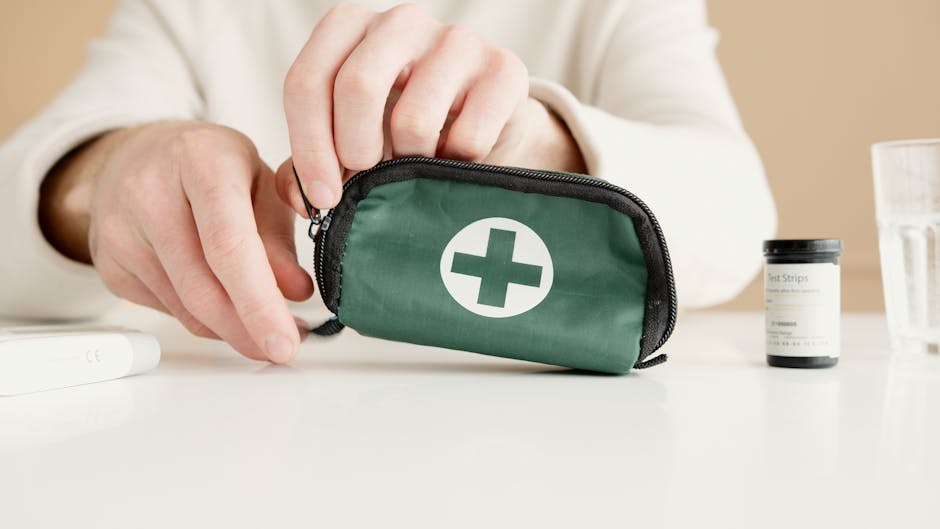
The sweet spot is a slim, weather-resistant pouch holding a few individually wrapped dressings, antiseptic wipes, a small non-adherent pad, tape, and a blister option. Minimalism fails when every item is a single bandage; overpacking fails when the pouch is too bulky to carry and supplies expire unseen. Items intended for more serious injuries belong in a larger home, vehicle, or outdoor kit.
Match the kit to the day
EDC first aid kit overview
An EDC first aid kit is designed for short-term support, not definitive care.
Additionally, it can help contain a small cut, cover an abrasion, or manage a blister. It also supports cleaning up after a minor mishap until thorough cleaning, observation, or professional assessment is available when warranted.
Additionally, contents become more useful when they reflect where the kit travels.
For example, an office-and-commute kit may emphasize small adhesive dressings, antiseptic wipes, and a few gloves.
Similarly, a workshop kit can justify more durable dressings and eye-rinse capability where appropriate.
Additionally, travel favors compact, individually wrapped items; trail use may add blister care and a means to signal or communicate.
Caregiving changes the equation.
Familiar supplies, child-appropriate sizing, and a record of relevant contacts can matter more than adding specialized tools.
However, an EDC first aid kit that’s carried, understood, and replenished is more practical than a large pouch.
A useful filter is frequency, consequence, and access: what minor incidents occur often, what needs brief containment, and how far away are soap, water, supplies, or trained help?
The core wound-care layer
The compact kit earns its space first by handling the ordinary chain of a minor wound.
It cleans, covers, and protects.
Additionally, these are separate jobs, so a pile of adhesive strips alone is not a complete wound-care layer.
- Cleaning supplies: individually sealed wipes and a small saline rinse option remove surface grime when water and soap are unavailable. Antiseptic wipes are convenient, but they are not a replacement for flushing away visible debris.
- Adhesive bandages: provide a ready-made cover for small cuts and abrasions. Mixed sizes matter: a narrow strip is useful on a finger, while a larger pad covers a scraped knuckle more effectively.
- Sterile gauze pads: absorb fluid, cushion a larger area, and can be held in place where a standard bandage will not conform.
- Non-stick pads: sit against a tender or weeping surface without the same tendency to adhere as plain gauze.
- Medical tape or rolled gauze: secure a pad across joints, curved areas, or skin that will not hold an adhesive strip. Paper tape is compact and gentle, though it is less suited to sweat and repeated wetting.
Packaging is part of the equipment. A crushed, damp, opened, or expired wrapper no longer provides the same confidence in the dressing inside.
Storing supplies in a zip pouch or hard case limits lint, moisture, and abrasion. Additionally, a quick periodic check can catch loose wrappers and depleted wipes.
Clean handling matters just as much. Additionally, Hands and surfaces can transfer dirt to a dressing before it reaches the skin. Keeping gauze sealed until needed and avoiding contact with its wound-facing side preserves its intended role.
A compact replenishment-style module
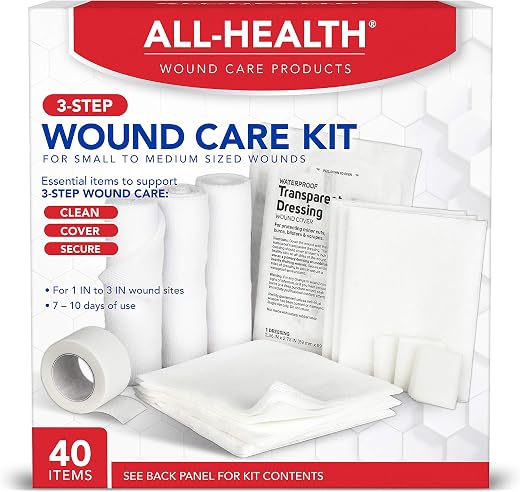
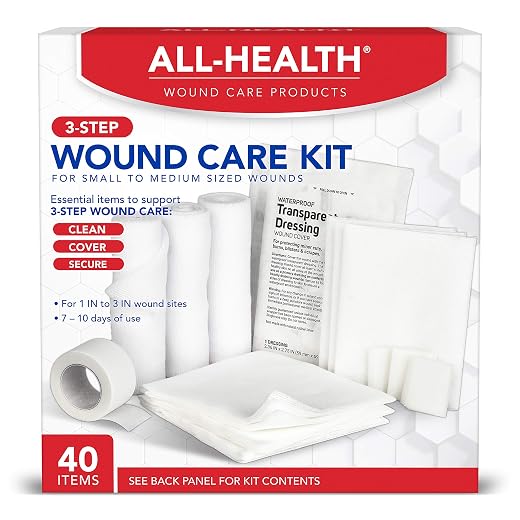
This 40-piece assortment includes 10 gauze pads, 12 non-stick pads, 10 antiseptic wipes, three rolled-gauze pieces, paper tape, and transparent dressings. Its mix illustrates why a capable small kit needs more than adhesive bandages: it includes materials for cleaning, covering, and securing.


A useful mix covers awkward places
- Shape and articulationA small strip that seals a fingertip is not interchangeable with a wider dressing that can bridge a knuckle. Movement repeatedly lifts edges, especially over joints.Look forFingertip, knuckle, and flexible fabric formats alongside ordinary strips.AvoidA box filled only with one straight, narrow strip.
- Moisture and daily wearHandwashing, rain, sweat, and pocket carry create different failure modes. Waterproof options suit brief wet exposure; fabric options tend to conform better during ordinary movement.Look forA small waterproof reserve and flexible dressings for active areas.AvoidAssuming waterproof means suitable for every location or duration.
The small tools that make supplies usable
Dressings are harder to use cleanly when the only available tools are bare hands and a pocketknife. Moreover, a minimal tool layer is usually more valuable than a novelty multitool. It handles access, cleanup, and separation without adding bulk.
- Trauma shears: Blunt-tipped, corrosion-resistant mini shears can cut tape, gauze, clothing, and bandage material with less risk of puncturing nearby skin. A sheath or closed profile matters in pocket carry. Four-inch shears are notably packable, but their short handles offer less leverage on heavy fabric than full-size EMT shears.
- Tweezers: Fine-tip stainless tweezers can help handle small debris or splinter-like material, but they are not a substitute for clinical assessment of embedded, contaminated, or difficult-to-reach material. A cap or sleeve keeps tips aligned and clean.
- Nitrile gloves: One or two pairs create a barrier between hands and bodily fluids. Nitrile is commonly chosen because it avoids natural-rubber latex; gloves still need replacing after use or damage.
- Clean barrier: A folded disposable drape, clean dressing wrapper, or small polyethylene sheet gives supplies a cleaner temporary work surface. It is not a sterile field.
Additionally, skip loose blades, fragile gadget tools, and unprotected metal that can rust, snag, or contaminate the pouch.
Plan for friction and heat
Walking commutes, new boots, climbing shoes, and long travel days create friction injuries. Additionally, ordinary adhesive strips rarely manage them well. A small prevention layer keeps a developing hot spot from becoming the day’s limiting problem.
Please include a few targeted items. Specifically, these address the most relevant risks.
- Low-profile blister dressings for clean, intact friction blisters; hydrocolloid styles cushion and reduce rubbing, but need enough surrounding dry skin to adhere.
- Smooth medical tape or a precut friction patch for covering a hot spot before skin breaks. Tape that wrinkles can create a new rub point.
- A small piece of moleskin or foam to off-load pressure around, rather than directly over, a tender area.
- A sterile non-adherent pad for minor burns or abraded skin, since adhesive dressings can be uncomfortable to remove.
Similarly, a climbing-focused kit may favor tape.
A commuter’s kit may favor blister dressings.
Additionally, for travel, individually wrapped pieces tolerate humidity and baggage better than loose cut-offs.
Also, minor burns can be cooled promptly with clean running water when available.
A compact kit mainly provides clean coverage afterward.
Keep medicines separate and personal
Pain relievers, antihistamines, antiseptic products, and antibiotic or protective ointments are often treated as default first-aid-kit contents.
They are better considered individual modules. However, a product that suits one person may be unsuitable due to allergies. This depends on existing medicines, medical conditions, or prior reactions.
Keep any selected product in its original, clearly labeled packaging.
The label preserves active ingredients, directions, warnings, lot information, and expiry details.
Additionally, information is easily lost when tablets or creams are decanted into unlabeled containers.
Check expiry dates and replace items exposed to prolonged heat, moisture, or leakage.
Furthermore, car interiors and tightly packed bags can be especially hard on liquids, gels, and adhesive seals.
Antiseptics and ointments also add practical trade-offs.
Additionally, single-use packets reduce spills and contamination.
Tubes may be more compact for repeated personal use.
Local rules can affect possession, transport, and sharing of some medicines, particularly across borders or in schools and workplaces.
A kit inventory card can record what is inside without turning the pouch into a communal medicine cabinet.
Loose pills and mystery creams save little space while removing the details needed to identify and handle them appropriately.
Trauma gear is a separate decision
Everyday wound care in an EDC first aid kit handles common problems: small cuts, abrasions, blisters, and cleanup. Moreover, trauma-oriented equipment addresses uncommon, immediately life-threatening bleeding or penetrating chest injuries. It is not simply an upgraded version of a bandage pouch.
A tourniquet, hemostatic dressing, or chest seal requires a deliberate risk assessment.
Additionally, consider environments, time to professional response, local policies, and the carrier’s ability to recognize when the tool is relevant.
A kit for a remote worksite or range may differ from one used between office and home.
Ownership alone is a weak safety measure. Additionally, these items require credible, hands-on instruction. They also need inspection. It should cover sealed packaging, legible dates and labels, protection from crushing and heat, and a location that remains accessible.
Avoid novelty “IFAK” bundles with undocumented components. Moreover, for high-consequence gear, established manufacturers, traceable sourcing, and training-aligned designs are more meaningful than an impressive item count.
A compact kit can carry trauma equipment, but it cannot substitute for practical training or emergency services. Damaged, expired, counterfeit, or unfamiliar items may create false confidence at the moment clarity matters most.


Pack for access
-
Stage urgent basics
Keep the most frequently reached-for items—bandages, wipes, and tape—nearest the opening so they don’t require digging through the rest of the kit.
-
Use a tin to protect flat dressings
A rigid tin keeps flat bandages and gauze from creasing or getting crushed in a pocket or bag.
-
Use a zip pouch to isolate liquids and reduce bulk
A zip pouch contains any liquids or gels separately while keeping the overall kit compact.
-
Choose the format for the setting
Organizer inserts make contents easy to see at a glance, while vehicle pouches prioritize fast access over visibility.
Assembling an EDC IFAK
Zac In The Wild demonstrates EDC IFAK assembly.
EDC First Aid Kits: Common Questions
What's the difference between an EDC first aid kit and a full home kit?
An EDC kit is designed for short-term support, not definitive care—it can contain a small cut, cover an abrasion, manage a blister, or clean up after a minor mishap until thorough cleaning or professional assessment is available. Items intended for more serious injuries belong in a larger home, vehicle, or outdoor kit.
What core wound-care items belong in a compact kit?
A useful mix covers clean, cover, and protect: individually sealed cleaning wipes, mixed-size adhesive bandages, sterile gauze pads, non-stick pads for tender or weeping skin, and medical tape or rolled gauze to secure a pad across joints or curved areas.
Should an everyday carry kit include a tourniquet or other trauma gear?
That’s a separate, deliberate decision based on likely environments, time to professional emergency response, and the carrier’s ability to recognize when the tool is relevant. Trauma equipment requires credible, hands-on instruction and periodic refreshers—ownership alone is a weak safety measure.
How should medications be carried in an EDC first aid kit?
Keep any selected product in its original, clearly labeled packaging, since the label preserves active ingredients, directions, warnings, and expiry details. Pain relievers, antihistamines, and ointments are individual modules—what suits one person may be unsuitable for another due to allergies or existing medicines.
How often should an EDC first aid kit be checked and restocked?
A quick periodic check can catch loose wrappers, depleted wipes, and expired items. Empty slots, torn pouches, dried-out wipes, corrosion, and bandages with lifted adhesive are signals that an item may no longer be ready to carry and should be replaced.
Maintain the loadout, not just the pouch
- Used or compromised supplies no longer count as available inventory.
- Heat, moisture, crushed wrappers, and failing adhesive can justify retiring an item.
- Repeated real-world needs reveal which formats deserve space.
An EDC kit remains dependable through a brief reset after use and occasional inspection. Empty slots, torn pouches, dried-out wipes, corrosion, and bandages with lifted adhesive are useful signals that an item may no longer be ready to carry.
A simple filter is clean, cover, protect: retain supplies that support cleanup, suitable coverage, and protection from the conditions encountered most often. Each real use can refine the kit—adding a format that solved a recurring problem and removing bulk that never earned its place.



4 Comments
I appreciate the warning about intact wrappers. I had a couple of adhesive bandages loose in a wallet kit and the paper backing got pretty gross around the edges. Tiny kit, huge lesson 🙃
I never realized there were different bandages for knuckles versus fingertips. Are the flexible fabric ones actually worth carrying, or do regular strips work well enough for most little cuts?
Regular strips handle many cuts, but they tend to lift quickly on joints and around fingertips because those areas bend and get wet often. A small handful of flexible or knuckle-shaped dressings can solve that problem without adding much bulk. Think of them as gap-fillers rather than replacing every standard strip.
I’m not sold on mini shears for normal EDC. Scissors seem like one more item to rust, poke through the pouch, or get confiscated somewhere. Can’t you just tear tape and use a bandage wrapper edge when needed?