
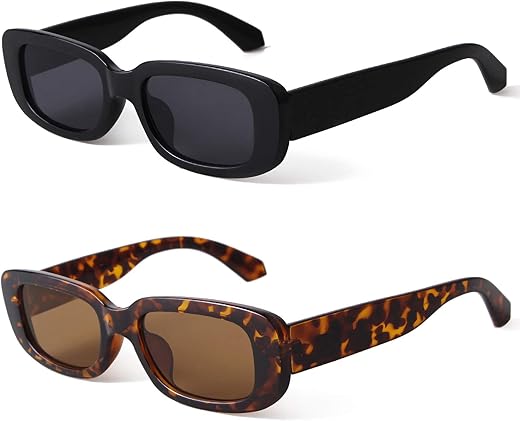
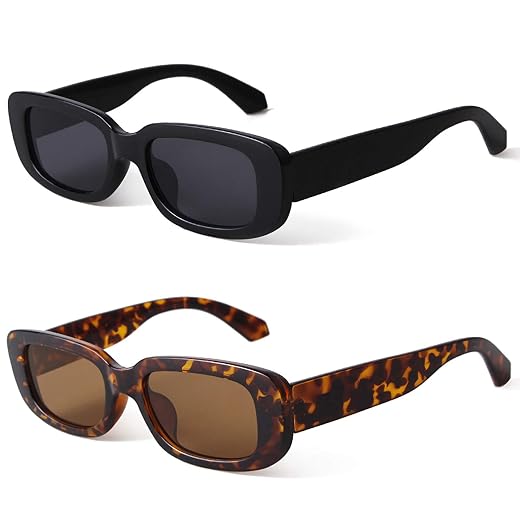
KUGUAOK Retro Rectangle Sunglasses Women and Men Vintage Small Square Sun Glasses UV Protection Glasse
- Imported

2 Pack Foldable Reading Glasses for Women Man, Blue Light Blocking, Anti UV Glare, Computer Compact Readers
- 【Block Harmful Blue Light】:Blue light blocking HD clear resin lens, which is anti-reflective, can prevent 90% harmful blue light and 100% UV400.
- 【Compact Design】:The glasses can be folded small enough and come with a sturdy glasses case, allowing you to place or take them anywhere.
- 【Alleviates Eye Fatigue】:Upgrade your screen time with these blue light blocking reading glasses which could alleviat visual fatigue and discomfort caused by various digital screens.
- 【2 PCS - Great Value】:You will get 2 pairs so that you can keep 1 pair in a place where you read frequently and carry the other with you.
- 【Perfect for Daily Use】Ideal for reading, working, scrolling, and all close-up tasks, anytime, anywhere.

Hifot Aluminium Glasses Case, Slim Reading Glasses Case, Portable Travel Metal Eyeglass Spectacles Protection Hard Shell
- GOOD PROTECTION: the soft inside can protect your glasses from damage, scratches, dust, and provide optimal guard for your glasses.
- COMPACT: these aluminium eyeglasses case are very lightweight and portable also allows them to be stored anywhere, so will not add burden to your trip.
- FASHION DESIGN: stylish glasses cases are available in the timeless colors of the black. These holders easily add a subtle touch of style to your outfit.
- SIZE: this pocket glasses sleeve fits most standard sized eyeglasses and reading glasses as well, inner size- 15.2cm/5.98in x 5.7cm/2.24in x 2.6cm/1.02in.
- NOTE: please confirm that your glasses are the right size for this slim metal eyeglasses case before buying.
A pair only matters when it is there at the exact inconvenient moment.
The handsome pair left on a hall table is useless when sun breaks through a commute or a restaurant menu turns into small print. Pocket space is scarce: glasses earn it through repeated usefulness, little carry annoyance, and a replacement cost that does not make every misplaced case feel disastrous.
Low-profile frames, secure hinges, and a case that resists crushing matter more than display-case appeal. A carry pair also needs a role: glare control outdoors, close-focus help, or a compact backup—not an expensive all-purpose object asked to survive keys, lint, and hurried sitting.
- A dedicated hard case prevents most pocket damage.
- A backup pair lowers the stakes of loss.
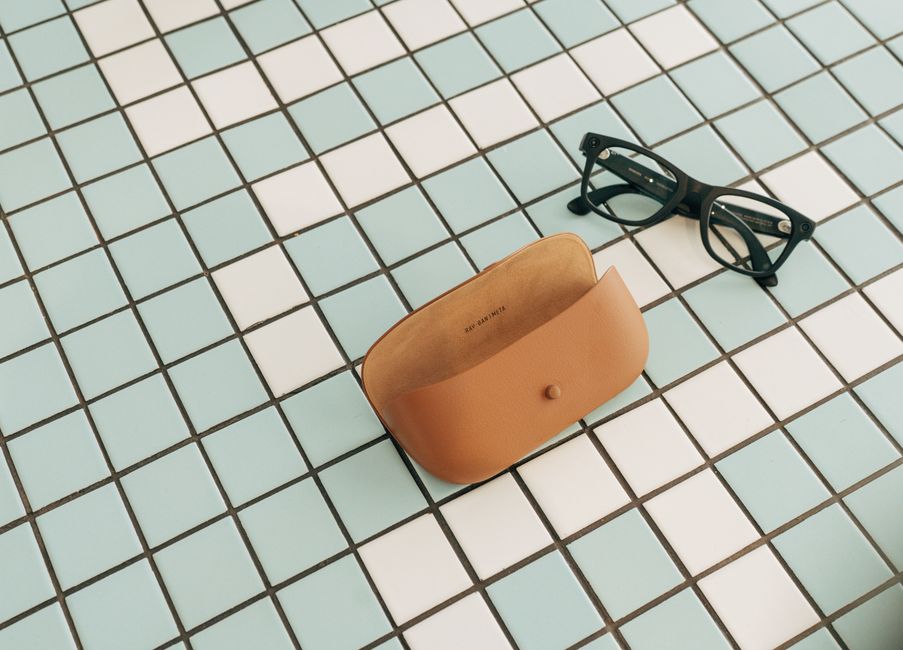
Sun pair: the surprise glare gap
A pair earns space when bright conditions repeatedly appear between home and destination: driving toward low sun, outdoor queues, lunch walks, or a suddenly clear commute. A slim dedicated sun pair is often more dependable than hoping a primary prescription frame will always be on hand.
Reading pair: the small-print gap
This role becomes clear when menus, medication labels, receipts, device settings, or package instructions are routinely held farther away for clarity. Readers are task tools, not general-purpose distance glasses; power and fit still matter.
Protective pair: the dirty or impact-prone gap
Workshop dust, yard debris, cycling wind, and splash-prone chores call for eyewear designed for that environment. Ordinary fashion glasses may cover the eyes but do not automatically provide suitable impact, side, or wraparound protection.
Prescription backup: the stranded-primary gap
A backup matters when loss, breakage, rain, travel, or an overnight stay would leave essential vision correction unavailable. It can be an older valid pair or a compact spare, provided its prescription remains usable.
Primary plus specialist spare
One everyday pair need not perform every job. A primary frame can handle normal wear while one carefully chosen backup addresses the most frequent failure point—usually glare, close work, or rough activity.
Pocketability is more than grams
A frame can be light yet awkward to carry.
In a pocket or small pouch, everyday carry glasses shape matters.
It covers lens height, front width, temple stack, and the hinge’s widest point.
Tall lenses create a broad, rigid slab, while thick hinges form two pressure points.
These can catch on fabric.
The shapes that pack cleanly
Straight or gently curved temples generally lie flatter against the back of the frame than strongly wrapped sport temples. A low-profile spring hinge may improve fit for everyday carry glasses, but it also adds width and moving parts. For a true spare, ordinary barrel hinges are often easier to inspect and less bulky when folded.
Common constructions make different trade-offs:
| Construction | Carry character | Practical limitation |
|---|---|---|
| Thin injected plastic | Light, simple, usually flat-folding | Can feel flexible; hinge quality varies |
| Acetate | Smooth, substantial feel | Often thicker at the front and temples |
| Metal wire frame | Slim folded profile | Nose pads and thin rims can snag or bend |
| Folding frame | Shortest packed length | Extra joints add bulk and complexity |
Weight still matters for all-day comfort, but ultralight is not a durability rating. A slightly heavier frame with aligned hinges, firm temple screws, and a case-friendly silhouette can be the more dependable carry piece.
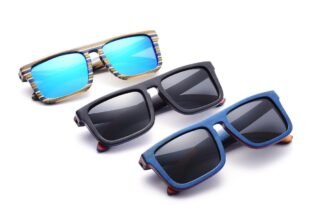
Before pocketing everyday carry glasses, fold the frame and check three things. First, check whether the temples overlap neatly. Additionally, confirm that the hinges protrude and that the lenses fit a slim sleeve or hard case. The KUGUAOK retro rectangle sunglasses use a small square silhouette, and their UV claim warrants label verification. Additionally, the compact geometry may suit a low-bulk spare.
Read the label, not the darkness
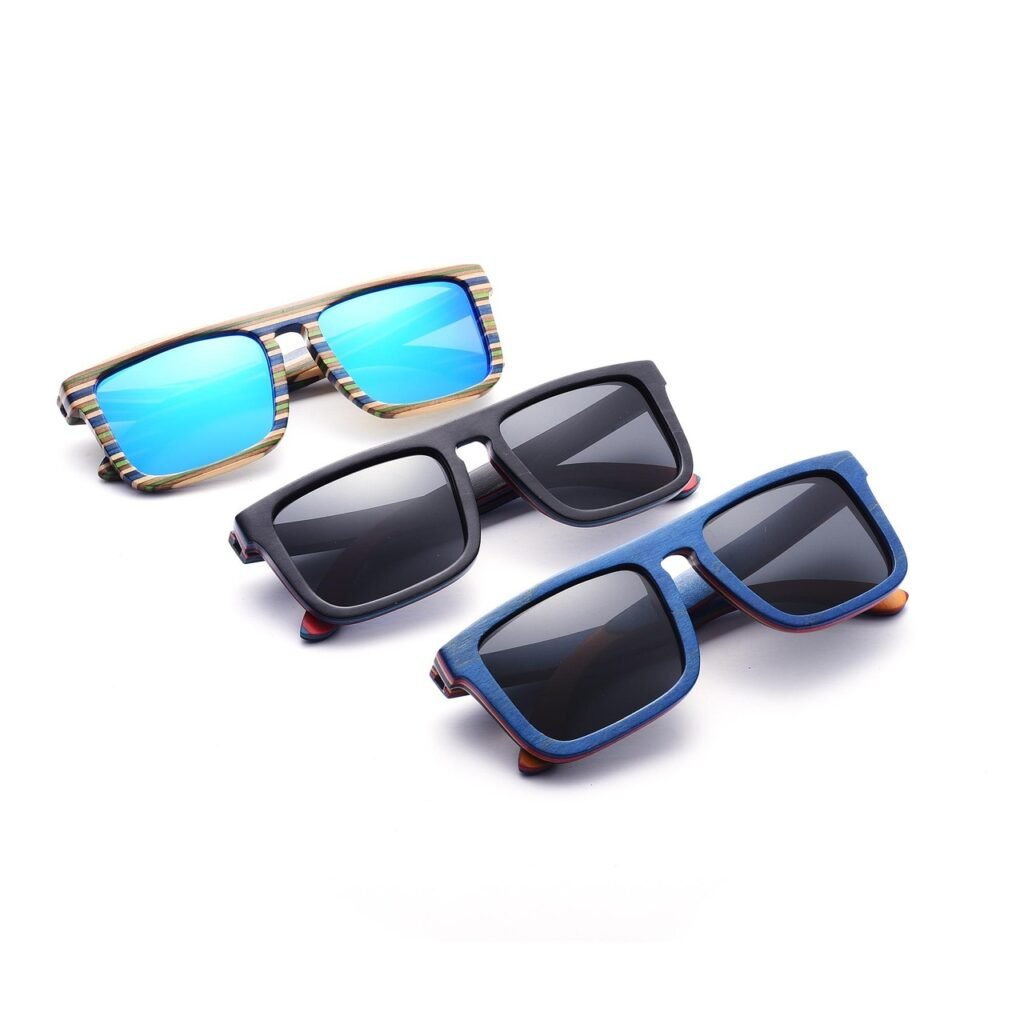
- Verified UV coverageFor sun eyewear, a clear claim of 100% UVA/UVB protection or UV400 is the starting point; it addresses ultraviolet radiation rather than perceived brightness. Lens color and mirror finish do not establish this protection.Look forA specific UV-protection marking from a credible seller or maker.AvoidAssuming a dark, cheap, or mirrored lens blocks UV.
- Polarization for reflected glareA polarizing filter can cut harsh horizontal reflections from wet roads, water, and vehicle hoods, often making a commute feel less fatiguing. It is not a substitute for UV protection and can make some LCD displays or instrument panels harder to read at certain angles.Look forPolarization where road, water, or pavement glare is routine.AvoidTreating polarized as synonymous with UV-protected or universally clearer.
- Tint matched to the settingGray tends to preserve neutral color perception; brown or amber can increase apparent contrast in variable light; green sits between them. The useful choice is the one that keeps detail comfortable in the conditions the pair actually sees.Look forA tint chosen for familiar light and color-critical tasks.AvoidChoosing a tint solely because it makes the scene look darker.
- Visible-light transmissionVLT states how much visible light reaches the eye: a lower percentage means a darker lens. It governs brightness comfort, while UV labeling governs protection, so two equally protective pairs can feel dramatically different in overcast streets, open water, or bright snow.Look forVLT appropriate to the brightest and dimmest likely carry conditions.AvoidUsing lens darkness as a proxy for ultraviolet filtering.
Readers for the moments small print appears
Compact readers earn their place when close work is frequent but short: checking a restaurant menu, signing a delivery screen, reading a transit notice, or inspecting a product label. In these moments, the value is not an all-day optical experience; it is having usable magnification before the moment passes.
Match the frame to the session
- Full-frame readers suit longer waits, paperwork, and sustained phone use. Their larger lenses give a more forgiving viewing area and familiar temple fit, but ask for a bag pocket or dedicated case.
- Slim readers are a practical middle ground for a shirt pocket or small organizer. They retain conventional temples, usually making them easier to put on repeatedly than more elaborate compact designs.
- Folding readers minimize packed length by adding hinge points. They work well as an occasional backup, provided their case protects the bridge and folding joints from crushing.
- Pincer styles can be exceptionally small because they grip at the nose rather than use temples. That convenience can come with less stable positioning and a smaller usable field—better for a quick label than a long article.
Miniaturization concentrates stress at hinges, bridges, and cases. A pair carried loose with keys is effectively disposable; a rigid or semi-rigid case makes a compact reader far more dependable. For a backup, replacement tolerance matters: a modest, easily replaced pair may be sensible for a vehicle, travel kit, or jacket pocket, while the most comfortable full-frame option can remain the choice for extended reading.
A listed two-pack of foldable readers with a case offers a simple redundancy approach: one pair can stay at a regular reading spot while the other travels. Its blue-light and UV claims are separate from its core carry advantage—small folded storage—and do not substitute for confirming the needed reader strength.
Choose the coverage, not just the lens
One lens, or a deliberate backup
Photochromic lenses suit walks and errands that move repeatedly between indoor light and open sky, but they are a convenience layer—not a universal sun solution. Most systems react chiefly to ultraviolet light, and a car windshield filters much of it; that is why many lenses stay relatively light behind the wheel. They also need time to change, so a sudden exit from a garage may outpace the tint.
For frequent driving or high-glare exposure, dedicated polarized sunglasses are often the more reliable carried pair. A prescription backup serves a separate purpose: restoring familiar correction after a loss, so it benefits from a rugged case and easy replacement.
Clip-ons retain one prescription and pack flat, but must match lens shape, avoid rubbing coatings, and stay secure. They suit occasional outdoor use; rapid transitions generally favor a second pair.
A secure fit without pressure
A carry pair should remain at its intended height while walking, looking down, speaking, and bending to pick up a bag—without pinching behind the ears or leaving pronounced marks. Stability comes from the relationship between bridge contour, pad contact, temple length and bend, and the frame’s front-to-back balance. A heavy lens front can rotate forward even when the temples feel tight.
Slipping is not one fault. Skin oil, sweat, a bridge that is too wide or shallow, worn temple tips, loose hinges, and an altered pad angle can each move a frame differently. The practical ways to diagnose a slipping pair begin with noticing when it moves: during heat, while looking down, or all day.
Indiscriminately tightening temples can create pressure points and still leave the bridge unsupported. A proper adjustment targets the component causing the movement.
A pair that feels secure standing still can still slip once actual movement enters the picture. Bend to tie a shoe, look down at a phone, and speak for a minute, then check whether the frame returns to its resting position without being pushed back.
Protect the pair that travels
A glasses case earns its space when it matches the way the frame is carried. A pocket shared with keys, coins, a phone, or a seat-belt buckle needs more than scratch protection; it needs resistance to bending and point loads.
Match the case to the hazard
- Soft sleeves add almost no bulk and allow the fastest draw. They keep off dust and light abrasion, but do little against a frame being sat on or squeezed beside hard objects.
- Semi-rigid shells suit bags and jacket pockets: their padded structure helps resist everyday compression without the bulk of a full clamshell. A zip or firm closure also keeps lenses from collecting loose-pocket debris.
- Hard cases make most sense for thin metal readers, rimless styles, and spare prescription pairs—frames that can be misaligned by a surprisingly small crush. They trade some access speed for a defined protected volume.
Check the case with the glasses fully folded, not simply laid on top. Temple tips, thick hinges, and curved wrap frames can press against a lid that appears roomy. There should be slight clearance around the frame, while enough internal support prevents it from rattling.
A lined case is not automatically a cleaning solution. Dust or grit trapped inside can mark lenses during repeated insertion. Empty it occasionally, wipe the lining gently, and reserve a clean microfiber cloth for lenses rather than using a shirt or pocket.
When eyewear needs to protect
Everyday sunglasses, readers, and blue-light-style frames are not substitutes for task-appropriate impact protection. A tough-looking casual frame may still lack the tested lens retention, coverage, and impact performance needed around flying debris, tools, or chemicals.
On U.S. protective eyewear, ANSI/ISEA Z87.1 markings identify tested protectors. Z87 denotes basic-impact performance; Z87+ denotes high-impact performance. Markings need to apply to the complete, compatible protector—not merely a lens or a frame that resembles safety eyewear. Side shields and sealed coverage may also matter for the specific task.
Fogging can defeat an otherwise suitable pair the moment a cold lens meets warm, humid air: stepping indoors, lifting a face covering, or working hard in changing weather. Once visibility clouds, eyewear is often pushed up or removed. Anti-fog treatments, clean lenses, and a fit that allows some airflow can make protective eyewear more practical to keep on.
A Z87 marking addresses impact-performance categories; it does not automatically establish protection from every workplace or project hazard.
Build a one-week carry trial
-
Pick one repeatable moment
Use a task that reliably creates friction: reading delivery labels outdoors, walking between bright streets and interiors, or checking a phone in a workshop.
-
Assign one pair and one storage spot
Carry the selected glasses in the same pocket, bag sleeve, or console every day. A case that is too bulky, noisy, or slow to open is part of the test—not an accessory detail.
-
Run the task under real conditions
Note whether the lens delivers usable contrast, glare control, or near focus; whether coverage suits the exposure; and whether the frame stays aligned while bending, turning, or looking down.
-
Record each interruption
A wipe needed after pocket debris, a temple that catches, pressure at the bridge, lens fog, or a forgotten case identifies the component creating resistance.
-
Change only the failing component
Try a different case before replacing a sound frame, or adjust fit before changing lens type. Retest the same task for several days so convenience is not confused with novelty.
Everyday Carry Glasses: Common Questions
Does a dark or mirrored lens mean it blocks UV?
No. Lens color and mirror finish do not establish UV protection. For sun eyewear, look for a clear claim of 100% UVA/UVB protection or UV400 from a credible seller or maker—that’s the marking that actually matters.
What's the difference between polarization and UV protection?
They solve different problems. Polarization cuts harsh horizontal reflections from wet roads, water, and vehicle hoods, while UV protection filters ultraviolet radiation. A polarized lens is not automatically UV-protected, and polarization can make some LCD displays or instrument panels harder to read at certain angles.
Does an ultralight frame mean it's more durable?
No, ultralight is not a durability rating. A slightly heavier frame with aligned hinges, firm temple screws, and a case-friendly silhouette can be the more dependable carry piece than a featherweight one with weak hinges.
What does a Z87 marking on safety glasses actually mean?
Z87 denotes basic-impact performance and Z87+ denotes high-impact performance under the ANSI/ISEA Z87.1 standard. The marking needs to apply to the complete, compatible protector—not merely a lens or a frame that resembles safety eyewear—and it doesn’t automatically cover every workplace hazard.
Do photochromic lenses work well behind a car windshield?
Not reliably. Most photochromic systems react chiefly to ultraviolet light, and a car windshield filters much of it, so these lenses often stay relatively light while driving. For frequent driving or high-glare exposure, dedicated polarized sunglasses tend to be more reliable.
- A compact pair that remains in its case is not truly pocket-ready.
- The smallest useful change is often a case, fit adjustment, or lens-cleaning routine rather than a new frame.
A carry pair earns space when it can be retrieved, worn, and returned without disrupting the recurring task it exists to solve. Optics, protective coverage, stable fit, and storage form one system: weakness in any one part can make an otherwise capable pair stay behind.


3 Comments
Could someone explain VLT like I’m five? I bought “UV400” sunglasses that are pretty light gray, and a friend told me they can’t be good in bright sun because the lenses aren’t dark enough. This article seems to say those are separate things, which is honestly news to me.
They are separate. UV400 refers to blocking ultraviolet radiation, while VLT (visible light transmission) tells you how much visible light reaches your eyes. A light-gray lens can provide full UV protection but let through more visible light than a dark lens, so it may feel less comfortable in intense sun even though its UV protection is good. Polarization is another separate feature: it reduces certain reflected glare, especially off water, roads, and car hoods.
This was my misunderstanding too. I have lighter polarized lenses for driving and darker non-polarized ones for the beach; both say UV400. The lighter pair is fine most days, but on snow or midday water I definitely want the darker coverage.