


JANKS Small Crossbody Bag for Women - Mini Phone Purses with Crossbody Strap and Wallet - Nylon Arm Bag
- Dimensions: The right size you just need ! 7.5 inch(H) *4.5 inch(L) * 2.36 inch(W) ; Come with a detachable & adjustable long strap, length range from 26 to 58 in ; Weight : 120g/4.2 ounces. Lightweight and easy to carry
- Small but Roomy: The small purses is perfect for holding your mobile phones up to 6.8 inch (With Slim Case), Please measure your phone and phone case if fits the pocket before purchase. You can organize your small shoulder purse simply
- Smart Design: 2 large main pockets ,1 middle , 1 small front compartment. You can organize your staffs well. Such as phone, napkin paper, credit card, cash, keys, passport, lipstick, cosmetics, tissues, mascara, coins etc. Mini purse with a large capacity
- The over the shoulder purses for women is made of water resistant nylon fabric. The travel purse is suitable for many occasions night out, travel, shopping, work or dating, tourism, etc. Perfect for daily, The Phone Pouch is practical and fashionable
- Wonderful Gift: it's a small over shoulder bag for women, The arm bag comfortable to wear and also a great gift for women, girls and teens. the full flap cover can Protect your cellphone and other stuffs from dust, shocks, scratches and insure the safety
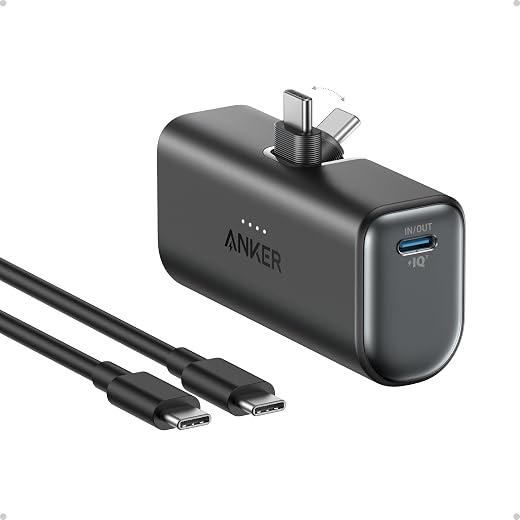
Anker Nano Power Bank,5,000mAh Portable Charger, Built-in USB-C Connector | 5,000mAh 22.5W Portable Charger for iPhone 17 / 16 / 15 Series, Galaxy S23 / S22...
Features
| Connector Type | USB Type C |
| Battery Capacity | 5000 milliamp_hours |
| Other Special Features of the Product | Fast Charging |
| Voltage | 5 volts |
| Power Source | Battery |
| Amperage | 2 A |
| Number of Ports | 1 |
| Output Current | 1 A |
| Compatible Devices | iPhone 15, iPhone 16 |
| Compatible Cellular Phone Models | Apple iPhone 15, Apple iPhone 16, Samsung Galaxy S22 5G, Samsung Galaxy S23 5G |
| Compatible Phone Models | iPhone 16/15 Series |
| Reusability | Rechargeable |
| Number of Outlets | 2 |
| Antenna Location | Indoor/Outdoor |
| Warranty Type | Limited |
| Item Weight | 3.5 ounces |
| Item Dimensions L x W x Thickness | 3.03"L x 1.45"W x 0.98"Th |
| Unit Count | 1 Count |
| Item Dimensions | 5.16 x 3.98 x 1.42 inches |
| Battery Weight | 69.7 g |
| Brand | Anker |
| Model Name | A1653 |
| Model Number | A1653 |
| Number of Items | 1 |
| UPC | 194644145880 |
| External Testing Certification | / |
| Manufacturer | Anker Innovations Limited |
| Number of Batteries | 1 C batteries required. (included) |
| Mfr Part Number | A1653 |
| Warranty Description | 24 months |
| ASIN | B0C6XK77HJ |
| Color | Black |
| Battery Cell Type | Lithium Polymer |
- Power Up Your iPhone 15 Swiftly: Enjoy rapid device charging with dual USB-C ports featuring PowerIQ 3.0 technology and a robust 22.5W output, ensuring your iPhone 15 is ready to go when you are.
- Tangle-Free, Hassle-Free: Experience the convenience of a foldable USB-C connector design that keeps your iPhone 15 charging cable neat and organized, perfect for those who value efficiency and order.
- iPhone 15 Energy On The Move: With a 5,000mAh battery capacity, stay powered throughout your day, making it ideal for travel and extended periods away from power outlets.
- Sleek Portability: Slide this iPhone 15 portable charger into your pocket or purse with its compact and stylish design, blending seamlessly with your on-the-go lifestyle and fashion sense.
- What You Get: Anker Nano Power Bank (22.5W, Built-In USB-C Connector), 2 ft / 0.6 m USB-C to USB-C cable, welcome guide, user manual, 24-month worry-free warranty, and our friendly customer service.
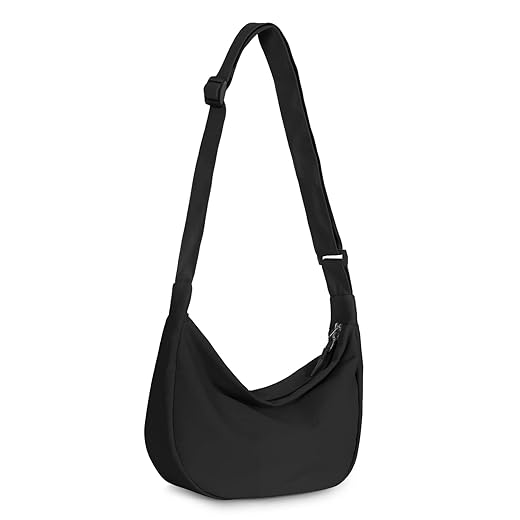
Crossbody Crescent Bag for Women Men, Crescent Bag with Adjustable Strap. | Crescent Bag with 2 Zippers Lightweight & 2 Inner Pockets & 1 Inner Zipper Pocket.
- 【Casual unisex crescent bag】 Versatile fashion casual waist bag has adjustable straps, it can be used as a cross bag, shoulder bag, waist bag, or fanny pack, suitable for various dressing styles, such as workwear style, ivy style, casual style, sports style, biker style, etc. iioscre crossbody bag is perfect for daily commuting or traveling! This is an ideal item that fashionable women must have!
- 【Adjustable straps and double zippers】The crossbody crescent bag can adjust the straps according to your own needs, and the soft straps are also very friendly to bare skin! At the same time, the fanny pack has a double zipper design, and the smooth zipper makes you don't worry about the zipper getting stuck!iioscre crossbody bag is perfect for short trips!
- 【Water-resistance and durability】The iioscre crossbody bag is made of hear wearing polyester fabric, waterproof and durable, lightweight, The size of iioscre crossbody crescent bag is 12 * 4 * 9 inches, just only 150g! Iioscre crescent bag is easy to clean and maintain, perfect for holding makeup, sunscreen cream lipstick, keys, mini fans, and more! Great for shopping tours, hiking, gym, and cycling!
- 【Spacious Without the Bulk & 3 Inner Pockets】Classic minimalist design, half moon design, make it more space without the bulk.Iioscre crossbody purse has a separate design, which is convenient for classifying your items. You can put credit cards, passports, ID cards, mobile phones, power banks, water bottles, umbrellas, and others you want to carry.Crescent bag is very suitable for urban commuting!
- [Perfect Gift] This bag is a perfect gift for boys, girls, family members, friends, mothers, and fathers. It makes a thoughtful gift for special occasions such as Valentine’s Day, birthdays, New Year, Christmas, Mother’s Day, and Father’s Day!
A good everyday carry earns its space before it enters the bag.
At 4 p.m., when a phone is fading, plans shift, and a tote has become a jumble, more stuff is rarely the answer. The useful carry is a small, repeatable core: phone, payment and ID, keys, a charging option, and one personal comfort item suited to the day.
Each piece needs a clear job, a fixed pocket, and enough frequency of use to justify its weight. Choose slim, multitasking items over “just in case” duplicates; reserve larger extras for a workday, travel day, or weather-specific plan. A bag that closes easily and keeps essentials reachable is prepared—not overloaded.
- A 5,000mAh power bank is a compact reserve for a typical day away from an outlet.
- Separate compartments reduce the time spent emptying a bag to find keys or a card.
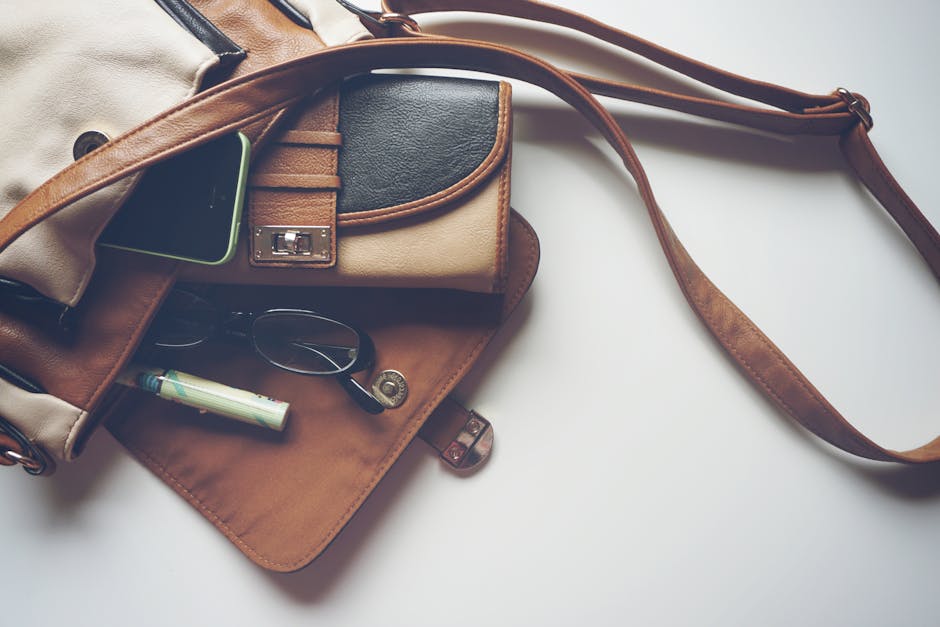
Make every item earn its place
- Use, consequence, replacementA daily-carry item merits space when it is used often, creates a real disruption when absent, or is difficult to replace away from home. It need not satisfy all three tests.KeepRegular use, meaningful backup value, or limited availabilityQuestionRarely used items with easy nearby substitutes
- One role per objectSeparate functional tools from aspirational extras: the item carried for an imagined version of the day. Duplicates are worthwhile only when they cover distinct failure points, such as power and payment.KeepA specific job and a clear reason for redundancyQuestionMultiple items that solve the same ordinary problem
Set aside anything that returns unused for a full week, then note the one occasion it was missed. Inconvenience is not always a carrying requirement. Reintroduce an item only when its absence had a practical consequence or made replacement genuinely difficult.
The access core
A dependable everyday carry begins with five items: phone, keys, payment, ID, and a compact organizer. They are not merely convenient; they unlock transport, communication, entry, purchases, and identity checks. The useful measure is not how many pockets a bag advertises, but whether each item can be found by touch without emptying the bag.
Give every piece a fixed home. A phone belongs in a snug, separate sleeve; keys in a clipped or zipped position; cards and ID together in a slim wallet; and loose necessities in one small pouch. A bag with a dedicated phone pocket reduces the familiar scramble at a checkout, transit gate, or incoming call while keeping the screen less exposed to spills and scratches.
Set up for retrieval, not capacity
A practical arrangement keeps the most time-sensitive item closest to the opening, without placing it in an unsecured exterior slot. Consider these checks:
- Phone: confirm the compartment fits the phone with its usual case.
- Keys: avoid letting metal rub against the screen; a key clip prevents migration to the bag bottom.
- Payment and ID: carry the cards used routinely, rather than a crowded stack that makes replacement harder.
- Organizer: reserve it for small, loose items such as a charging cable, lip balm, tissues, or earbuds.
The JANKS Small Crossbody illustrates this approach: its light nylon body has separate main and front compartments, an adjustable detachable strap, and room for phones up to 6.8 inches with a slim case. Its water-resistant fabric is useful for everyday splashes, though compartments still need to be closed deliberately.
A discreet personal-care pouch
A personal-care kit earns its space when it prevents a minor interruption from becoming a messy one. Keep it limited and self-contained: a slim zip pouch or wipe-clean silicone case is easier to spot, refill, and transfer than loose items migrating through a bag.
Choose individually wrapped or capped formats wherever possible. A few period products, tissues, lip balm, a stain-removal wipe, and a small hand sanitizer can cover common needs without turning the pouch into a bathroom cabinet. Avoid glass, unprotected creams, and anything with a weak flip-top cap.
Build for containment
Place liquids in a secondary sealed sleeve; pressure and heat can defeat even a seemingly secure closure. Check caps after refilling, and replace warped travel bottles. A dark or opaque pouch keeps contents private, while a light-colored washable lining makes leaks visible before they spread.
Refresh the kit after use rather than waiting for it to run empty. Keeping one consistent pouch means it can move from tote to crossbody in seconds, with no need to repack its contents.
A useful pouch opens, reveals its contents, and closes with one hand. If it requires unpacking half the bag, its contents are unlikely to be used discreetly.
The small backups that keep days moving
A backup only earns space when it solves a familiar interruption. For most daily loads, 5,000mAh is the sensible middle ground: enough for a meaningful phone top-up, yet much less bulky than higher-capacity travel banks. Match its output and connector to the phone; USB-C Power Delivery is useful for current USB-C devices, while older Lightning-equipped phones need the appropriate cable.
Keep one short, durable cable with the bank rather than borrowing the phone’s everyday charging lead. A 15–30 cm cable reduces loops inside a crossbody; a small cable tie or silicone strap stops it catching on keys. Built-in connectors are tidier, but a separate cable is more adaptable when headphones, a friend’s phone, or a wireless-earbud case needs power.
Sound and access without clutter
Regular-use earbuds merit a fixed pocket or slim hard case, not the bag’s loose bottom. Choose a case that closes securely and check the charging port occasionally; an empty case is little help on a commute or call.
Access cards stay flatter and safer in a dedicated card slot. Carry only cards used repeatedly—such as transit, building, or gym access—and keep magnetic-stripe cards away from strong magnetic closures. A weekly reset removes expired passes, receipts, and duplicate cables before they become bag ballast.
Pack for the moment, not the item
A pouch is not merely a container; it is a retrieval cue. Organize the bag around the moments that interrupt a day: arriving at a door, paying, answering a call, handling a small spill, or moving between work and transit. When each moment has one dependable home, searching becomes unnecessary.
Give fragile items a boundary
Create protected zones rather than allowing hard and soft objects to mingle. A raised, zippered phone sleeve or dedicated pocket keeps the screen away from metal; a key clip prevents the familiar scramble at the bottom of the bag. These ways to keep keys from scratching a phone also matter when a bag is set down or carried against the body, where loose items shift under pressure.
- Immediate-access zone: phone, transit card, keys; positioned near the opening.
- Protected zone: earbuds, glasses, lipstick, or a compact mirror; ideally padded or enclosed.
- Contained-care zone: the sealed personal-care pouch, kept upright where possible.
- Reserve zone: power bank and cable, behind daily-use items.
One-handed access is realistic when closures are simple and orientation stays fixed. Attach keys to a short tether, store cards in the same facing direction, and return each pouch to its assigned side. The result is less about carrying more and more about retrieving calmly when attention is elsewhere.
Choose the platform by the load
A carry platform works when it disappears into the day: it holds the actual load, stays stable while walking, and lets the phone, keys, and transit card come out without a search. Start by loading the items normally carried, rather than judging an empty bag. A compact crossbody suits an access-core load; a larger tote earns its bulk only when it routinely carries a bottle, layers, or work gear.
Measure the working fit
Strap range matters more than the label on the bag. The shortest setting must sit securely on a narrow frame or over a light top; the longest must clear a coat, fuller bust, or torso comfortably. Drop length—the distance from shoulder to bag—sets where the bag lands. A crossbody that hits at the hip is usually easier to steady than one that swings at mid-thigh; a shoulder bag needs enough drop to stay under an arm without digging in.
Check pockets with the intended contents inside. A dedicated, closable phone pocket speeds retrieval, while a separate key pocket limits scratches and noise. Deep but unstructured cavities can turn small essentials into a loose pile. For movement-heavy days, zip closures, a body-side pocket, and a strap that does not slide on slick clothing offer more practical security than an open tote.
A useful test is a ten-minute walk in the seasonal outfit most often worn. Note strap twist, bag swing, access while seated, and whether the closure can be operated one-handed.
A flexible option for a compact daily load
This lightweight crescent bag is designed to convert between crossbody, shoulder, and waist wear. Its adjustable soft strap, dual zippers, two interior pockets, and interior zip pocket provide more separation than a single open compartment. Confirm the published strap range against the intended body fit and outerwear before choosing it.
Scale down without starting over
A going-out carry is the everyday system after deliberate subtraction: access core first, then one context-specific item, then nothing that merely feels reassuring. The phone, keys, payment method, identification, and a compact power option may remain; the care pouch, cable, or earbuds stay only when the occasion makes them useful.
Capacity claims are less useful than a physical check of what actually fits in a mini bag. Measure the bag’s interior width, height, and depth—not its exterior silhouette. Then compare those measurements with the largest item, usually the phone or power bank.
Also allow closure clearance. A zipper needs room to travel; a flap must sit flat without pressing cards or forcing the bag out of shape. Object geometry matters as much as volume: a slim rectangular phone stacks efficiently, while a key bundle, lipstick tube, or rigid case creates awkward high points. Lay the intended items in their likely orientation before leaving; if the closure strains, subtract an item rather than overstuffing.
Keep awkward extras outside the core
A water bottle, umbrella, tote, or light layer can overwhelm a compact bag because each is bulky, rigid, or shape-shifting. Treat these as external-load choices: they accompany the carry system without displacing the phone, wallet, keys, and care pouch.
For carrying a water bottle alongside a purse hands-free, a bottle sleeve with an adjustable crossbody strap or a bag with a genuinely deep exterior pocket is usually more stable than balancing a bottle under an arm. A secure top closure or retention loop matters on stairs and public transit.
Balance is as important as attachment. Keep the bottle close to the torso, avoid dangling it from a thin handle, and place heavier extras on the side that does not obstruct the bag’s primary opening. The access core stays reachable even when the day’s larger items change.
Walk, sit, bend, and open the bag one-handed. If an attached item swings, pulls the strap, or blocks the zipper, the setup needs a different attachment point.
Reset the carry once a week
-
Empty the bag completely
Use a consistent weekly moment. Shake out debris, return borrowed items, discard receipts, and recharge or replace consumables before they become clutter.
-
Read the evidence
Set aside anything untouched since the last reset. Note what was borrowed, searched for, or genuinely missed; those moments reveal friction more reliably than imagined emergencies.
-
Restore fixed locations
Return the access core, care pouch, and power setup to their designated zones. A consistent layout makes a missing item obvious before leaving home.
-
Apply a strict admission rule
A new item enters only after a specific recent gap, and only if it replaces an existing item or solves a recurring problem. Give it a short trial, then remove it if it goes unused.
-
Keep a tiny exception list
Travel, weather, events, or caregiving can justify temporary additions. Label them by occasion rather than allowing them to become permanent residents.
Everyday Carry: Common Questions
What are the five core items every everyday carry needs?
A dependable everyday carry starts with phone, keys, payment, ID, and a compact organizer. They unlock transport, communication, entry, purchases, and identity checks, and each should have a fixed, findable home in the bag.
How big a power bank do I actually need?
For most daily loads, 5,000mAh is a sensible middle ground—enough for a meaningful phone top-up without the bulk of a higher-capacity travel bank. Match its output and connector to the phone, and keep one short, durable cable with it.
What should go in a personal-care pouch?
Keep it limited and self-contained: a few individually wrapped or capped items such as period products, tissues, lip balm, a stain-removal wipe, and a small hand sanitizer, placed in a secondary sealed sleeve to contain leaks.
How do I know if a bag actually fits my daily items?
Load the bag with what’s normally carried rather than judging it empty, check the strap range and drop length against your frame, and confirm pockets fit the intended contents—including the phone with its usual case.
How often should the carry be reset?
Weekly is a practical rhythm: empty the bag completely, note what went untouched since the last reset, restore the access core and pouch to their fixed zones, and apply a strict rule before adding anything new.
- Frequent resets prevent “just in case” accumulation from becoming invisible.
- Temporary extras stay useful when tied to a named situation and removed afterward.
A dependable everyday carry is not a finished packing list. It is a small system that is reviewed against actual use: what failed, what helped, and what merely occupied space.
Evidence earns space. That standard keeps the kit lighter, faster to navigate, and adaptable without turning every possible concern into another item.


6 Comments
The weekly reset sounds nice in theory, but I know myself: Sunday arrives and I ignore it. Has anyone tied it to another habit successfully? I need a system that survives real life, not a perfect Pinterest bag.
I like the idea of an “access core,” but what five items are you counting? Phone, keys, wallet/card, earbuds, and…? I always end up digging around for lip balm too.
The exact five can vary, but a common starting point is phone, keys, payment/ID, transit or access card, and one health/safety item such as medication or an inhaler. Earbuds and lip balm can absolutely earn a fixed spot too—especially if you use them daily. The useful part is deciding what must be reachable quickly, then protecting that space from everything else.
The “aspirational extras” line got me. I have been hauling around a paperback, notebook, two pens, and a reusable bag for weeks because I *might* need them. Meanwhile I never have a charged phone. 😅
The washable sealed pouch is such a practical suggestion. Mine currently contains painkillers, a couple bandages, tissues, hair tie, stain wipe, and apparently three ancient receipts for moral support.
How often do you actually replace things like painkillers or wipes? I reset my bag maybe twice a year, which is probably why it becomes a tiny landfill.
A weekly reset is enough for most people: remove receipts and loose trash, check what was used, and make sure the pouch is clean and sealed. For medication, check expiry dates periodically and replace anything that has been exposed to moisture or heat. Wipes dry out, so a quick squeeze/check during the weekly reset saves the unpleasant surprise later.