
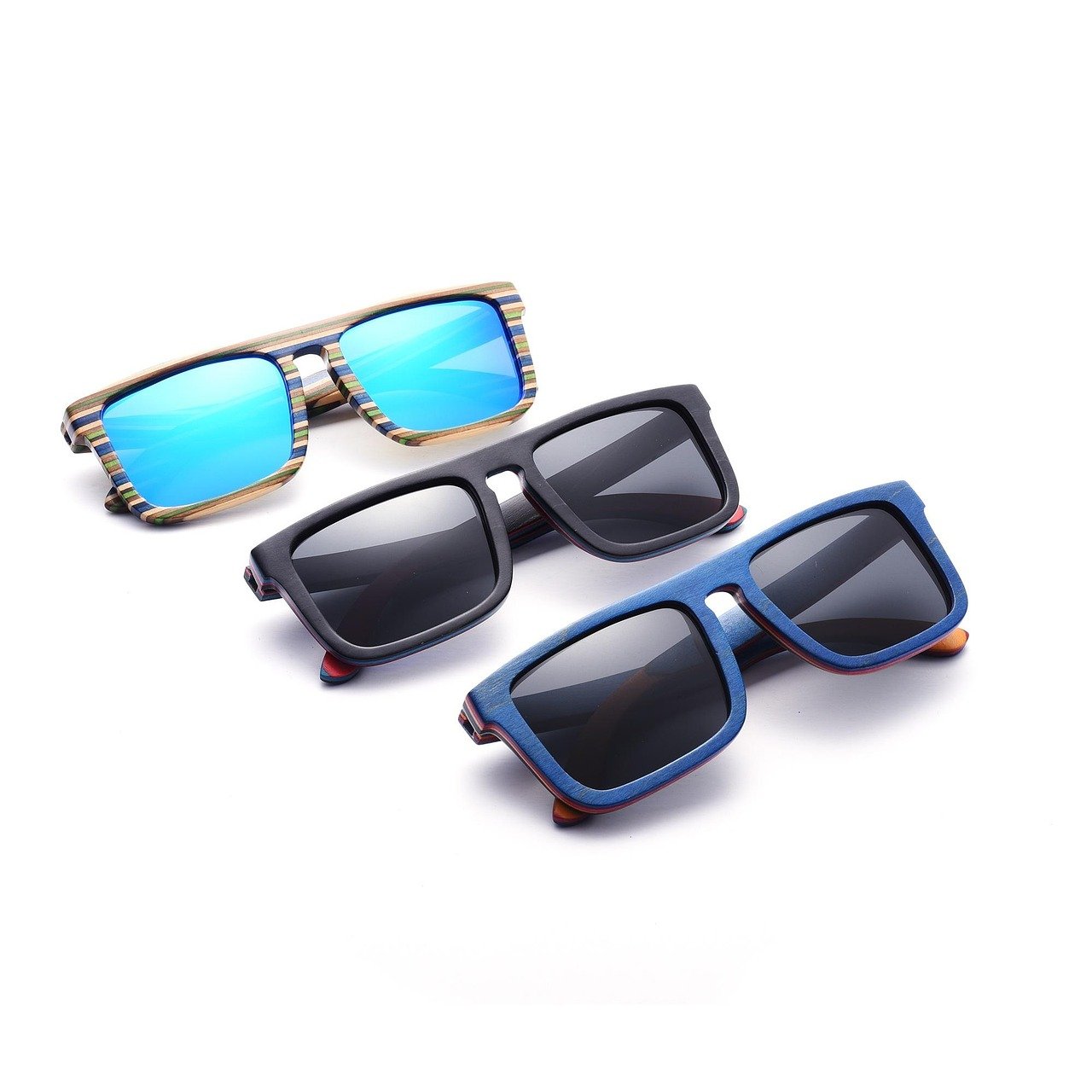
On a wet morning, the road can flash brighter than the sky.
A low sun catching rain-polished asphalt, a windscreen, or the curved paintwork of a parked car can create a flat, blinding sheet of reflected light. That is the situation polarized lenses are designed for: they preferentially block much of the horizontally oriented light reflected from broad, smooth surfaces, often restoring contrast in lane markings, kerbs, and hazards.
Their everyday value is less about a fashionable frame—or a higher ticket—and more about the commute’s conditions. An exposed cycling route, waterside road, or frequent wet-weather drive can make the effect conspicuous; a shaded urban walk may not. There is also a trade-off: some LCD dashboards, ticket gates, and phone screens can look dim, rainbowed, or nearly black at certain angles through polarized lenses. Vehicle position, weather, time of day, and screen reliance decide whether that compromise feels minor or persistent.
- Polarization targets reflected glare; it is separate from UV protection and lens darkness.
- Rotating an LCD screen or tilting the head can sometimes restore screen visibility.

Polarization is not simply a darker tint
- Polarization
A polarizing film preferentially blocks horizontally oriented light. That is the dominant component of glare reflected from roads, windshields, wet pavement, water, and other broad, fairly flat surfaces.
- Tint
Tint reduces the overall amount of visible light entering the eye. A dark gray or brown lens may feel comfortable in bright sun without selectively removing reflected glare.
- UV protection
Ultraviolet filtering addresses invisible UVA and UVB radiation, not visible glare. A clear lens can provide UV protection, while a dark lens is not automatically UV-protective.
- Mirror coating
A mirror finish reflects some incoming light from the lens surface and can modestly reduce transmission. It is a cosmetic or light-management layer, not a substitute for a polarizing filter.
- Photochromic behavior
Photochromic lenses darken in response to UV exposure. Their changing tint can improve brightness comfort, but polarization is a separate feature and may or may not be included.
For commuting, the practical question is not whether a lens makes daylight look dimmer. It is whether it reduces the bright, washed-out reflections that obscure road texture, lane markings, puddles, and dashboard-adjacent surfaces. A polarized lens can do that even when its tint is relatively moderate; a heavily tinted non-polarized lens may not.
Where commuting glare changes the view
Rain does more than make a route darker. A thin film of water turns asphalt into a broad, uneven reflector, sending bright sky light toward the driver at a low angle. The resulting veil can flatten the tonal difference between black pavement, faded lane paint, patched areas, and pooled water—even when the scene is not especially bright overall.
Polarized lenses reduce much of this predominantly horizontal reflection. On a wet urban street or sunlit concrete roadway, that can restore separation between surfaces: a white line may stand out more distinctly, the granular texture of asphalt may reappear, and the boundary of a curb, rail, or standing-water patch may be easier to distinguish. The effect is often more noticeable than a darker non-polarized tint because it removes stray reflected light rather than merely lowering all incoming light.
Low sun creates a different kind of glare
Morning and late-afternoon sun can produce sharp reflections from windshields, vehicle hoods, painted road arrows, and damp pavement. Polarization may make the shape and movement of nearby vehicles easier to parse when glare is the factor obscuring them. It does not eliminate direct sunlight, deep shadow, fog, or visual clutter; a sun visor and appropriate lens tint still matter.
The practical value therefore depends on repetition. For someone regularly crossing exposed bridges, concrete corridors, waterfront roads, or rain-prone streets in daylight, the added contrast can be meaningful. On largely shaded routes, short commutes, or predominantly night travel, the difference may be modest.
Polarization can reveal detail by reducing reflected glare. It does not make a dark or heavily shaded road brighter.
What polarized lenses cannot fix
It chiefly suppresses glare reflected from horizontal or near-horizontal surfaces.
It does not add light, sharpen an out-of-focus view, or make hazards appear through visual obstructions.
Some LCD and older instrument displays can darken, shift colour, or nearly disappear when viewed through a polarized lens at certain head angles.
Both the display and lens use polarizing filters. When their axes cross, little light passes through.
It can reduce some reflected light, but reflections from the dashboard, side glass, and laminated windshield layers may remain.
Those reflections are not all aligned in the direction the lens blocks; windshield angle and cabin brightness also matter.
Fog, mist, grime, wiper haze, pitting, and lens scratches scatter light in many directions.
Polarization filters one orientation of light; it cannot undo diffuse scatter or restore contrast lost to a dirty or damaged surface.
Before relying on polarized sunglasses for a regular vehicle, view the instrument cluster, navigation display, and any head-up display in normal seating position. Brightness changes with head angle are a compatibility issue, not a lens defect.
Modern displays vary: some are designed to remain readable through polarized lenses, while others are not. A quick daylight check reveals more than a specification sheet.
When the upgrade is noticeable
Polarization tends to earn its place when glare is a recurring feature of the route, not merely an occasional inconvenience. A commuter who drives east or west into a low morning or afternoon sun, crosses broad exposed intersections, or travels beside water, pale concrete, glass-fronted buildings, or parked vehicles may encounter the same reflections day after day.
Signs that the benefit may be substantial include:
- Daylight driving after rain, when the road surface becomes a reflective sheet and lane markings lose definition.
- Long stretches of open, high-sun roadway, especially with light-colored pavement or frequent windshield reflections.
- Cycling, walking, or riding a scooter near water, wet streets, polished stone, or metal surfaces.
- Regular transitions between shade and bright, reflective pavement, where visual comfort and contrast can fluctuate quickly.
The difference may be modest on a short, shaded commute, a predominantly underground or nighttime journey, or a route with little wet pavement and few broad reflective surfaces. For transit riders who spend most of the trip reading a phone, checking a dashboard-style display, or moving through covered stations, the potential screen-viewing trade-off can be more noticeable than the glare reduction.
A useful test is to recall the last several daylight commutes: repeated squinting at road sheen or reflections suggests a stronger case than simply preferring a darker lens.
Choose around the displays
A commuter who checks a dashboard, infotainment display, or phone mount needs to test the whole viewing routine, not merely judge road glare. Polarizers can make some LCD or instrument panels look dim, rainbow-patterned, or nearly black when the head is tilted. This depends on the screen’s own polarizing filter and orientation, so one vehicle’s display may remain clear while another is troublesome.
Tint deserves a separate decision. Gray generally preserves color recognition; brown or amber tints can make road texture and overcast contrast feel more distinct, though they alter color perception. A moderately dark lens may suit bright daytime driving, while a lighter tint can be more usable under tree cover, in rain, or late in the day. Neither tint choice resolves a screen conflict caused by polarization.
Do not rely on photochromics in the car
Many photochromic lenses react chiefly to ultraviolet light, much of which a windshield blocks. That is why transition-style lenses can remain too light behind a windshield, even on a bright drive. Some formulations respond partly to visible light, but their darkening and clearing still lag sudden changes such as tunnels, parking garages, and fast-moving cloud cover.
A sensible setup can be a polarized daytime pair for reflection-heavy routes plus a non-polarized, lighter pair for display-intensive driving, dusk, and poor-weather visibility. Lens choices are most reliable when evaluated in the actual vehicle, with its usual screen brightness and seating position.
Judge the lens, not the sticker
- UV claim that can be substantiatedA polarized filter does not itself establish ultraviolet protection. Look for a clear UV400 or 100% UVA/UVB claim from a traceable maker; confirming sunglasses provide UV protection may require more than trusting a hangtag.Look forA specific UV claim and credible product information.AvoidA vague “protective” label with no UV specification.
- Clean optics and even tintViewed against a pale wall or bright sky, the field should look even, without ripples, blotches, bubbles, or a color shift between lenses. Better lenses preserve fine contrast rather than merely making the scene darker.Look forUniform color and a stable, undistorted view.AvoidPatchy tint, haze, or waviness in either lens.
- Peripheral clarity in the actual frameWith the frame on, slowly move a straight edge across the outer lens area. Some curvature is normal, but swimming, bending, or abrupt blur near the edges can be distracting when checking mirrors or crossing traffic.Look forClear edges across the useful viewing zone.AvoidNoticeable image jump or distortion at the periphery.
- Coatings and side coverageA rear anti-reflective coating can reduce reflections bouncing from the lens’s inner surface. A wrap, broad temples, or a close-fitting shape also limits light entering from the sides—often more relevant on open, low-sun routes than a mirror finish.Look forRear-surface reflection control and sensible side shielding.AvoidStrong inner-lens reflections or large side gaps.
Hold the lenses in front of a polarized LCD screen or a polarized demo card, then rotate them about 90 degrees. A genuinely polarized lens will usually make the screen or card darken markedly at one angle and brighten at another.
This test confirms the filtering effect, not UV protection, optical quality, or whether a particular dashboard display will remain readable. Test any essential commuting display from the normal viewing position when possible.
A pair that stays on gets used
Lens performance matters only when the glasses are comfortable enough to leave the case every morning. A secure frame keeps its position when looking down for a platform edge or over a shoulder; slipping changes the effective coverage and can expose the eye to side glare. Lightweight everyday sunglasses with balanced temple tension and grippy nose pads are often easier to wear for a full commute than a heavier, more aggressively styled frame.
Coverage has a trade-off
Large lenses and wraparound curves block more peripheral light, particularly beside water, broad roads, or pale concrete. But deep wraps can press against cheeks, fog more readily, and conflict with helmet straps or over-ear headphones. Slim, low-profile temples usually coexist better with both, though they may admit more side light.
Prescription wearers need an additional fit check. Strong prescriptions can be harder to edge into highly curved frames, and optical distortion may increase toward the edges; a moderately curved frame or prescription sun clip can be more practical. Finally, daily carry favors a folding case or rigid slim case: unprotected lenses quickly lose clarity to scratches, making even a good polarized lens less pleasant to use.
Make the decision on the actual commute
- A polarized pair need not replace every pair of sunglasses; a screen-friendly backup can be more useful than a compromise worn reluctantly.
- A UV label and polarization claim answer different questions: both deserve confirmation before regular use.
For a commuter who repeatedly faces sunlit wet pavement, vehicle reflections, water, or long open-road glare, polarization is usually a worthwhile upgrade. The benefit is less compelling on mostly shaded or night routes, and it can be outweighed when a phone mount, instrument panel, or other LCD must remain reliably readable.
A short real-world trial reveals more than a store display. Wear the glasses outdoors in the route’s likely sun angle, then sit in a parked car and view every relevant screen through normal head movements. Check that glare reduction is tangible, displays remain legible, the lens carries a credible UV-protection claim, and the frame stays comfortable without pressure or slipping. If all four hold up, polarization is likely suited to daily commuting; if screens fail, it may work better as a second pair.
Polarized Commuting Sunglasses: Common Questions
Does polarization also block UV rays?
No, not automatically. UV protection and polarization are separate features. A clear lens can provide UV protection, while a dark or polarized lens is not automatically UV-protective. Look for a specific UV400 or 100% UVA/UVB claim from a traceable maker rather than assuming a polarized label covers it.
Why does my phone or dashboard screen look dark through polarized sunglasses?
Many LCD and instrument displays use their own polarizing filter. When the display’s filter and the lens’s filter cross at certain head angles, little light passes through, making the screen look dim, rainbowed, or nearly black. A small head tilt can sometimes restore the image, but that isn’t ideal for a display you check often while driving.
Will polarized lenses help in fog or rain?
Not with the visibility problem itself. Fog, mist, grime, wiper haze, and lens scratches scatter light in many directions, while polarization only filters one orientation of light. It can’t undo that diffuse scatter, and in fog especially, the reduced light transmission can make the scene feel dimmer rather than clearer.
How can I test if sunglasses are really polarized before buying?
Hold the lenses in front of a polarized LCD screen or a polarized demo card, then rotate them about 90 degrees. A genuinely polarized lens will usually make the screen or card darken markedly at one angle and brighten at another. This confirms the filtering effect, though not UV protection or optical quality.

